Key Takeaways
-
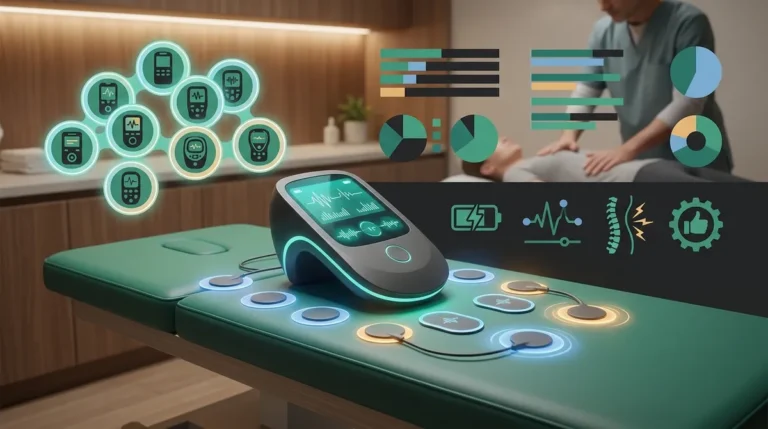
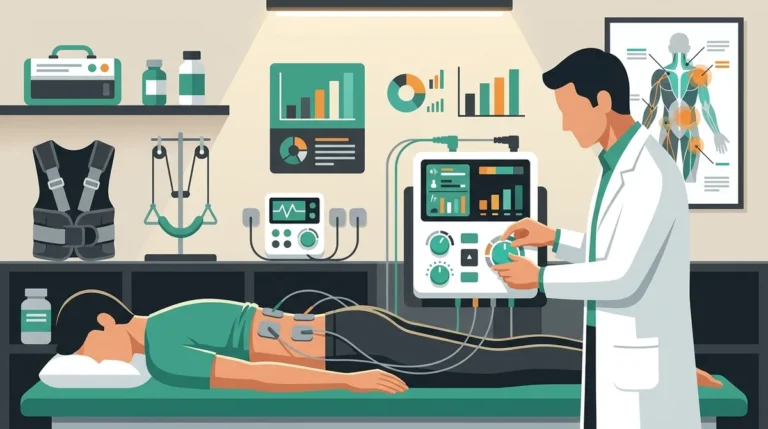
NMES devices directly stimulate motor neurons to prevent muscle atrophy and aid muscle re-education after immobilization or surgery, making them more clinically valuable than TENS for actual tissue repair.
-
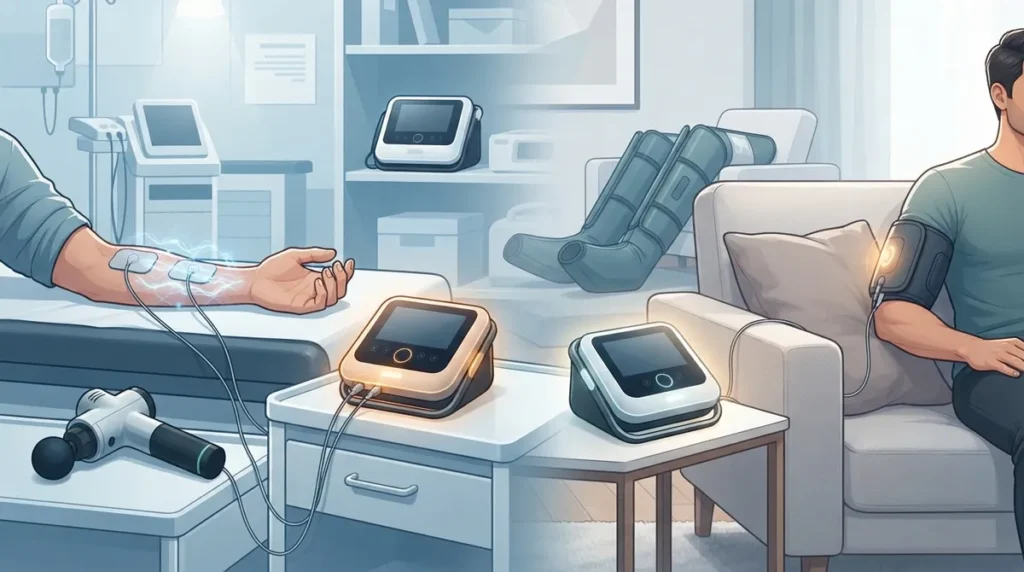
Portable EMS units enable patients to continue recovery between clinic visits, improving treatment compliance and extending the benefits of in-office protocols through home-based protocols.
-
Combination TENS/EMS units offer dual functionality for pain relief and muscle stimulation in a single device, reducing equipment costs and simplifying treatment protocols in smaller practices.
-
Insurance reimbursement success depends on consistent documentation of functional improvements, pain reduction, and range-of-motion gains using objective measurement standards.
-
Only select FDA 510(k) cleared devices with manufacturer-backed clinical studies; over 100 unproven muscle stimulation products exist, many lacking genuine evidence for injury treatment.
-
Integrate electrotherapy devices into multi-modal protocols (combining NMES, TENS, traction, or braces) rather than using single modalities, as layered approaches produce better documented outcomes for insurance claims.
Patients recovering from soft tissue injuries, post-surgical rehabilitation, or chronic musculoskeletal conditions increasingly ask their providers about muscle recovery devices that deliver measurable results without pharmaceutical intervention. For physical therapy clinics, chiropractic practices, and auto accident injury clinics, understanding which electrotherapy technologies genuinely accelerate healing versus those that merely manage discomfort has become essential to clinical decision-making. With the National Institutes of Health reporting persistently high rates of chronic pain among U.S. adults, providers are under growing pressure to offer effective, non-opioid recovery solutions.
This article examines five categories of muscle recovery devices used in clinical settings today, explains the science behind their effectiveness, and offers practical guidance for providers evaluating equipment for their practice. Whether you operate a rehabilitation center, a chiropractic office, or an auto injury clinic navigating insurance claims, this guide will help you select devices that align with patient outcomes and reimbursement realities.
Understanding Muscle Recovery Devices in Electrotherapy
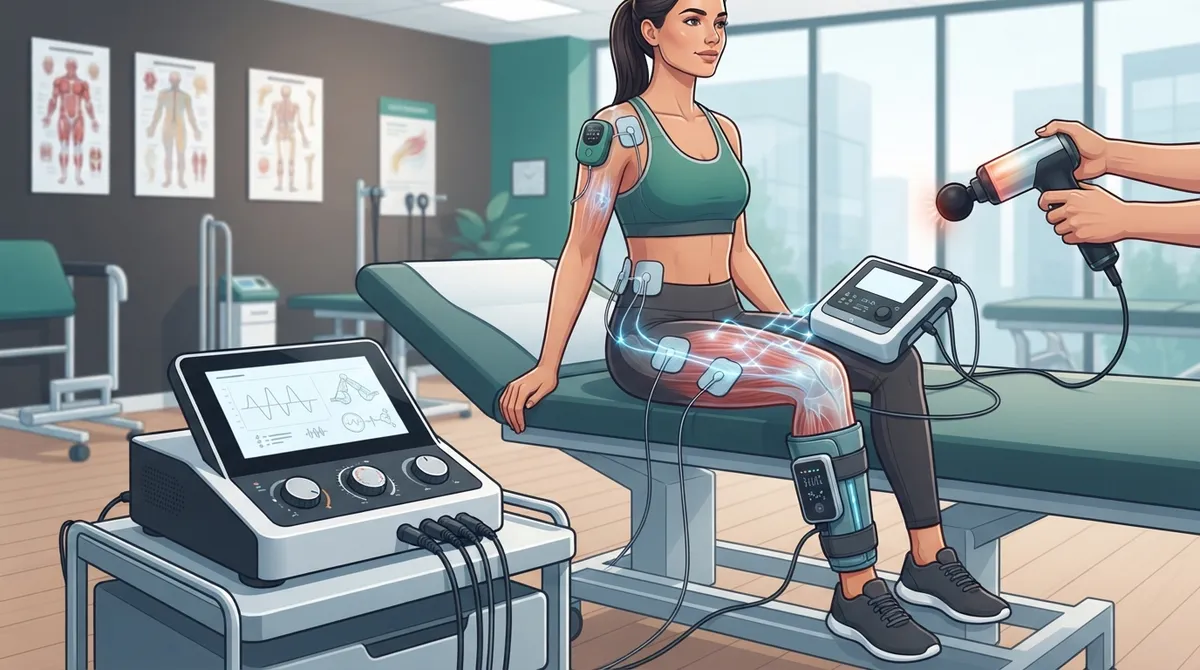
Muscle recovery devices used in clinical electrotherapy rely on controlled electrical impulses to stimulate muscle tissue, nerves, or both. Unlike passive modalities such as heat or ice, these devices actively engage the neuromuscular system to promote circulation, reduce inflammation, and support tissue repair. The National Library of Medicine has published extensive research on how electrical stimulation influences motor neuron activity and blood flow, providing a scientific foundation for clinical use.
Three primary technologies dominate this space: Electrical Muscle Stimulation (EMS), Neuromuscular Electrical Stimulation (NMES), and Transcutaneous Electrical Nerve Stimulation (TENS). While often grouped together, each serves a distinct clinical purpose, and understanding these differences is critical when selecting devices for your practice.
How EMS Differs From TENS and NMES
EMS devices mimic the brain’s natural signals to cause muscles to contract and relax, which accelerates recovery and builds strength without placing additional stress on joints. This makes EMS particularly valuable for patients recovering from injuries who cannot yet tolerate weight-bearing exercise. NMES, meanwhile, sends electrical impulses directly to motor neurons, creating contractions that improve muscle tone, strengthen weakened muscles, and increase blood flow to the affected area.
TENS units operate differently, primarily targeting sensory nerves for pain relief rather than triggering muscle contractions. According to Cleveland Clinic, TENS therapy works by disrupting pain signals before they reach the brain, making it highly effective for symptom management even though research suggests it has limited direct value for tissue repair compared to EMS or NMES. Clinics treating soft tissue injuries often combine modalities, using NMES for muscle re-education and TENS for pain control during the same treatment session.
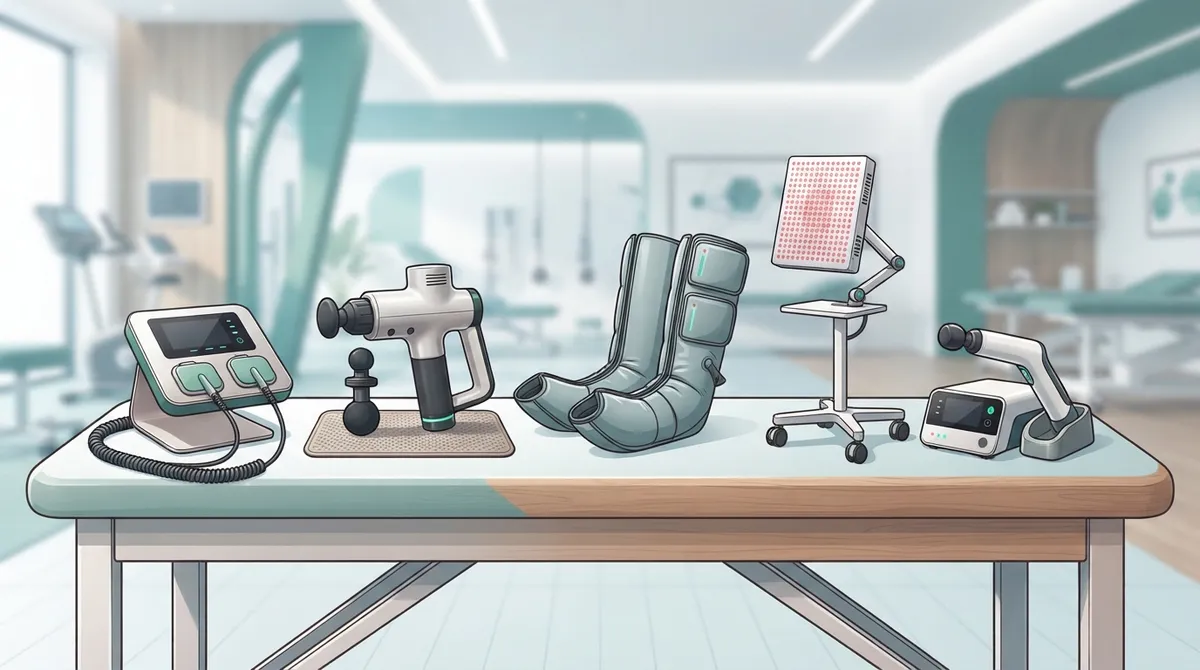
5 Muscle Recovery Devices Your Clinic Should Consider
Selecting the right combination of equipment depends on your patient population, treatment goals, and reimbursement structure. Below are five categories of devices commonly integrated into physical therapy, chiropractic, and auto injury clinic protocols.
1. NMES Units for Post-Injury Muscle Re-Education
NMES devices are particularly effective for patients experiencing muscle atrophy following immobilization, surgery, or nerve injury. By directly stimulating motor neurons, these units help maintain muscle tone and prevent the rapid strength loss that occurs when a limb or region is immobilized. Auto accident injury clinics frequently rely on NMES protocols for patients with whiplash-related muscle guarding or soft tissue trauma that limits active movement.
2. Portable EMS Devices for Take-Home Recovery Plans
Portable, battery-operated EMS units allow patients to continue recovery protocols between clinic visits. These devices are compact enough for home use while still delivering clinically meaningful stimulation for warmups and post-activity recovery. For chiropractic practices looking to extend care beyond the adjustment table, offering patients a take-home EMS option can improve compliance and reinforce in-office treatment gains.
3. Dual-Mode TENS/EMS Combination Units
Many clinics prefer combination devices that offer both TENS and EMS modes in a single unit, allowing providers to switch between pain relief and muscle stimulation protocols without additional equipment. This versatility is especially valuable for smaller practices managing diverse patient needs, from chronic pain management to active rehabilitation. Liberty Medical Solutions offers a range of products designed to give providers this flexibility while remaining compatible with common insurance billing codes.
4. Conductive Garments for Continuous Stimulation
Conductive garments represent an evolution in electrotherapy delivery, embedding electrodes directly into wearable fabric to provide more consistent, evenly distributed stimulation across larger muscle groups. These garments are particularly useful for patients with widespread muscular pain or those requiring stimulation over irregular body contours where traditional electrode pads are less effective. Liberty Medical Solutions’ conductive garments and TheraKnit garments are engineered to improve patient comfort while maintaining consistent electrical contact throughout treatment.
5. Cervical Traction Units Paired With Electrotherapy
For patients presenting with neck injuries common in auto accidents, combining cervical traction with electrical stimulation addresses both mechanical decompression and muscular recovery simultaneously. This dual approach is often incorporated into treatment plans for whiplash and cervical strain, supporting both structural realignment and soft tissue healing in a coordinated protocol.
Comparing Muscle Recovery Modalities
The table below summarizes how each modality functions and where it fits within a clinical treatment plan.
| Modality | Primary Mechanism | Best Clinical Use | Muscle Contraction? |
|---|---|---|---|
| TENS | Sensory nerve interference | Pain management, symptom relief | No |
| EMS | Mimics brain signals to muscles | Strength maintenance, warmup/recovery | Yes |
| NMES | Direct motor neuron stimulation | Muscle re-education, atrophy prevention | Yes |
| Conductive Garments | Distributed electrode stimulation | Large muscle groups, chronic pain | Varies by mode |
Clinical Benefits Backed by Research
Electrotherapy’s role in muscle recovery extends beyond basic pain relief. Research published on PubMed demonstrates that electrical stimulation enhances blood circulation, accelerates tissue repair, and promotes new cell growth, leading to reduced downtime for patients recovering from injury. These physiological effects make electrotherapy a valuable complement to manual therapy, spinal adjustments, and traditional rehabilitation exercises.
- Improved local blood circulation supports faster nutrient delivery to damaged tissue
- Reduced inflammation through controlled electrical stimulation
- Prevention of muscle atrophy during periods of immobility or restricted movement
- Enhanced joint stability through improved muscle tone and functional mobility
- Non-invasive treatment option that reduces reliance on pain medication
The FDA has actively encouraged the expansion of non-opioid pain management options, and the CDC similarly recommends nonopioid therapies as first-line treatment for many musculoskeletal conditions. This regulatory and clinical momentum has increased demand for FDA-cleared electrotherapy equipment across physical therapy, chiropractic, and auto injury treatment settings.
Selecting Devices for Your Practice: A Step-by-Step Approach
Choosing the right muscle recovery devices requires careful evaluation of clinical need, patient volume, and reimbursement pathways. Consider the following process when evaluating equipment for your clinic.
- Assess your patient population. Auto accident clinics treating whiplash and soft tissue trauma have different equipment needs than chiropractic practices focused on chronic spinal conditions.
- Verify FDA clearance status. Only consider devices with proper 510(k) clearance to ensure regulatory compliance and patient safety.
- Evaluate insurance compatibility. Confirm that devices and treatment protocols align with commercial PPO/POS plans, workers’ compensation, and auto insurance billing requirements.
- Consider portability needs. Determine whether your practice benefits more from stationary clinical units, portable take-home devices, or a combination of both.
- Review training and support resources. Ensure your supplier provides adequate clinical training for staff to maximize device effectiveness and patient safety.
Insurance Considerations for Providers
Navigating insurance reimbursement remains one of the most significant challenges for clinics incorporating electrotherapy devices into treatment plans. Working with a supplier experienced in commercial PPO/POS plans, workers’ compensation, and auto accident claims can substantially reduce administrative burden. Liberty Medical Solutions works directly with a broad range of insurance plans, helping providers make electrotherapy accessible to a wider patient base without absorbing unnecessary billing complications.
| Insurance Type | Common Use Case | Documentation Needs |
|---|---|---|
| Commercial PPO/POS | Chronic pain, post-surgical rehab | Medical necessity, prior authorization |
| Workers’ Compensation | Occupational injury recovery | Injury report, treatment plan |
| Auto Accident/Third-Party Liability | Whiplash, soft tissue trauma | Accident report, attorney documentation |
Common Pitfalls Clinics Should Avoid
Not every device marketed as a muscle stimulator delivers genuine clinical value. Over 100 products on the market claim muscle stimulation benefits, yet many are simply basic TENS devices with conflicting research regarding their effectiveness for actual injury treatment. Providers should be cautious of equipment lacking clear FDA clearance documentation or manufacturer-backed clinical studies.
- Avoid devices without documented FDA 510(k) clearance
- Be skeptical of manufacturers who cannot provide clinical evidence for their specific claims
- Ensure electrode quality and garment durability meet daily clinical demands
- Confirm supplier responsiveness for warranty claims and replacement parts
- Verify compatibility with your existing electronic health records and billing systems
For a deeper look into related equipment considerations, providers can review this clinical guide to electrotherapy electrodes or explore what makes the best TENS machine for clinical use when building a comprehensive equipment inventory.
Integrating Muscle Recovery Devices Into Treatment Protocols
Successful integration of muscle recovery devices depends on thoughtful protocol design rather than simply purchasing equipment. Physical therapy clinics often layer NMES with active exercise, using electrical stimulation to prime muscles before functional movement training. Chiropractic practices frequently pair back braces with electrotherapy sessions to provide structural support alongside muscular recovery, giving patients a comprehensive at-home and in-clinic solution.
Auto accident injury clinics benefit from combining cervical traction, NMES, and TENS in sequenced protocols that address both the mechanical and neuromuscular components of whiplash injuries. This multi-modal approach often produces better documented outcomes for insurance claims, as it demonstrates a comprehensive treatment strategy rather than reliance on a single modality. Clinics seeking guidance on building these protocols can review additional resources such as how to use electrotherapy for auto accident treatment.
Documenting Outcomes for Better Reimbursement
Clinics that consistently document functional improvement, pain reduction, and range-of-motion gains associated with electrotherapy tend to experience smoother reimbursement processes. According to WebMD, objective measures such as reduced pain scores and improved mobility strengthen the medical necessity argument required by many insurance carriers. Establishing standardized documentation templates for electrotherapy sessions can streamline this process across your entire clinical team.
Choosing a Reliable Equipment Partner
The effectiveness of any muscle recovery device ultimately depends on quality construction, proper calibration, and ongoing manufacturer support. Clinics should prioritize suppliers who understand the operational realities of insurance billing, patient compliance, and clinical training needs. Liberty Medical Solutions has built its reputation by offering customized electrotherapy solutions tailored specifically to the needs of physical therapy clinics, chiropractic practices, and auto accident injury clinics, while simplifying the insurance verification process for providers.
As reported by the Mayo Clinic, non-pharmacological pain management strategies continue gaining clinical acceptance, reinforcing the long-term value of investing in quality electrotherapy equipment for your practice.
Conclusion
Muscle recovery devices have become indispensable tools for clinics committed to delivering evidence-based, non-invasive treatment options. From NMES units supporting post-injury rehabilitation to conductive garments providing consistent stimulation across larger muscle groups, the right equipment can meaningfully improve patient outcomes while supporting efficient insurance reimbursement. Whether your practice focuses on physical therapy, chiropractic care, or auto accident injury treatment, selecting devices backed by clinical evidence and reliable manufacturer support remains essential to long-term success. To explore customized electrotherapy solutions tailored to your practice’s specific needs, Contact Us and discover how the right equipment can transform your patient recovery outcomes.
FAQs
Q: What is the difference between EMS and TENS for muscle recovery?
A: EMS devices mimic brain signals to trigger actual muscle contractions, which helps build strength and accelerate recovery without added joint stress. TENS units, by contrast, target sensory nerves to interrupt pain signals but do not produce muscle contractions, making them more effective for symptom management than tissue repair.
Q: How does neuromuscular electrical stimulation (NMES) help with muscle recovery?
A: NMES sends electrical impulses directly to motor neurons, creating contractions that improve muscle tone, strengthen weakened muscles, and increase blood flow to injured areas. This makes it particularly valuable for patients experiencing muscle atrophy following surgery, immobilization, or nerve injury.
Q: Are muscle stimulator machines effective for post-workout or post-injury recovery?
A: Clinically validated EMS and NMES devices support recovery by enhancing circulation, reducing inflammation, and promoting tissue repair, leading to reduced downtime. However, providers should verify FDA clearance and clinical backing, as many products marketed as muscle stimulators are simply basic TENS units with limited evidence for injury treatment.
Q: Can electrotherapy prevent muscle atrophy during immobility?
A: Yes, NMES and EMS devices help maintain muscle tone and prevent rapid strength loss during periods of immobilization by directly stimulating motor neurons and muscle fibers. This supports improved joint stability and functional mobility once patients resume normal activity.
Q: Which electrotherapy devices are FDA-cleared for muscle recovery?
A: Providers should look specifically for devices carrying FDA 510(k) clearance, which confirms the equipment has met regulatory standards for safety and intended clinical use. Working with an established supplier that provides clear documentation on clearance status helps ensure compliance and patient safety.