
Key Takeaways
-
Start sessions at zero intensity and increase gradually until achieving a strong, comfortable tingling sensation; maintain at least 30 minutes per session as pain relief typically takes up to 30 minutes to become noticeable.
-
Screen patients for contraindications before dispensing devices, particularly those with pacemakers, implantable electronic devices, pregnancy, epilepsy, or significantly reduced skin sensation.
-
Prepare skin thoroughly by cleaning with mild soap, drying completely, and removing lotions or oils; position electrodes 2-2.5 cm apart around or beside the painful area, never on the front of neck, spine, or chest.
-
Track patient outcomes over 2-4 weeks of consistent use and adjust treatment if no pain reduction occurs, skin irritation develops, or electrode pads lose adhesion; TENS is adjunctive therapy, not a standalone cure.
-
Never use TENS while driving, operating machinery, sleeping, bathing, or swimming; stop immediately and remove pads if experiencing pain, burning, persistent redness, itching, or worsening skin irritation.
-
Rotate electrode placement between sessions and replace pads when adhesion degrades; store pads on protective film between uses and encourage patients to maintain a pain log for tracking effectiveness over time.
For physical therapy clinics, chiropractic practices, and auto accident injury centers, TENS therapy remains one of the most versatile tools available for managing patient pain. Yet its clinical value depends entirely on correct application. Electrode placement, intensity settings, session duration, and contraindication screening all influence whether a patient experiences meaningful relief or simply an uncomfortable buzzing sensation with no therapeutic benefit. Understanding how to use TENS therapy properly is not optional knowledge for providers who dispense these devices; it is a core competency that affects patient outcomes, compliance, and satisfaction.
Transcutaneous electrical nerve stimulation delivers low-voltage electrical pulses through adhesive skin electrodes to help modulate pain signals traveling to the brain. It is widely used as an adjunct to, rather than a replacement for, diagnosis and treatment of the underlying condition, whether that is a whiplash injury following a car accident, chronic lower back pain, or post-adjustment soreness in a chiropractic setting. This guide breaks down the four essential steps every clinic should teach patients, along with safety considerations, evidence-based expectations, and practical troubleshooting advice.

Why TENS Therapy Matters for Clinical Practices
Chronic pain affects a substantial portion of the adult population, and the National Institutes of Health has documented persistently high rates of chronic pain among U.S. adults, underscoring the need for non-pharmacological pain management options. The FDA has also pushed to expand non-opioid treatment options, and TENS units fit squarely into that strategy as a drug-free modality patients can use at home between clinical visits.
For physical therapy clinics, TENS extends treatment beyond the appointment window, giving patients an active role in their recovery. Chiropractic practices often pair TENS with adjustments to manage residual muscle tension, while auto accident injury clinics rely on it to address whiplash and soft tissue trauma while navigating insurance documentation requirements. Liberty Medical Solutions works directly with commercial PPO/POS plans, workers compensation, and auto accident claims, making it easier for clinics to equip patients with devices without creating administrative bottlenecks.
Step 1: Prepare the Skin and Select Electrode Placement
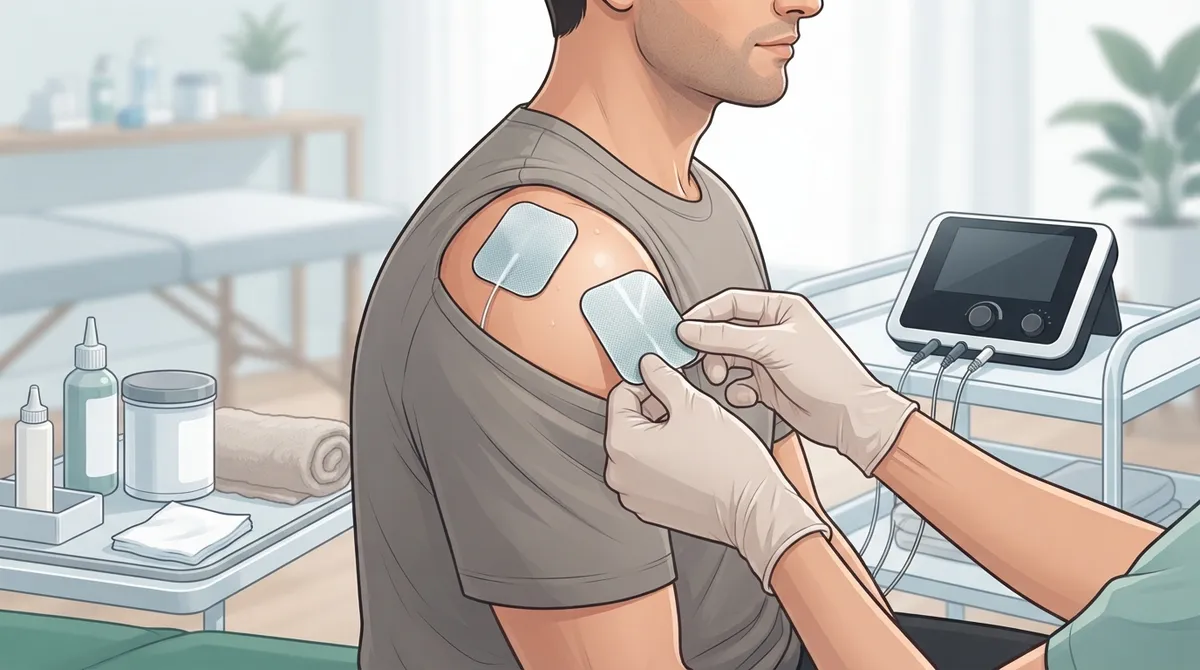
Before any device is switched on, proper skin preparation determines both comfort and signal conductivity. Clinics should train patients to inspect the treatment area for broken, infected, irritated, fragile, or numb skin before every session.
Skin Preparation Checklist
- Switch the device off before touching electrodes or wires
- Clean the skin with mild soap and water, then dry thoroughly
- Remove all lotions, oils, or creams that could interfere with adhesion
- Confirm normal sensation in the area; avoid numb or hypersensitive skin
- Inspect electrode pads for wear and replace if adhesion has degraded
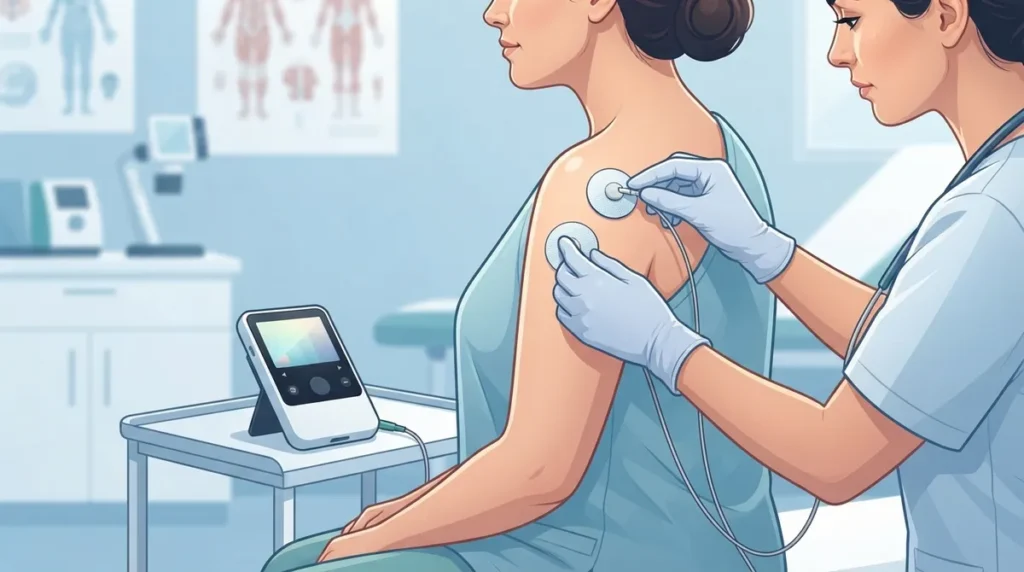
Electrode placement should follow clinician guidance, typically positioning pads around or on either side of the painful area, or along the nerve distribution supplying that region. Hospital guidance commonly recommends keeping electrodes approximately 2 to 2.5 centimeters, or about one inch, apart, though the device manufacturer’s instructions should always take priority. For patients using conductive garments or TheraKnit garments, placement is often simplified since the fabric integrates electrode contact points designed for consistent coverage.
| Condition | Common Electrode Placement | Clinical Notes |
|---|---|---|
| Lower back pain | Either side of the lumbar spine, framing the painful area | Avoid placement directly over the spinal column |
| Cervical/neck pain | Along paraspinal muscles, never on the front of the neck | Never place electrodes on the carotid area |
| Shoulder pain | Surrounding the affected joint or along referred nerve pathways | Avoid placement directly across the chest |
| Knee pain | Above and below the joint line | Ensure skin is intact and free of swelling complications |
Step 2: Set Intensity and Session Duration Correctly
Once electrodes are secured, the unit should be turned on with intensity starting at zero and increased gradually. The goal is a strong, clear tingling, buzzing, or pulsing sensation that remains comfortable at all times. For standard pain-relief TENS protocols, visible muscle contraction is not typically the objective, and any sensation crossing into pain should prompt an immediate reduction in intensity.
General Session Guidelines
- Begin at the lowest intensity setting and increase slowly until a strong but comfortable sensation is achieved
- Allow the session to run for a minimum of 30 minutes, as pain reduction can take up to approximately 30 minutes to become noticeable according to NHS patient guidance
- Some patients may use sessions lasting up to two hours or longer only when directed by a clinician and when skin condition remains healthy
- Reassess intensity periodically, as skin often accommodates to stimulation and may require adjustment mid-session
Frequency and waveform settings vary significantly across devices, which is why clinics should standardize protocols using a single trusted supplier. Reviewing the full range of devices available helps practices match unit features, such as programmable modes and dual-channel outputs, to the specific patient populations they serve.
Step 3: Recognize Contraindications and Safety Boundaries
Not every patient is a candidate for TENS therapy, and clinics carry a responsibility to screen appropriately before dispensing devices. Certain populations require specialist clearance or should avoid TENS altogether.
Patients Requiring Medical Clearance or Avoidance
- Individuals with pacemakers, implantable cardioverter-defibrillators, or other implanted electronic devices
- Pregnant patients, particularly regarding abdominal or lower back placement
- Patients with epilepsy or seizure disorders
- Individuals with significantly reduced skin sensation or cognitive impairment affecting safe device operation
- Patients with active skin infections, open wounds, or severe dermatological conditions in the treatment area
Electrodes should never be placed on the front of the neck or carotid area, over the eyes, mouth, or head, directly across the chest or heart, internally, over open wounds or infected skin, or near transdermal medicine patches. Electrodes should also not be placed across the chest and back simultaneously unless specifically instructed by a qualified clinician. Additionally, patients should never use TENS while driving, operating machinery, sleeping, bathing, showering, or swimming.
According to the Cleveland Clinic, patients should stop treatment and remove pads immediately if they experience pain, burning, persistent redness, itching, rash, or worsening skin irritation. Clinics operating within auto accident injury settings should document these screenings carefully, as this information often becomes relevant to insurance claim files and third-party liability documentation.
Step 4: Monitor Outcomes and Adjust the Treatment Plan
TENS therapy is primarily intended for temporary symptom relief, and its evidence base is genuinely mixed. A 2021 appraisal of 169 reviews and 49 meta-analyses found that 69 reviews concluded TENS was beneficial, 13 found no benefit, and 87 reported inconclusive evidence, illustrating substantial variation depending on condition and protocol. More recently, a 2024 systematic review comparing TENS with other electrotherapy modalities found moderate evidence for similar improvements in patient-reported pain and disability across TENS and comparator groups.
This means clinics should present TENS as one component of a broader pain-management plan rather than a standalone cure. The CDC lists electrotherapy among recommended nonopioid therapies, reinforcing its role as a legitimate but adjunctive tool. Providers should track patient-reported outcomes over two to four weeks of consistent use to determine whether TENS is delivering measurable value for that specific individual.
Signs the Treatment Plan Needs Adjustment
- No noticeable reduction in pain after several consistent sessions at appropriate intensity
- Recurring skin irritation despite proper electrode care and rotation of placement sites
- Patient reports discomfort or pain rather than a tolerable tingling sensation
- Electrode pads losing adhesion quickly or producing uneven stimulation
When these issues arise, clinics should reassess electrode placement, verify device settings against manufacturer instructions, and consider whether a different unit or accessory, such as back braces with integrated stimulation capability, might better serve the patient’s needs.
Comparing TENS Devices for Clinical Settings
Selecting the right unit for a practice involves more than price comparison. Clinics should evaluate channel count, program libraries, portability, and compatibility with insurance billing codes.
| Feature | Basic Units | Advanced Clinical Units |
|---|---|---|
| Channels | Single or dual | Dual or quad channel for multi-site treatment |
| Programs | Limited preset modes | Customizable protocols by condition |
| Portability | Compact, home-use focused | Clinic-grade with patient take-home options |
| Insurance compatibility | Varies by supplier | Documentation support for PPO/POS, workers comp, and auto claims |
Research published through the National Library of Medicine continues to examine electrotherapy mechanisms and clinical applications, reinforcing that device quality and appropriate protocol selection directly influence outcomes. Clinics seeking a structured overview of clinical-grade features can review guidance on what makes the best TENS machine for clinical use before finalizing a purchasing decision.
Supporting Patients Through Insurance and Access Barriers
One of the most common obstacles clinics face is helping patients access TENS devices without excessive out-of-pocket costs. Liberty Medical Solutions works with commercial PPO/POS plans, workers compensation cases, and auto accident claims, streamlining the process for both providers and patients. This is particularly valuable for auto accident injury clinics managing whiplash and soft tissue cases where insurance documentation must align precisely with treatment protocols.
Chiropractic practices and physical therapy clinics benefit from partnering with a supplier that understands both the clinical and administrative sides of electrotherapy. Reviewing options such as the full products catalog allows practices to standardize equipment across their patient base while maintaining flexibility for individual case needs.
Frequently Overlooked Best Practices
Beyond the four core steps, several smaller details often separate successful TENS programs from frustrated patients who abandon their devices.
- Store electrode pads on their protective film between uses to preserve adhesive quality
- Rotate electrode placement slightly session to session to reduce skin sensitivity buildup
- Replace pads promptly once adhesion weakens or stimulation feels uneven
- Always follow manufacturer instructions, since controls, waveforms, and safety warnings differ across devices
- Encourage patients to keep a simple pain log to track effectiveness over time
According to WebMD, consistency in electrode placement and session timing tends to produce more reliable results than sporadic use, which reinforces the importance of patient education at the point of device dispensing.
Bringing It All Together for Your Practice
Mastering how to use TENS therapy is a shared responsibility between clinics and patients. Providers who invest time in proper training, from skin preparation through contraindication screening, see better compliance and more consistent outcomes. Whether your practice focuses on chiropractic care, physical therapy rehabilitation, or auto accident injury recovery, a well-structured TENS protocol strengthens your overall pain-management offering.
Liberty Medical Solutions has supported clinics across the country with customized electrotherapy devices, insurance navigation, and clinical guidance tailored to real-world practice needs. If your clinic is ready to strengthen its pain-management program with reliable, professionally supported TENS equipment, Contact Our Team to discuss the right solutions for your patients.
FAQs
Q: How do you use a TENS machine for pain relief?
A: Clean and dry the skin, attach electrodes around or beside the painful area with the device switched off, then turn on the unit and gradually increase intensity until you feel a strong but comfortable tingling sensation. Sessions typically last at least 30 minutes, and pain reduction may take up to that long to become noticeable.
Q: Where should TENS electrodes be placed for back, knee, shoulder, or neck pain?
A: Electrodes are generally placed on either side of the painful area or along the nerve pathway supplying that region, following clinician guidance for each condition. Electrodes should never be placed on the front of the neck, directly over the spine, or across the chest and back simultaneously unless specifically instructed.
Q: How long should you use TENS therapy in one session?
A: Most clinical guidance recommends a minimum of 30 minutes per session for an initial trial, since pain relief can take up to that long to develop. Some patients use TENS for up to two hours or longer only when directed by a clinician and when skin condition remains healthy.
Q: Should TENS feel painful or make muscles contract?
A: No, TENS should never feel painful; the target sensation is a strong, comfortable tingling or buzzing. Visible muscle contraction is generally not the goal for standard pain-relief TENS protocols, and intensity should be reduced if discomfort occurs.
Q: Who should not use TENS therapy, and is it safe with a pacemaker or during pregnancy?
A: Patients with pacemakers, implantable defibrillators, or other electronic implants should obtain specialist clearance before using TENS, and many clinical sources advise avoiding it altogether. Pregnancy, epilepsy, reduced skin sensation, and significant skin conditions also require medical guidance before starting treatment.
