Key Takeaways
-
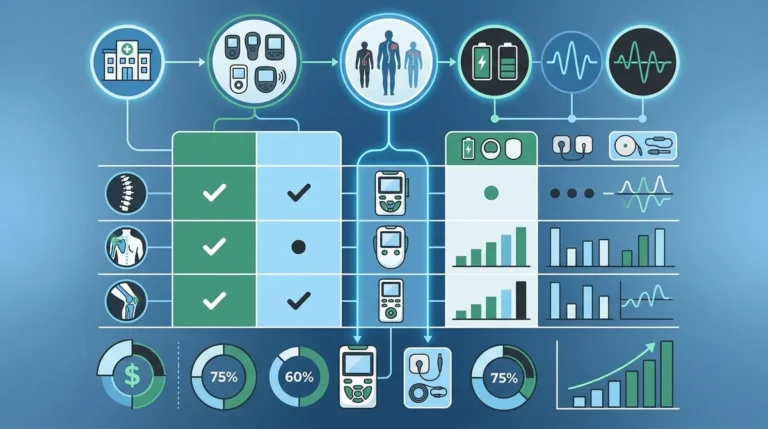
Professional TENS units deliver up to 100mA output with adjustable pulse rates (2-150 Hz) and multiple stimulation modes, significantly outperforming consumer models limited to 80mA and fixed settings for clinical effectiveness.
-
Mount Vernon chiropractors can generate additional revenue by prescribing take-home TENS kits that integrate with commercial PPO/POS, workers' compensation, and auto accident insurance billing pathways when medical necessity is properly documented.
-
TENS therapy is particularly effective for common chiropractic conditions including lower back pain, neck pain, sciatica, and post-auto-accident injuries, making it essential for practices treating workers' compensation and insurance claims.
-
Dual-channel TENS units enable simultaneous treatment of multiple muscle groups and multi-site pain presentations, improving clinical throughput and patient outcomes, especially for auto accident injury cases.
-
Combining TENS therapy with complementary equipment like cervical traction, back braces, and conductive garments creates synergistic treatment protocols that accelerate recovery and improve functional outcomes.
-
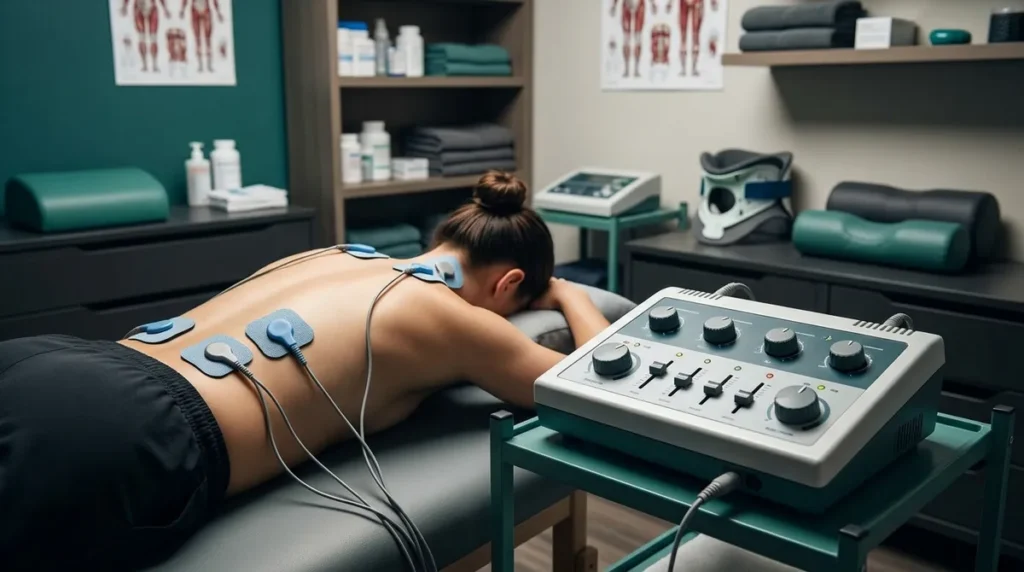
Proper electrode placement protocols vary by condition—lower back uses L4-S1 region at 2-80 Hz, cervical pain uses upper trapezius at 2-10 Hz, and sciatica uses burst mode along the sciatic nerve pathway for optimal clinical results.
Chiropractic care in Mount Vernon, WA, has evolved significantly over the past decade, and electrotherapy has become a cornerstone of modern pain management protocols. Among the most effective and widely adopted modalities, TENS units for chiropractors in Mount Vernon deliver measurable, drug-free pain relief that complements spinal adjustments, soft tissue therapies, and rehabilitation programs. As healthcare providers face increasing pressure to offer non-opioid alternatives, the FDA has actively encouraged the adoption of non-pharmacological solutions like transcutaneous electrical nerve stimulation (TENS). Whether you operate a chiropractic office, a physical therapy clinic, or an auto accident injury center, selecting the right TENS device is critical to patient outcomes, billing efficiency, and practice growth. This guide presents eight of the most clinically relevant TENS units available in 2026, along with the technical specifications, use cases, and sourcing strategies that Mount Vernon practitioners need to make informed procurement decisions.

Why Mount Vernon Chiropractors Are Prioritizing TENS Therapy
Chronic pain affects a substantial portion of the American population. According to the National Institutes of Health, high rates of persistent chronic pain are prevalent among U.S. adults, underscoring the urgent need for effective, accessible treatment options. TENS therapy directly addresses this need by delivering controlled electrical impulses through the skin to interrupt pain signals traveling to the brain — without medication.
Mount Vernon chiropractic practices, including those specializing in spinal decompression and soft tissue mobilization, increasingly integrate TENS into their treatment plans. The modality is particularly effective for lower back pain, neck pain, sciatica, muscle strains, and post-auto-accident injuries — conditions that form the core caseload for most regional practices. For clinics working with workers’ compensation or auto accident insurance claims, TENS therapy also adds billable treatment value that can improve reimbursement outcomes.
What Separates Professional TENS Units from Consumer Models
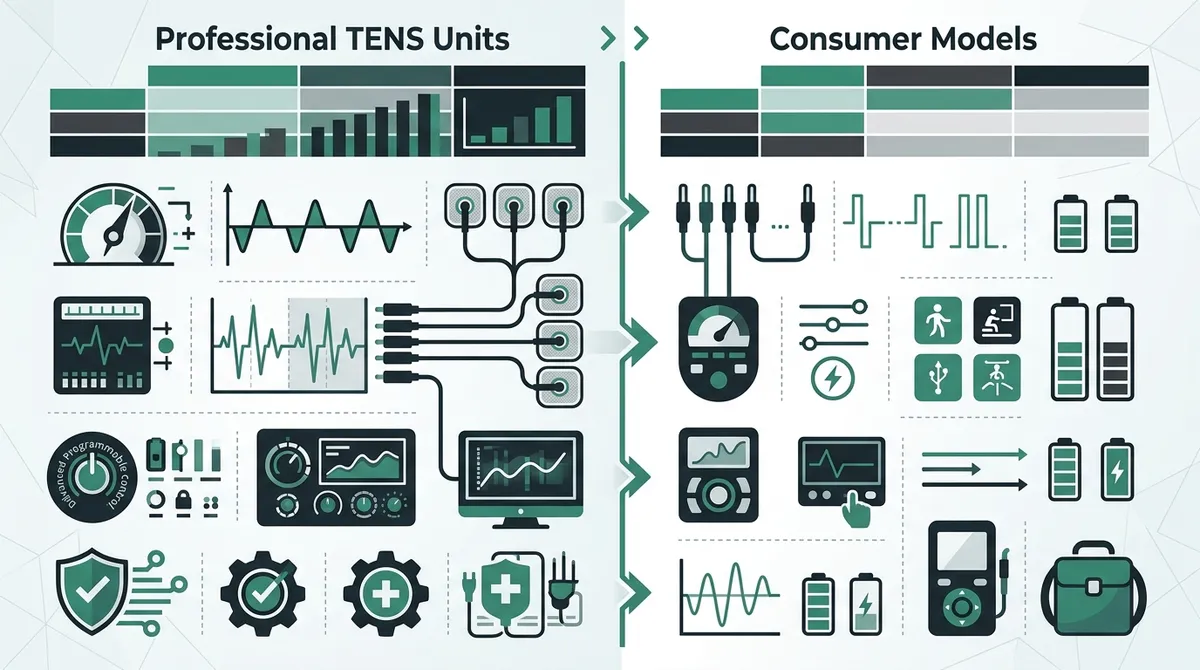
Not all TENS devices are created equal. Consumer-grade units sold at retail pharmacies typically deliver a maximum of 80mA of current, offer limited programmability, and lack the durability required for daily clinical use. Professional-grade TENS units, by contrast, deliver up to 100mA, feature adjustable pulse rates from 2 Hz to 150 Hz, pulse widths ranging from 40 μs to 300 μs, and offer multiple stimulation modes including burst, constant, and modulation.
Chiropractic professionals also require devices that are FDA-cleared, easy to operate with gloves or during manual procedures, and compatible with a variety of electrode configurations. Dual-channel operation allows practitioners to treat multiple muscle groups simultaneously, increasing clinical throughput. For practices interested in supplying patients with take-home units, it is worth exploring the full range of TENS devices available through specialized electrotherapy suppliers.
| Feature | Consumer TENS | Professional TENS |
|---|---|---|
| Maximum Output | Up to 80mA | Up to 100mA |
| Pulse Rate Range | Fixed or limited | 2–150 Hz adjustable |
| Pulse Width Range | Limited | 40–300 μs adjustable |
| Stimulation Modes | 1–2 modes | Burst, constant, modulation |
| Channels | Single | Dual isolated channels |
| FDA Clearance | OTC | Prescription & OTC available |
| Durability | Light use | Clinical daily use |

8 TENS Units Mount Vernon Chiropractors Should Consider
1. 2-Channel Digital InTENSity™ 7
The InTENSity™ 7 is a clinically reliable dual-channel unit featuring a precise digital processor and physical amplitude knobs for immediate control during patient sessions. It is FDA-cleared for over-the-counter use, making it an excellent option for both in-office treatments and patient take-home programs. Its durability and ease of use make it a preferred choice among chiropractic practices managing high patient volumes.
2. InTENSity™ Select Combo Unit
This versatile device integrates TENS, EMS (electrical muscle stimulation), interferential (IF), and microcurrent (MC) therapies in a single unit. For Mount Vernon practitioners who want to broaden their electrotherapy capabilities without purchasing multiple devices, the InTENSity™ Select is a cost-efficient solution. It allows clinicians to transition seamlessly between modalities based on patient diagnosis and treatment phase. Practices looking to expand their modality offerings can also explore the full product catalog for complementary equipment.
3. TENS 3000 Professional Unit
Designed specifically for licensed professionals, the TENS 3000 offers adjustable pulse rates from 2 to 150 Hz and pulse widths from 40 to 300 μs, along with a timer function up to 90 minutes. It is widely stocked by chiropractic supply distributors and is valued for its straightforward controls and consistent output. This unit is particularly effective for treating lower back pain and post-adjustment muscle soreness.
4. MAXTENS 2000 Clinical TENS Device
The MAXTENS 2000 is engineered for clinical settings requiring precise output control. Its dual isolated channel design ensures independent stimulation of separate muscle regions, which is beneficial for patients presenting with multi-site pain — a common presentation in auto accident injury cases. The device’s robust build quality supports extended clinical service life, reducing long-term equipment replacement costs.
5. TENS 7000 Digital Unit
With over two million units sold worldwide since 2008, the TENS 7000 has earned a reputation for reliability among chiropractors and physical therapists. It features five preprogrammed modes, dual-channel output, and a backlit display for easy visibility in clinical environments. According to the Cleveland Clinic, TENS therapy is a well-established non-invasive pain management technique, and the TENS 7000 remains one of the most trusted delivery platforms for this modality.
6. Portable Wireless TENS Unit
For practices that want to offer patients greater freedom of movement during treatment or take-home therapy, wireless TENS units eliminate lead wire complications and improve patient compliance. These units are particularly appealing for active patients recovering from workplace injuries or automobile accidents. When combined with conductive garments, wireless units can deliver targeted stimulation across larger surface areas with improved electrode contact.
7. Interferential Current (IFC) and TENS Combo Unit
For chiropractors treating deep tissue pain, an IFC/TENS combination device provides penetrating stimulation beyond the capacity of standard TENS alone. Interferential current operates at medium-frequency carrier waves, allowing deeper tissue penetration with reduced skin resistance. This makes it especially effective for hip pain, sciatic nerve irritation, and deep paraspinal muscle conditions commonly seen in Mount Vernon chiropractic practices.
8. Patient Take-Home TENS Kits
Beyond in-office treatment, many Mount Vernon chiropractors are increasing revenue and patient satisfaction by prescribing take-home TENS kits. These kits typically include a professional-grade unit, lead wires, electrodes, and a carrying case. Liberty Medical Solutions specializes in providing customized take-home electrotherapy solutions that integrate with commercial PPO/POS insurance plans, workers’ compensation claims, and auto accident billing — streamlining the prescription and fulfillment process for busy practices.
| TENS Unit | Best For | Key Feature | Channels |
|---|---|---|---|
| InTENSity™ 7 | High-volume practices | Digital precision, OTC FDA-cleared | 2 |
| InTENSity™ Select | Multi-modality treatment | TENS + EMS + IF + MC | 2 |
| TENS 3000 | Licensed professionals | 90-min timer, full adjustability | 2 |
| MAXTENS 2000 | Multi-site pain | Dual isolated channels | 2 |
| TENS 7000 | General clinical use | 5 modes, 2M+ units sold | 2 |
| Wireless TENS | Take-home & mobility | Lead-wire free design | Varies |
| IFC/TENS Combo | Deep tissue pain | Interferential penetration | 4 |
| Patient Take-Home Kits | Insurance billing & compliance | Full kit with accessories | 2 |
Pairing TENS Units with Complementary Electrotherapy Equipment
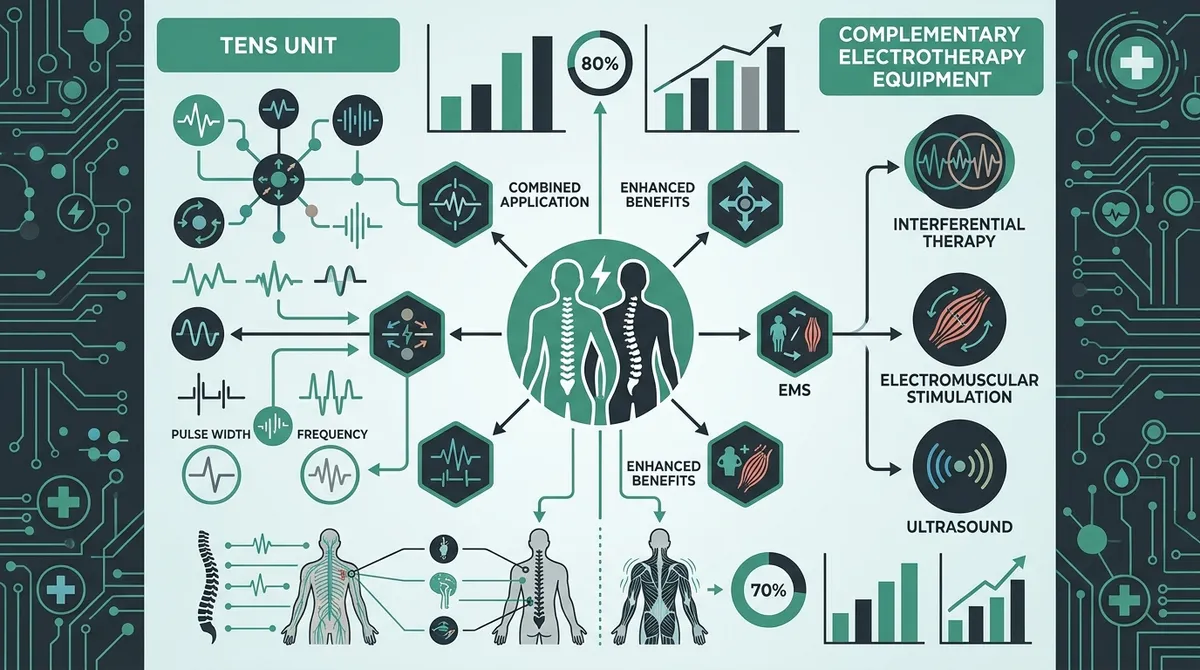
TENS therapy achieves its greatest clinical impact when integrated within a comprehensive treatment protocol. Mount Vernon chiropractors frequently combine TENS with cervical traction for neck pain patients, back braces for lumbar support and postural correction, and conductive garments for full-surface electrode contact. Each of these elements works synergistically to accelerate recovery and improve functional outcomes.
For practices treating post-auto-accident patients, the combination of TENS therapy with back braces provides both active pain management and structural support during the recovery process. Practitioners managing whiplash cases may also benefit from integrating cervical traction alongside TENS stimulation to address both muscular and neurological components of the injury.
Electrode Placement Protocols for Common Chiropractic Conditions
Effective TENS therapy depends as much on electrode placement as it does on device selection. The following placement strategies are commonly employed by chiropractic practitioners:
- Lower Back Pain: Place electrodes on either side of the lumbar spine (L4–S1 region), avoiding direct placement over the vertebrae. Use 2–80 Hz pulse rate for conventional pain relief.
- Cervical Pain and Whiplash: Position electrodes bilaterally along the upper trapezius or cervical paraspinals. Use low frequency (2–10 Hz) for endorphin-mediated relief.
- Sciatica: Apply electrodes along the sciatic nerve pathway from the gluteal region to the posterior thigh. Use burst mode to modulate nerve conduction.
- Shoulder and Rotator Cuff: Position electrodes around the deltoid and supraspinatus regions using a high-frequency setting (80–150 Hz) for acute pain management.
Insurance and Billing Considerations for Mount Vernon Practices
One of the practical advantages of incorporating TENS units into a chiropractic practice is the billing opportunity associated with both in-office treatment and take-home prescription fulfillment. Many commercial PPO/POS plans, workers’ compensation carriers, and auto accident insurance policies provide reimbursement for electrotherapy services and durable medical equipment (DME).
Chiropractors in Mount Vernon who prescribe patient take-home TENS units can leverage these billing pathways to generate additional revenue per patient visit. It is essential, however, to document medical necessity accurately and align prescriptions with verified plan benefits. Working with a specialized electrotherapy supplier that understands the nuances of DME billing — including third-party liability cases — can significantly reduce administrative burden and accelerate reimbursement timelines.
| Insurance Type | TENS Coverage Typical? | Documentation Required |
|---|---|---|
| Commercial PPO/POS | Yes (with out-of-network benefits) | Prescription, diagnosis code, medical necessity |
| Workers’ Compensation | Yes | Work injury documentation, treatment plan |
| Auto Accident / PIP | Yes | Accident report, physician order, treatment notes |
| Medicare | Limited (check current policy) | Specific diagnosis requirements apply |
Key Selection Criteria for Chiropractic TENS Procurement
When evaluating TENS units for a chiropractic practice, clinical directors and practice managers should apply a structured selection process. The following criteria provide a reliable framework:
- FDA Clearance: Verify that the device carries appropriate FDA clearance for professional or OTC use depending on your prescribing intent.
- Output Range: Prioritize units offering up to 100mA with adjustable pulse rates and widths to accommodate diverse patient presentations.
- Modality Flexibility: Consider combo units that offer TENS alongside EMS, interferential, or microcurrent therapy for broader clinical application.
- Durability and Warranty: Clinical-grade devices should withstand daily use; confirm manufacturer warranties before purchasing.
- Supplier Support: Choose suppliers that offer clinician training, patient education materials, and insurance billing assistance.
- Electrode Compatibility: Ensure the unit is compatible with a range of electrode types, including TheraKnit garments for patients requiring full-surface stimulation.
Practitioners seeking additional guidance on device selection for their specific practice environment can also reference resources such as how to choose TENS units for chiropractic practices or explore regional guides like TENS units for chiropractors: a clinical guide for deeper procedural insight.
Conclusion
Selecting the right TENS unit is one of the most impactful clinical and business decisions a Mount Vernon chiropractor can make in 2026. The eight units outlined in this guide represent a cross-section of the professional-grade options available — from versatile combo devices to specialized patient take-home kits — each offering specific advantages depending on practice type, patient population, and billing strategy. As pain management continues to shift toward non-opioid, evidence-based modalities, TENS therapy stands as a reliable, cost-effective, and clinically validated solution.
To ensure your practice is equipped with the right devices and supported by a team that understands electrotherapy billing and patient fulfillment, reach out to the specialists who can help. Connect with our electrotherapy team at Liberty Medical Solutions to discuss customized TENS solutions tailored to your Mount Vernon chiropractic practice.
FAQs
Q: What are the best TENS units for chiropractors in Mount Vernon, WA?
A: The most clinically effective options include the InTENSity™ 7, TENS 3000, MAXTENS 2000, and the TENS 7000 — all of which offer dual-channel output, adjustable pulse parameters, and FDA clearance. The ideal choice depends on your practice’s treatment protocols, patient volume, and whether you intend to prescribe take-home units alongside in-office therapy.
Q: How do TENS units support chiropractic pain relief?
A: TENS units deliver low-level electrical impulses through surface electrodes that interrupt pain signal transmission along peripheral nerves and stimulate endorphin release. When used alongside spinal adjustments and soft tissue therapies, TENS therapy enhances pain relief, reduces muscle guarding, and accelerates patient recovery timelines.
Q: What features distinguish professional TENS units from home-use devices?
A: Professional TENS units offer up to 100mA output (versus 80mA in consumer models), fully adjustable pulse rates (2–150 Hz), pulse widths (40–300 μs), multiple stimulation modes, and dual isolated channels. They are built for the rigors of daily clinical use and are often compatible with a broader range of electrode and garment configurations.
Q: Are TENS units covered by insurance for chiropractic patients in Mount Vernon?
A: Many commercial PPO/POS plans, workers’ compensation carriers, and auto accident insurance policies provide reimbursement for TENS therapy and durable medical equipment. Proper documentation — including a physician prescription, diagnosis codes, and evidence of medical necessity — is required to support reimbursement claims.
Q: Can chiropractors prescribe take-home TENS units to patients?
A: Yes, licensed chiropractors can prescribe take-home TENS units as part of a patient’s ongoing pain management plan. This practice improves treatment continuity between office visits, enhances patient compliance, and can generate additional billable revenue through durable medical equipment reimbursement channels, particularly for workers’ compensation and auto accident cases.