Key Takeaways
-
Choose medical supply companies that manufacture their own devices rather than resale distributors—in-house design ensures tighter quality control, faster troubleshooting, and equipment tailored to clinical requirements instead of generic consumer specs.
-
Partner with suppliers who understand insurance complexities across commercial PPO/POS plans, workers' compensation, and auto accident claims to reduce denied claims and expedite patient access to electrotherapy equipment.
-
Verify that prospective suppliers hold FDA clearance and ISO 13485 certification, maintain broad clinically relevant product catalogs, and demonstrate global distribution reach signaling supply chain reliability and long-term business stability.
-
Prioritize suppliers offering both clinical-grade devices and patient-friendly home-use options with educational materials and responsive customer support, as modern electrotherapy increasingly extends treatment benefits between clinic visits.
Choosing the right medical supply company can determine whether a physical therapy clinic, chiropractic practice, or auto accident injury center delivers consistent, measurable patient outcomes. In the electrotherapy industry, a medical supply company does far more than ship boxes of equipment. It designs devices, manages insurance complexities, provides clinical guidance, and ensures that TENS units, EMS devices, and cervical traction equipment perform reliably day after day. With chronic pain affecting a significant portion of the population according to the National Institutes of Health, providers need dependable partners who understand both the technology and the paperwork behind it.
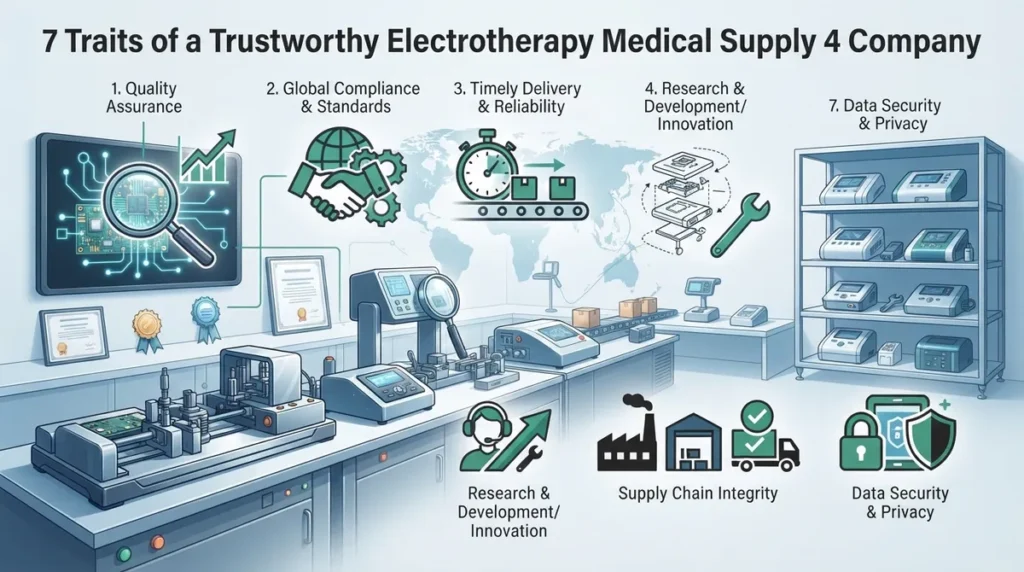
This article breaks down seven defining traits that separate a genuinely reliable electrotherapy medical supply company from a generic distributor. Whether you run a busy physical therapy clinic, a chiropractic office building out at-home care programs, or an auto accident injury clinic navigating insurance claims, these criteria will help you evaluate suppliers with confidence and clarity.
1. Manufacturing and Product Design Expertise, Not Just Resale
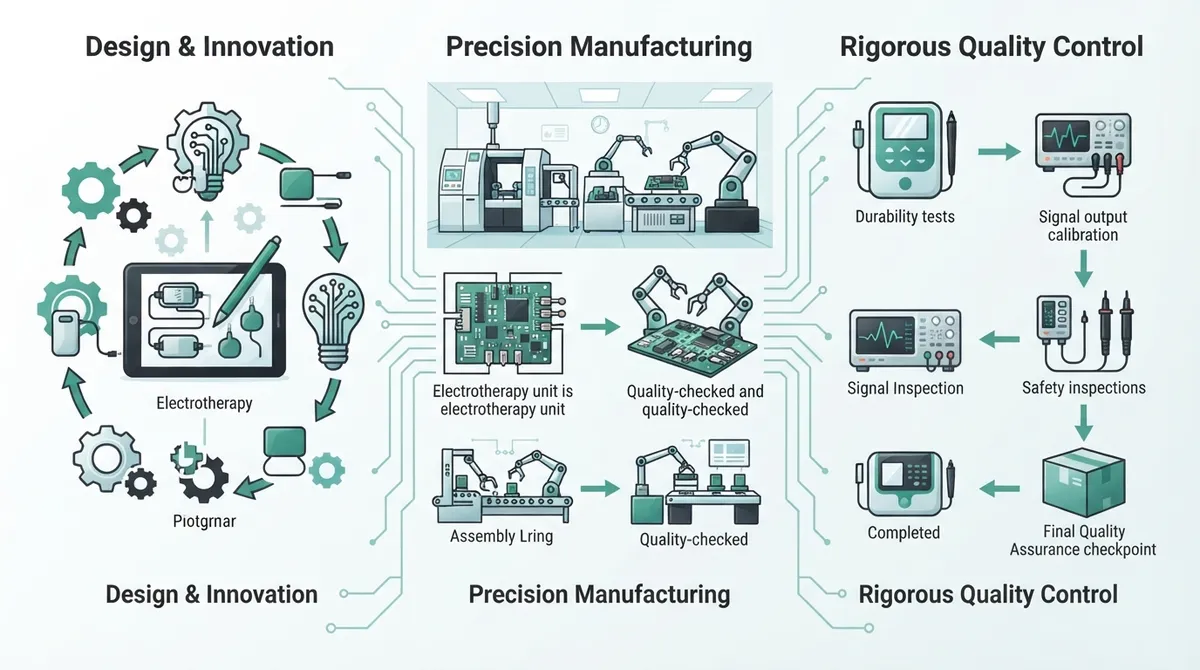
The most respected companies in electrotherapy do not simply purchase inventory and relabel it. They design, engineer, and manufacture devices specifically for clinical and rehabilitation use. This distinction matters because in-house design allows for tighter quality control, faster troubleshooting, and equipment tailored to therapeutic requirements rather than generic consumer specifications.
Companies with decades of manufacturing history often bring proven engineering standards to their catalogs. For example, some suppliers have been producing rehabilitation equipment since 1924, while others have specialized in electrotherapy technologies for more than 25 years. This kind of longevity reflects a company’s ability to adapt to changing clinical standards and regulatory requirements over time.
Why This Matters for Clinics
- Devices built for clinical use typically offer more precise waveform control than consumer-grade alternatives.
- Manufacturers can often customize conductive garments and electrode configurations for specific patient populations.
- In-house design reduces the risk of counterfeit or substandard components entering the supply chain.
2. A Broad, Clinically Relevant Product Catalog
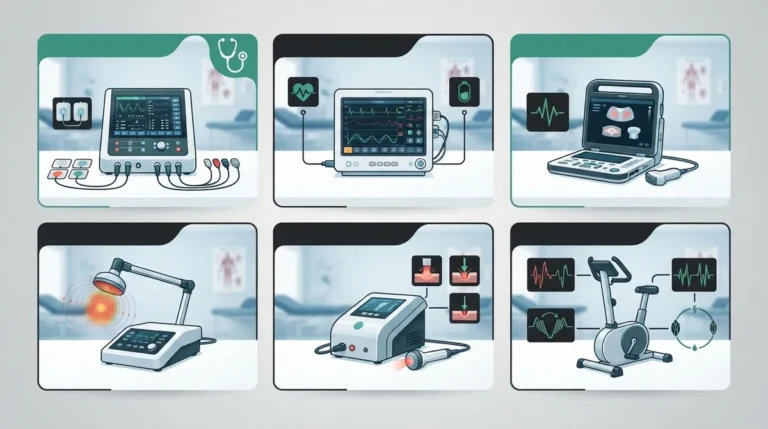
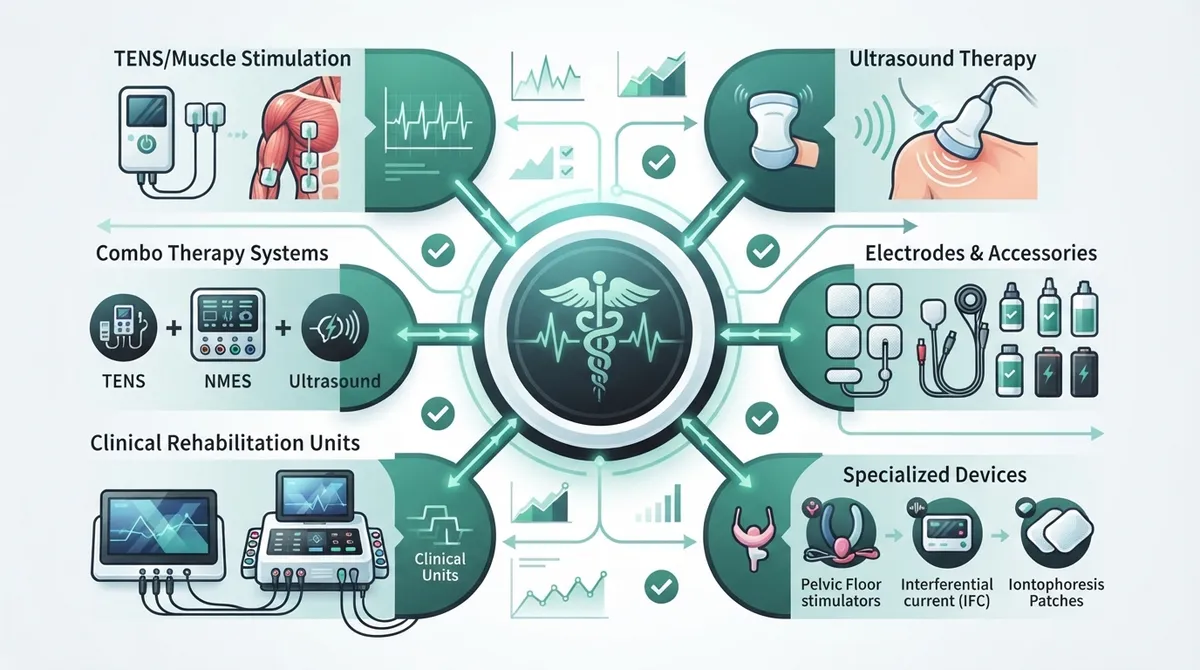
A capable electrotherapy medical supply company offers more than a single device category. The strongest suppliers maintain a full range of modalities that align with how clinics actually treat patients, from acute pain to post-surgical rehabilitation.
| Product Category | Primary Clinical Use | Typical Setting |
|---|---|---|
| TENS Units | Pain modulation via nerve stimulation | Clinic and home use |
| EMS Devices | Muscle stimulation and re-education | Clinic and post-surgical rehab |
| Cervical Traction Units | Neck decompression and whiplash recovery | Clinic and home use |
| Therapeutic Ultrasound | Deep tissue heating and healing | Clinic setting |
| Conductive Garments | Broad-area stimulation delivery | Home and clinic use |
This range allows providers to source nearly all their electrotherapy needs from a single, vetted partner rather than juggling multiple vendors. Reviewing a full product lineup before committing to a supplier is a practical first step for any clinic evaluating new equipment options.
3. Insurance and Billing Fluency
Electrotherapy equipment rarely gets purchased in a vacuum. Reimbursement pathways, whether commercial PPO/POS plans, workers’ compensation, or auto accident claims, shape what devices patients can access and how quickly. A medical supply company that understands these systems saves clinics significant administrative burden.
Common Insurance Pathways in Electrotherapy
- Commercial PPO/POS Plans: Often include out-of-network benefits that can be leveraged for durable medical equipment.
- Workers’ Compensation: Requires detailed documentation linking the injury to the prescribed device.
- Auto Accident and Third-Party Liability Claims: Frequently involve delayed reimbursement timelines and specific documentation standards.
Suppliers experienced in these three pathways can guide clinics through paperwork requirements, reducing denied claims and delayed patient access to equipment. This is particularly valuable for auto accident injury clinics treating whiplash and soft tissue damage, where timely equipment delivery directly affects recovery outcomes.
4. Regulatory Compliance and Quality Certifications
Trustworthy electrotherapy suppliers hold themselves to recognized quality standards. Certifications such as ISO 13485 confirm that a manufacturer follows internationally recognized quality management practices specific to medical devices. The FDA has also emphasized expanding non-opioid pain management options, positioning electrotherapy devices as an important part of modern clinical protocols.
Clinics should verify that any prospective supplier can provide:
- Documentation of FDA clearance for devices sold in the United States
- ISO 13485 certification or equivalent quality management credentials
- Clear labeling and instructions for both clinical and home-use products
- Warranty terms and defect-handling procedures
For a deeper look at what certification standards mean for device selection, providers can review this guide on ISO 13485 certified electrotherapy devices and what clinics need to know before purchasing.
5. Global Reach and Supply Chain Reliability
Supply chain consistency is a practical concern for any clinic that depends on steady access to electrodes, lead wires, and replacement parts. Established electrotherapy suppliers often demonstrate their reliability through international distribution. Some manufacturers report exporting to more than 80 countries, while others serve over 45 countries worldwide, reflecting the scale of infrastructure required to keep clinics stocked without interruption.
What Global Distribution Signals
- Established relationships with component manufacturers that reduce shortages
- Proven logistics systems capable of handling large-volume clinic orders
- Long-term business stability, since export-scale operations require sustained regulatory compliance across multiple countries
While a smaller, regionally focused supplier can still deliver excellent service, clinics should ask about backorder history and average fulfillment times before committing to a long-term equipment partnership.
6. Support for Both Clinical and Home-Use Applications
Modern electrotherapy treatment rarely stops at the clinic door. Physical therapists and chiropractors increasingly prescribe home-use devices to extend treatment benefits between visits. According to the Cleveland Clinic, TENS therapy can help interrupt pain signals and support ongoing home management when used correctly alongside in-clinic care.
A well-rounded medical supply company supports this continuum of care by offering:
- Clinical-grade devices for in-office treatment sessions
- Simplified, patient-friendly home units with clear instructions
- Back braces and orthopedic supports that complement electrotherapy protocols
- TheraKnit garments designed for comfortable, extended wear
- Patient education materials that reinforce proper device use at home
This dual focus benefits chiropractic practices in particular, since patients often need at-home pain relief tools between adjustment sessions to maintain progress and manage discomfort.
7. Responsive Customer Service and Clinical Guidance
Even the best-engineered device is only as useful as the support behind it. A dependable electrotherapy medical supply company provides ongoing guidance on device settings, electrode placement, and troubleshooting, rather than treating the sale as a one-time transaction. Research published through the National Library of Medicine’s PubMed database continues to explore optimal stimulation parameters, underscoring why ongoing clinical support matters as protocols evolve.
Signs of Strong Supplier Support
- Dedicated account representatives familiar with clinical workflows
- Clear warranty registration and repair processes
- Educational resources covering device settings and best practices
- Responsive channels for reordering electrodes and accessories
Clinics evaluating potential partners should not hesitate to ask detailed questions about support availability before finalizing an order. Liberty Medical Solutions, based in Tampa, Florida, has built its reputation on this kind of responsive, provider-focused service, working directly with physical therapy clinics, chiropractic practices, and auto accident injury centers to match equipment with patient needs and insurance requirements.
Comparing Supplier Priorities by Practice Type
Different provider types weigh these seven traits differently depending on daily operational needs. The table below summarizes typical priorities.
| Practice Type | Top Priority | Secondary Priority |
|---|---|---|
| Physical Therapy Clinics | Broad product catalog and clinical support | Regulatory compliance |
| Chiropractic Practices | Home-use device availability | Back brace and garment options |
| Auto Accident Injury Clinics | Insurance and billing fluency | Fast fulfillment and reliability |
Understanding these priorities can help a practice negotiate more effectively with prospective suppliers and ask targeted questions during the vetting process.
Making an Informed Decision
Selecting a medical supply company is a long-term commitment that affects patient outcomes, staff workflow, and reimbursement success. Clinics benefit most from suppliers who combine manufacturing expertise, insurance knowledge, and genuine clinical support rather than those who compete solely on price. As the CDC continues to encourage non-opioid pain management strategies, electrotherapy’s role in standard clinical practice will likely continue expanding, making supplier reliability even more important.
Practices ready to strengthen their electrotherapy offerings can explore the full range of TENS devices and related equipment available through Liberty Medical Solutions, a Tampa-based provider serving clinics nationwide. To discuss insurance compatibility, product customization, or bulk ordering for your practice, reach out to the Liberty Medical Solutions team today and take the next step toward a more reliable electrotherapy supply partnership.
FAQs
Q: What does a medical supply company do in the electrotherapy industry?
A: In electrotherapy, a medical supply company typically designs, manufactures, or distributes devices such as TENS units, EMS equipment, and cervical traction systems for clinics and home use. Many also assist providers with insurance documentation, product training, and ongoing technical support rather than simply shipping equipment.
Q: Which electrotherapy products are most commonly sold by medical supply companies?
A: Common offerings include TENS units, EMS devices, therapeutic ultrasound systems, cervical traction equipment, conductive garments, and replacement electrodes. Many suppliers also provide back braces and other orthopedic supports that complement electrotherapy treatment plans.
Q: How do electrotherapy suppliers differ from general medical supply distributors?
A: Electrotherapy suppliers typically specialize in rehabilitation-focused technology and often manufacture or customize their own devices rather than reselling generic inventory. This specialization allows them to offer deeper clinical guidance on device settings, electrode placement, and treatment protocols.
Q: What certifications should electrotherapy medical supply companies meet?
A: Reputable companies should hold FDA clearance for devices sold in the United States and maintain quality management certifications such as ISO 13485. These standards confirm that manufacturing processes meet recognized safety and consistency benchmarks for medical devices.
Q: What is the difference between TENS, EMS, and ultrasound therapy devices?
A: TENS units use electrical currents primarily to interrupt pain signals, while EMS devices stimulate muscle contractions to support strengthening and re-education. Therapeutic ultrasound instead uses sound waves to generate deep tissue heating, promoting circulation and tissue healing rather than nerve or muscle stimulation.