Key Takeaways
-
EMS stimulates motor nerves to create involuntary muscle contractions that strengthen and re-educate weakened muscles, making it more effective than TENS for post-surgical rehabilitation and atrophy prevention.
-
Dual-channel EMS systems allow clinics to treat multiple injury sites simultaneously, reducing treatment time while maintaining therapeutic intensity—particularly valuable for auto accident clinics managing complex injuries.
-
Only the Slendertone Flex has FDA clearance for consumer abdominal toning; most home EMS devices lack this approval and should be used alongside active exercise under professional guidance.
-
Wireless, app-guided EMS systems with smartphone programming improve patient compliance by allowing structured home protocols and simplifying provider tracking of treatment adherence.
-
Insurance reimbursement for muscle stimulation varies significantly across commercial PPO/POS, workers' compensation, and auto accident claims; device selection must align with your practice's specific billing codes and coverage requirements.
-
Combination EMS/TENS devices reduce equipment costs while enabling clinics to address both muscle strengthening and pain relief needs without purchasing separate units for different treatment modalities.
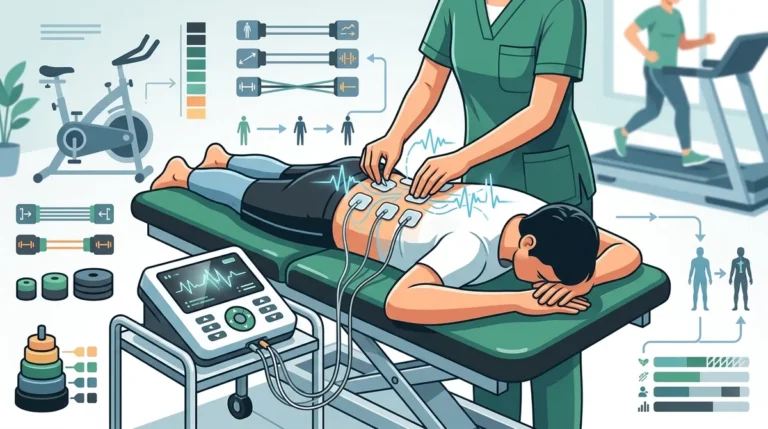
Muscle stimulation devices have become indispensable tools for physical therapy clinics, chiropractic practices, and auto accident injury centers seeking to accelerate patient recovery. Unlike TENS units, which target nerves for pain relief, electrical muscle stimulation (EMS) and neuromuscular electrical stimulation (NMES) devices stimulate motor nerves directly, causing involuntary muscle contractions that mimic voluntary exercise. This distinction matters clinically: EMS is engineered to strengthen, repair, and re-educate muscles that have become weakened or atrophied due to injury, surgery, or prolonged immobility.
As patient demand for non-opioid pain management and rehabilitation solutions grows, providers are increasingly integrating muscle stimulation technology into their treatment protocols. According to the National Institutes of Health, chronic pain affects a substantial portion of American adults, underscoring the need for effective, evidence-based alternatives to medication. This article examines nine categories of muscle stimulation devices that clinics rely on in 2026, along with practical guidance for selecting equipment that fits your practice’s clinical goals and insurance workflows.
Understanding Muscle Stimulation Devices in Clinical Practice
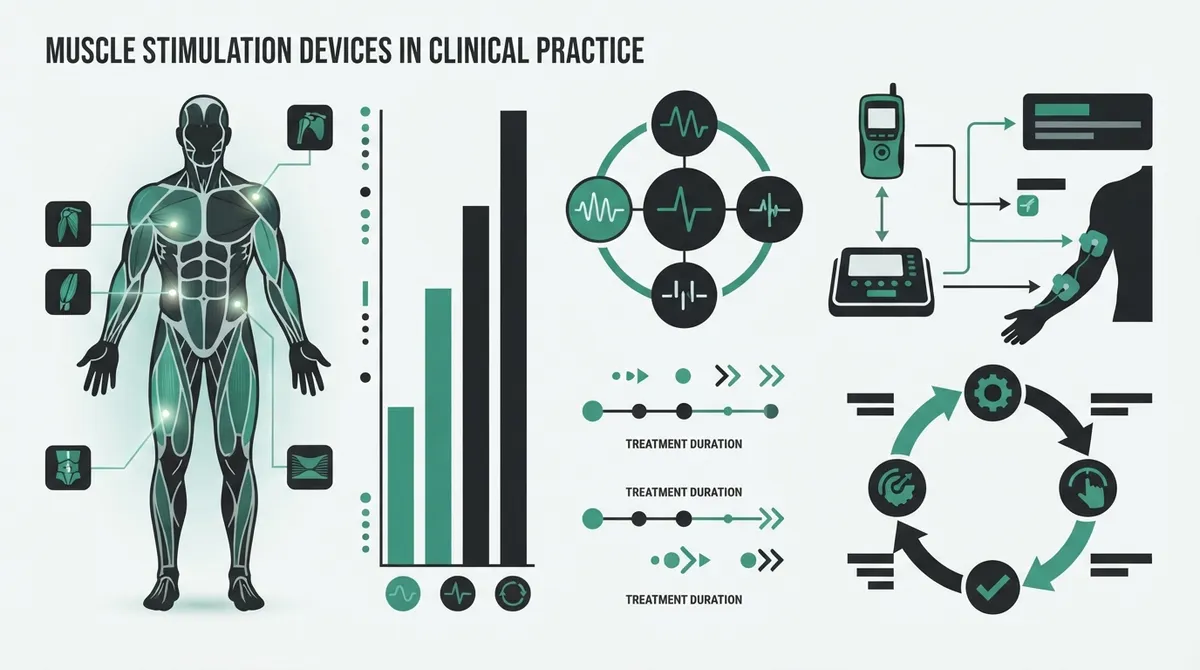
Muscle stimulation devices work by delivering electrical impulses through electrodes placed on the skin, prompting motor nerves to trigger muscle contractions. This process is fundamentally different from TENS therapy, which focuses on gate-control pain relief mechanisms rather than muscle activation. For clinics treating post-surgical patients, auto accident victims, or individuals with muscle atrophy, EMS provides a controlled way to simulate voluntary contraction cycles when patients cannot yet perform full-strength exercises on their own [2][6].
The clinical applications extend beyond simple strengthening. EMS is used to prevent disuse atrophy, manage muscle spasms, increase range of motion, and support neuromuscular re-education following injury. Providers should note that high-voltage stimulation is typically reserved for wound healing applications, while low-to-medium voltage settings—similar to those used in TENS and interferential current (IFC) therapy—are more appropriate for general pain relief and muscle re-education [3].
1. Portable NMES Units for Post-Surgical Rehabilitation
Portable neuromuscular electrical stimulation units are among the most requested devices for physical therapy clinics managing post-operative patients. These units help prevent muscle atrophy in patients recovering from knee, hip, or spinal surgery who have limited mobility. Clinics can review the muscle recovery devices electrotherapy guide for detailed specifications on models suited to post-surgical care.
2. Dual-Channel EMS Systems for Multi-Site Treatment
Dual-channel systems allow clinicians to treat two muscle groups simultaneously, which is particularly useful for auto accident injury clinics managing whiplash-related shoulder and neck weakness alongside lower back injuries. This efficiency reduces treatment time while maintaining therapeutic intensity across multiple injury sites.
3. Combination EMS/TENS Devices
Many clinics prefer combination units that offer both EMS and TENS modalities in a single device. This versatility allows chiropractors and physical therapists to switch between pain relief and muscle strengthening protocols without purchasing separate equipment. For a deeper comparison of these modalities, review our guide on what TENS units actually do for clinical pain management.
4. Wireless and App-Guided EMS Systems
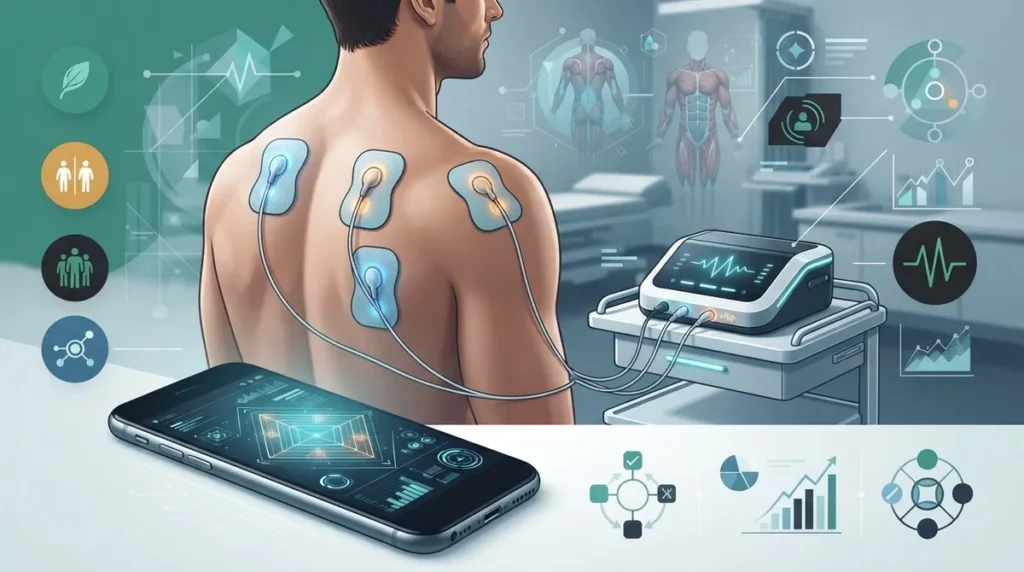
Modern market trends show a clear shift toward wireless models with smartphone-guided programming, allowing patients to follow structured protocols for endurance, strength, and recovery even during home-use sessions [5][7]. These devices appeal to tech-savvy patients and simplify compliance tracking for providers.
5. Interferential Current (IFC) Stimulation Devices
IFC units combine two medium-frequency currents to penetrate deeper tissue with reduced skin discomfort. Clinics treating chronic lower back pain or deep muscular spasm often incorporate IFC alongside standard EMS protocols. Learn more in our interferential current therapy guide for clinics.
6. Clinical-Grade Home Use EMS Units
For patients requiring ongoing rehabilitation between office visits, FDA-cleared home-use EMS units extend treatment continuity. It is important to note that most consumer EMS devices are not cleared for weight loss or girth reduction; the FDA has cleared only the Slendertone Flex by BMR NeuroTech, Inc. specifically for abdominal toning and firming in consumers [4]. Clinics should educate patients accordingly when recommending home units.
7. Cervical and Spinal EMS Attachments
Specialized attachments designed for cervical and spinal applications support chiropractic practices treating whiplash and post-accident spinal injuries. These often pair well with back braces to provide comprehensive support during the healing process.
8. Conductive Garment-Integrated Stimulation Systems
Conductive garments represent an innovative approach to muscle stimulation, embedding electrodes directly into wearable fabric for consistent, hands-free treatment. Liberty Medical Solutions offers conductive garments and TheraKnit garments designed to deliver targeted stimulation while allowing patients greater mobility during sessions.
9. Multi-Modality Clinical Systems for High-Volume Practices
High-volume clinics benefit from multi-modality systems that combine EMS, TENS, and IFC capabilities in a single professional-grade unit. These systems reduce equipment costs while allowing providers to customize treatment plans for diverse patient needs, from auto accident recovery to post-surgical rehabilitation.
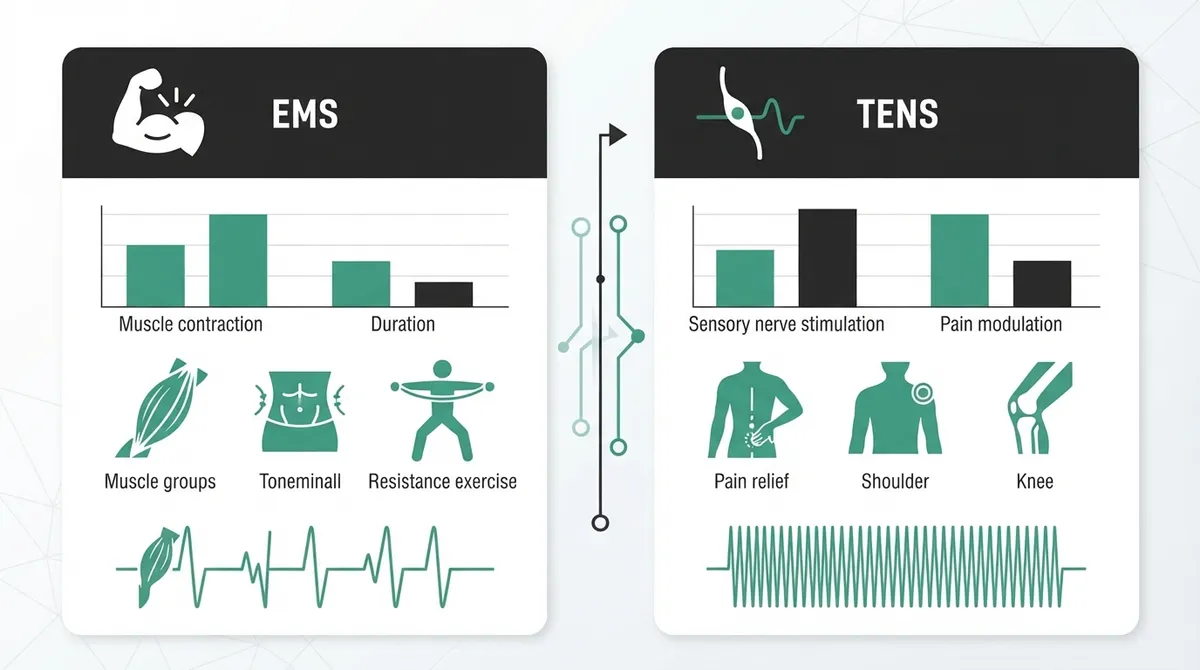
EMS Versus TENS: Key Clinical Distinctions
Understanding the difference between EMS and TENS is essential for accurate treatment planning and patient education. The table below outlines the primary distinctions clinicians should communicate to patients.
| Feature | EMS (Muscle Stimulation) | TENS (Pain Relief) |
|---|---|---|
| Primary Target | Motor nerves | Sensory nerves |
| Main Effect | Involuntary muscle contraction | Pain signal modulation |
| Common Use | Atrophy prevention, strengthening | Chronic and acute pain relief |
| Typical Setting | Higher intensity, rhythmic pulses | Lower intensity, continuous or burst |
| Clinical Oversight | Often prescription-guided | Available for home use |
The Cleveland Clinic notes that TENS therapy specifically targets nerve pathways for pain management, reinforcing why clinics should stock both modalities to address the full spectrum of patient needs.
Selecting the Right Muscle Stimulation Device for Your Practice
Choosing the appropriate device depends on your patient population, treatment goals, and insurance billing structure. Consider the following factors when evaluating equipment for your clinic.
- Patient population: Auto accident clinics may prioritize dual-channel units for treating multiple injury sites, while chiropractic practices might favor combination EMS/TENS devices for versatility.
- Treatment protocols: Confirm the device offers adjustable frequency, pulse width, and intensity settings to accommodate both acute and chronic conditions.
- Insurance compatibility: Verify that the device and associated billing codes align with commercial PPO/POS plans, workers’ compensation, and auto accident claims your practice processes.
- Portability needs: Clinics offering in-home patient support should prioritize lightweight, wireless-capable units.
- Regulatory compliance: Ensure devices carry appropriate FDA clearance for their intended clinical use.
Insurance and Reimbursement Considerations
Navigating insurance reimbursement for muscle stimulation devices can be complex, particularly when working with commercial PPO/POS plans, workers’ compensation, and auto accident claims. Liberty Medical Solutions works directly with providers to simplify this process, helping clinics understand coverage nuances specific to electrotherapy equipment. For additional guidance, review our resource on PPO insurance and electrotherapy coverage and how POS insurance impacts electrotherapy coverage.
| Insurance Type | Common Coverage Considerations |
|---|---|
| Commercial PPO/POS | Out-of-network benefits often available for electrotherapy equipment |
| Workers’ Compensation | Coverage typically tied to documented workplace injury and treatment plan |
| Auto Accident Claims | Reimbursement processed through third-party liability or personal injury protection |
Clinical Evidence and Patient Expectations
Patients often ask how quickly they can expect results from muscle stimulation therapy. Many notice improvements during the first week of consistent treatment, though larger injuries may require an extended treatment timeline depending on session frequency [3]. Setting realistic expectations helps improve patient adherence and satisfaction with the treatment plan.
Research published through the Pub Med database continues to support the efficacy of neuromuscular electrical stimulation for rehabilitation applications, reinforcing its role as an evidence-based intervention. Additionally, the FDA has emphasized expanding non-opioid treatment options, positioning electrotherapy modalities like EMS as valuable components of a comprehensive pain management strategy.
Common Clinical Applications by Practice Type
- Physical therapy clinics: Post-surgical rehabilitation, atrophy prevention, and strength restoration following extended immobilization.
- Chiropractic practices: Complementing spinal adjustments with muscle re-education and at-home recovery support using devices paired with back braces.
- Auto accident injury clinics: Treating whiplash-related muscle weakness, soft tissue damage, and spasm management while coordinating with insurance claim documentation.
Providers seeking additional protocols can explore our guide on using electrotherapy for auto accident treatment, which outlines specific stimulation approaches for common accident-related injuries.
Why Provider Guidance Matters
Because EMS devices are normally prescription-only and administered under professional supervision, patient education is critical. Sports medicine physicians, physical therapists, and orthopedists typically guide EMS use for recovery and rehabilitation, ensuring settings are appropriate for the specific injury and healing stage [2]. Home-use consumer units, while available, should never replace professional oversight for significant injuries or post-surgical recovery.
The National Library of Medicine has published extensive research confirming that supervised EMS protocols, when combined with active rehabilitation exercises, produce superior outcomes compared to passive stimulation alone. This reinforces the importance of clinics maintaining direct involvement in device selection and treatment planning rather than relying solely on unsupervised home use.
Building a Comprehensive Electrotherapy Program
Muscle stimulation devices work best as part of a broader electrotherapy program that includes complementary modalities. Clinics that integrate EMS alongside TENS devices, cervical traction, and conductive garments can address a wider range of patient conditions without referring patients elsewhere. This comprehensive approach improves patient retention and creates more predictable revenue streams tied to electrotherapy product offerings.
Liberty Medical Solutions has supported physical therapy clinics, chiropractic practices, and auto accident injury centers throughout the country with customized electrotherapy solutions tailored to each practice’s patient volume and insurance requirements. Our team understands the operational realities of running a clinic while navigating commercial PPO/POS plans, workers’ compensation claims, and auto accident liability cases.
Final Thoughts on Choosing Muscle Stimulation Equipment
Selecting the right muscle stimulation devices requires balancing clinical effectiveness, patient safety, regulatory compliance, and insurance practicality. As electrotherapy technology continues advancing in 2026, clinics that invest in versatile, well-supported equipment position themselves to deliver superior patient outcomes while streamlining administrative workflows. Whether your practice specializes in post-surgical rehabilitation, chiropractic care, or auto accident recovery, the right EMS technology can meaningfully improve treatment results.
Ready to explore customized muscle stimulation solutions for your practice? Contact our team today to discuss which electrotherapy devices best fit your clinic’s patient needs and insurance requirements.
FAQs
Q: What is the difference between EMS and TENS units in electrotherapy?
A: EMS targets motor nerves to produce involuntary muscle contractions for strengthening and rehabilitation, while TENS targets sensory nerves to interrupt pain signals. Clinics typically use EMS for muscle re-education and atrophy prevention, whereas TENS focuses primarily on pain management.
Q: Can muscle stimulation devices help prevent muscle atrophy after surgery?
A: Yes, EMS is clinically recognized for preventing disuse atrophy in patients with limited post-surgical mobility by simulating voluntary contraction cycles. This helps maintain muscle tone and strength while patients progress through their recovery timeline.
Q: Are home-use EMS devices safe for strengthening abdominal muscles without exercise?
A: Only one device, the Slendertone Flex by BMR NeuroTech, Inc., has received FDA clearance specifically for toning and firming abdominal muscles in consumers. Most other EMS devices are not cleared for this purpose and should be used alongside active exercise for best results.
Q: How does neuromuscular electrical stimulation (NMES) differ from standard EMS?
A: NMES is a clinical subset of EMS specifically used in rehabilitation settings to treat weakened or paralyzed muscles resulting from injury or neurological conditions. While both technologies stimulate motor nerves, NMES protocols are typically administered under professional supervision for therapeutic recovery goals.
Q: Do muscle stimulators work for pain relief or only for muscle strengthening?
A: Muscle stimulators are primarily designed for strengthening, atrophy prevention, and muscle re-education rather than direct pain relief. For pain management, TENS units are the more clinically appropriate modality, though many clinics use combination devices offering both functions.