Key Takeaways
-
NMES therapy directly stimulates motor nerves to produce muscle contractions resembling voluntary movement, making it distinct from TENS units and effective for treating disuse atrophy, post-surgical weakness, and muscle guarding.
-
FDA-approved NMES applications include preventing disuse atrophy, relaxing muscle spasms, increasing blood circulation, reducing venous thrombosis risk, and muscle re-education—providing clear medical necessity documentation for insurance reimbursement.
-
Recommended frequency settings of 30-50 Hz balance effective muscle activation with reduced fatigue and patient discomfort; clinicians must adjust pulse duration and intensity based on target muscle group composition and treatment goals.
-
NMES therapy is particularly valuable for physical therapy post-surgical recovery, chiropractic spasm management, and auto accident whiplash treatment when integrated with manual therapy and therapeutic exercise for comprehensive rehabilitation.
-
Safety screening must identify contraindications including cardiac pacemakers, active skin infections, seizure history, pregnancy, and bleeding disorders before initiating NMES treatment to prevent adverse outcomes.
-
The NMES market is growing significantly with pain management applications projected to reach $333.9 million by 2030 at 9.7% annual growth, reflecting expanding clinical demand and growing home care unit adoption for patient compliance.
Muscle weakness and atrophy following injury, surgery, or immobilization present persistent challenges for rehabilitation providers. Neuromuscular Electrical Stimulation, commonly known as NMES therapy, has emerged as a clinically validated solution for reactivating dormant muscle fibers and accelerating functional recovery. For physical therapy clinics, chiropractic practices, and auto accident injury centers, understanding how to properly integrate NMES devices into treatment protocols can significantly improve patient outcomes while expanding service offerings.
Unlike standard TENS units, which primarily target pain signals, NMES therapy directly stimulates motor nerves to produce muscle contractions that closely resemble voluntary movement. This distinction matters enormously for providers treating patients with disuse atrophy, post-surgical weakness, or whiplash-related muscle guarding. This article examines the clinical mechanisms, FDA-approved applications, and practical considerations that healthcare providers need when evaluating NMES equipment for their practice.
What Is NMES Therapy and How Does It Work
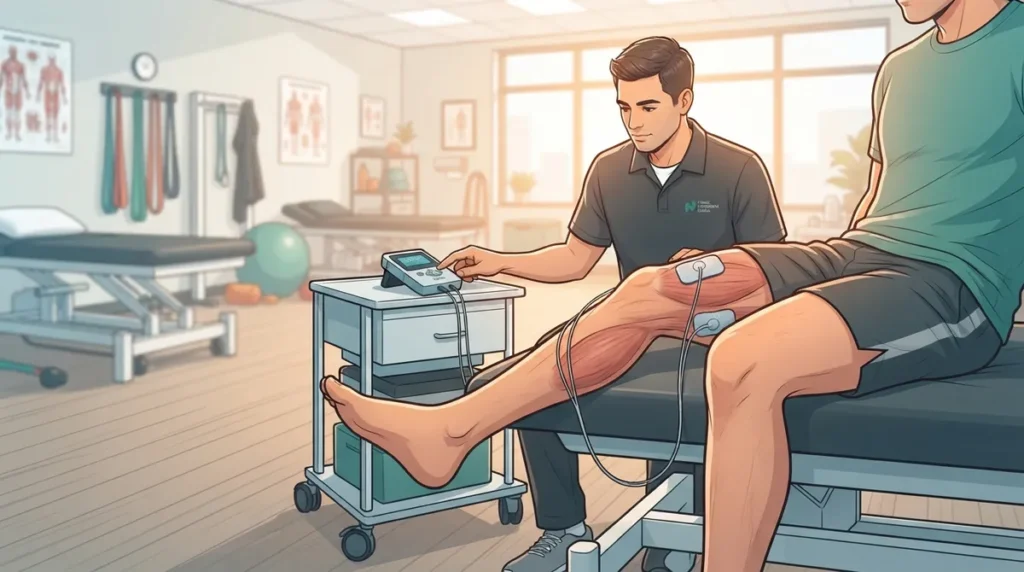
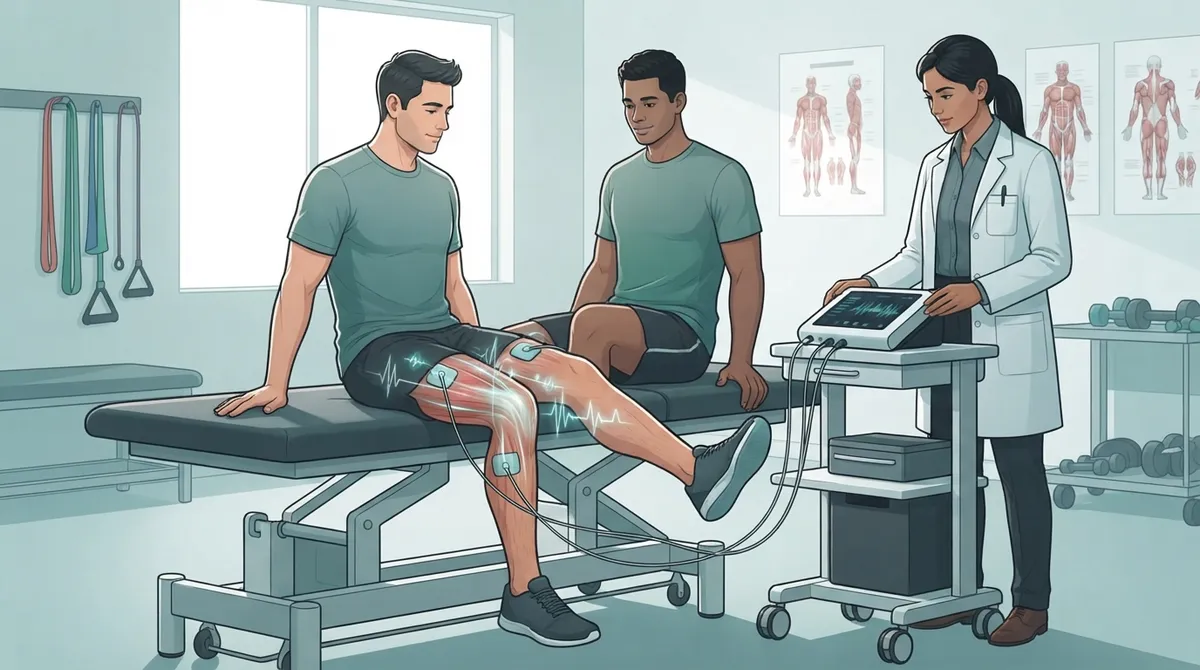
NMES therapy applies controlled electrical impulses through surface electrodes placed over targeted muscle groups. These impulses stimulate the motor nerves, triggering muscle fibers to contract in a pattern similar to the body’s natural neuromuscular activation process. This mechanism allows clinicians to induce contractions in muscles that patients cannot voluntarily activate due to pain, neurological deficit, or extended immobilization.
The therapy plays a critical role in muscle re-education, helping patients relearn proper firing patterns after injury or surgical intervention. According to clinical electrotherapy resources, NMES is distinct from Functional Electrical Stimulation (FES), which is reserved for neurologically impaired patients requiring functional activity enhancement. Standard NMES, by contrast, focuses primarily on preventing atrophy and restoring strength during the resting or early recovery phase.
FDA-Approved Clinical Indications
The FDA has approved NMES for several specific indications that are directly relevant to rehabilitation and orthopedic care settings. Providers should understand these approved uses when developing treatment plans and documenting medical necessity for insurance purposes.
- Prevention of disuse atrophy in immobilized or bedridden patients
- Relaxation of muscle spasms associated with soft tissue injury
- Increasing local blood circulation to promote healing
- Post-surgical calf stimulation to reduce risk of venous thrombosis
- Muscle re-education following orthopedic or neurological events
- Maintaining or increasing range of motion in affected joints
These approved applications make NMES particularly valuable for electrotherapy devices used across physical therapy, chiropractic, and injury rehabilitation settings.
Clinical Applications Across Practice Types
Physical Therapy Clinics and Post-Surgical Recovery
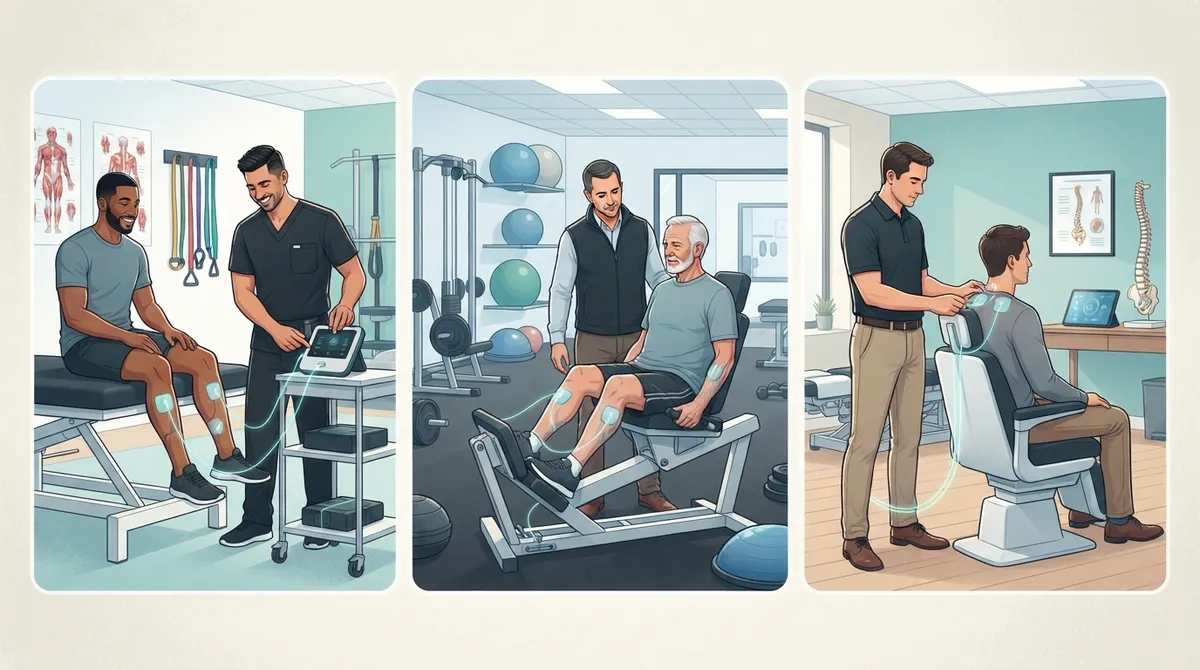
Physical therapists frequently encounter patients recovering from orthopedic surgeries, including ACL reconstruction, total knee replacement, and rotator cuff repair. In these cases, quadriceps and shoulder stabilizer muscles often become inhibited due to pain and swelling, a phenomenon known as arthrogenic muscle inhibition. NMES therapy allows therapists to bypass this inhibition and directly activate the muscle, preserving strength during the critical early recovery window.
Clinics that stock reliable electrotherapy products can offer patients a more complete rehabilitation pathway, combining manual therapy, therapeutic exercise, and NMES-assisted muscle strengthening. This comprehensive approach often shortens recovery timelines and improves functional outcomes measured at discharge.
Chiropractic Practices and Muscle Spasm Management
Chiropractors regularly treat patients presenting with acute muscle spasm secondary to spinal misalignment or soft tissue strain. NMES therapy complements spinal adjustments by reducing muscle guarding and promoting relaxation in hypertonic paraspinal muscles. This allows adjustments to hold better and reduces the likelihood of recurrent spasm between visits.
Many chiropractic practices pair NMES-capable devices with back braces to provide patients with continued support between office visits. Practices researching equipment options can review resources such as How to Choose the Best TENS Unit for Your Clinical Practice to better understand the distinctions between pain-relief modalities and muscle stimulation protocols.
Auto Accident Injury Clinics and Whiplash Recovery
Auto accident injury clinics face unique challenges when treating whiplash-associated disorders and soft tissue trauma. Cervical and thoracic musculature frequently develops protective guarding patterns that, left unaddressed, can lead to chronic stiffness and reduced range of motion. NMES therapy helps interrupt this guarding cycle by promoting controlled muscle contraction and relaxation cycles.
Because these clinics often work extensively with auto insurance claims and third-party liability cases, having well-documented, FDA-approved treatment modalities like NMES supports stronger claims documentation. Providers can learn more about navigating these processes through resources such as How to Use Electrotherapy for Auto Accident Treatment.
NMES Therapy Versus TENS: Understanding the Difference
A common point of confusion among new providers and patients alike involves distinguishing NMES from Transcutaneous Electrical Nerve Stimulation (TENS). While both modalities use electrical current delivered through skin electrodes, their clinical purposes differ substantially.
| Feature | NMES Therapy | TENS Therapy |
|---|---|---|
| Primary Target | Motor nerves | Sensory nerves |
| Main Purpose | Muscle contraction and strengthening | Pain signal interruption |
| Typical Frequency Range | 30-50 Hz | 2-150 Hz (varies by mode) |
| Visible Effect | Muscle contraction visible | No visible muscle movement |
| Common Uses | Atrophy prevention, muscle re-education | Acute and chronic pain management |
Many modern electrotherapy units, including those offered through Liberty Medical Solutions, include both NMES and TENS settings, allowing clinicians to switch between pain management and muscle stimulation protocols within a single device.
Recommended Frequency and Parameter Settings
Clinical guidelines generally recommend frequency settings between 30 and 50 Hz for most NMES applications, as this range balances effective muscle activation with reduced fatigue and patient discomfort. Selecting appropriate parameters requires consideration of several treatment variables.
- Identify the target muscle group and its typical fiber composition
- Determine treatment goals, whether strengthening, re-education, or spasm reduction
- Select pulse duration appropriate for the muscle size and depth
- Adjust intensity to achieve visible, tolerable contraction without excessive discomfort
- Monitor patient response and adjust on/off cycle ratios accordingly
- Document settings for consistency across subsequent treatment sessions
Providers new to calibrating these settings can reference How to Set Your TENS Unit to the Right Intensity Level for foundational guidance applicable to combined NMES/TENS devices.
Market Growth and Clinical Demand
The demand for neuromuscular electrical stimulation continues to expand across rehabilitation settings. Industry analysis indicates that the pain management application segment for neuromuscular electric stimulators is projected to reach approximately $333.9 million by 2030, growing at a compound annual rate of 9.7%. Meanwhile, the muscle rehabilitation application segment is expected to grow at a 5.7% CAGR over the same period.
TENS and NMES devices collectively dominate unit volumes within the broader electrotherapy market, accounting for an estimated 60 to 67.4% of global shipments, with annual sales exceeding four million units in developed markets. Physiotherapy clinics and sports medicine practices remain the core buyers of non-invasive NMES/EMS systems, while home care units represent 40 to 65% of non-invasive device shipments, reflecting growing patient demand for take-home rehabilitation tools.
Safety Considerations and Contraindications
While NMES therapy carries a strong safety profile when administered by trained professionals, certain patient populations require careful screening before treatment. Clinics should maintain updated intake protocols to identify contraindications prior to initiating therapy.
- Patients with cardiac pacemakers or implanted defibrillators
- Individuals with open wounds or active skin infections at electrode sites
- Patients with a history of epilepsy or uncontrolled seizure disorders
- Pregnant patients, particularly regarding abdominal or lumbar placement
- Individuals with active bleeding disorders or deep vein thrombosis
- Patients with certain cardiac arrhythmias requiring physician clearance
Providers can find additional safety documentation through TENS Machine Side Effects: What Clinicians Must Know, which addresses electrode placement precautions relevant to combined stimulation devices.
Insurance Coverage and Reimbursement Pathways
One of the most significant barriers to expanding NMES therapy access involves navigating insurance reimbursement. Liberty Medical Solutions works directly with commercial PPO and POS plans, workers’ compensation carriers, and auto accident claims to streamline the approval process for both providers and patients. This support allows clinics to focus on patient care rather than administrative burden.
Understanding coverage nuances is essential, particularly for auto accident injury clinics navigating third-party liability claims. Resources such as PPO Insurance and Electrotherapy Coverage: What Providers Need to Know and 7 Ways POS Insurance Impacts Electrotherapy Coverage in 2026 provide practical guidance for billing and documentation practices that support successful claims.
Choosing the Right NMES-Capable Device for Your Practice
Selecting appropriate equipment requires evaluating several factors beyond basic stimulation capability. Clinics should consider device versatility, ease of patient education, durability for high-volume clinical use, and manufacturer support for warranty and supply replenishment.
| Consideration | Why It Matters |
|---|---|
| Dual NMES/TENS Modes | Allows single device to serve pain management and strengthening needs |
| Adjustable Frequency Range | Supports varied protocols across patient populations |
| Portability | Enables home-use prescriptions for continued care between visits |
| Insurance Compatibility | Reduces administrative friction for reimbursement |
| Manufacturer Support | Ensures warranty registration and supply reordering |
Clinics evaluating options can explore conductive garments and TheraKnit garments as complementary solutions that extend electrode contact across larger treatment areas, particularly useful for back, shoulder, and cervical applications common in whiplash recovery.
Research consistently supports electrical stimulation as a valuable component of non-opioid pain management strategies, a priority highlighted by the FDA and reinforced by the CDC in its clinical guidance on nonopioid therapies. Given that the National Institutes of Health reports persistently high rates of chronic pain among U.S. adults, integrating evidence-based modalities like NMES therapy into standard practice offers meaningful clinical and public health value.
Building a Sustainable Electrotherapy Program
Successfully integrating NMES therapy into a clinical practice requires more than purchasing equipment. Providers must train staff on proper electrode placement, parameter selection, and patient education to maximize therapeutic benefit while minimizing discomfort or improper use.
Clinics interested in expanding their electrotherapy offerings can review comprehensive planning resources, including 15 Essential Medical Supplies Every Electrotherapy Clinic Needs and Physical Therapy Equipment: Electrotherapy Guide for Clinics, which outline foundational equipment needs for building a robust rehabilitation program.
Partnering with a Trusted Electrotherapy Provider
Liberty Medical Solutions has built a reputation for supplying customized electrotherapy devices tailored to the specific clinical needs of physical therapy clinics, chiropractic practices, and auto accident injury centers. Beyond equipment supply, the company assists providers with insurance verification across commercial PPO/POS plans, workers’ compensation, and auto accident claims, removing common administrative obstacles that slow patient access to care.
Clinics seeking to expand their NMES therapy offerings benefit from working with a partner experienced in both device selection and reimbursement navigation. This combined support allows providers to focus resources on patient outcomes rather than logistical hurdles, ultimately strengthening the practice’s reputation and treatment capacity.
Conclusion
NMES therapy represents a clinically proven, FDA-approved modality that addresses a critical gap in rehabilitation care: restoring muscle function when voluntary activation is compromised. For physical therapy clinics, chiropractic practices, and auto accident injury centers, incorporating properly calibrated NMES devices into treatment protocols supports faster recovery, reduces disuse atrophy, and enhances overall patient satisfaction. As demand for non-invasive, evidence-based pain and rehabilitation solutions continues to grow, providers equipped with reliable NMES technology position themselves to meet evolving patient needs effectively. To explore customized electrotherapy solutions tailored to your practice’s clinical and insurance requirements, reach out to our team today and discover how the right equipment can transform your patient outcomes.
FAQs
Q: What is the difference between NMES and TENS therapy?
A: NMES targets motor nerves to produce visible muscle contractions for strengthening and re-education, while TENS targets sensory nerves primarily to interrupt pain signals without causing muscle movement. Many clinical devices offer both modes to address different patient needs within a single treatment plan.
Q: How does NMES therapy prevent muscle atrophy in immobilized patients?
A: NMES stimulates motor nerves to induce contractions that mimic voluntary muscle activity, maintaining muscle fiber recruitment even when a patient cannot move the limb independently. This helps preserve muscle mass and strength during periods of immobilization following surgery or injury.
Q: What frequency settings are recommended for NMES in clinical rehabilitation?
A: Clinical guidelines typically recommend frequencies between 30 and 50 Hz for most NMES applications, as this range effectively activates muscle fibers while limiting fatigue and patient discomfort. Specific settings should be adjusted based on the targeted muscle group and treatment goal.
Q: Is NMES therapy safe for patients with pacemakers or heart conditions?
A: NMES therapy is generally contraindicated for patients with cardiac pacemakers, implanted defibrillators, or certain arrhythmias without direct physician clearance. Providers should always screen patients thoroughly and consult referring physicians when cardiac history is present.
Q: Can NMES be used at home for muscle strengthening after surgery?
A: Yes, many NMES-capable devices are designed for home use under clinician guidance, allowing patients to continue muscle activation protocols between clinic visits. Proper training on electrode placement and intensity settings is essential to ensure safe and effective home application.