Key Takeaways
-
Electrode garments maintain consistent electrode positioning across treatment sessions, which is critical for high-volume clinics managing insurance claims and documentation—unlike adhesive pads that require manual placement each session.
-
Proper garment fit and skin contact management are essential for effectiveness; a 2019 study found fabric electrodes became uncomfortable after 9-18 minutes without active moisture maintenance, affecting session planning and patient monitoring.
-
Multiple electrode sites in garments enable simultaneous stimulation of several muscle groups or nerve pathways, offering broader coverage than standard TENS pad configurations for multi-segmental complaints.
-
Before adopting electrode garments, clinics must verify regulatory clearance status, stimulation parameters, electrode material composition, contraindications (pacemakers, pregnancy, active infection), and manufacturer support availability.
-
A 2025 peer-reviewed crossover study found no significant performance difference between textile and hydrogel electrodes when textile electrodes used moisturizing lotion, but results may not generalize to all garment designs.
-
Clinicians should factor staff training time and patient education needs into adoption decisions, as 2019 research identified usability, comfort, cabling, and software as key barriers to wearable FES garment adoption.
Clinics that treat pain, weakness, or post-injury dysfunction are increasingly asked about wearable technology, and electrode garments have moved from research prototypes toward practical clinical tools. For physical therapy clinics, chiropractic practices, and auto accident injury clinics, understanding how these garments function—and how to fit them correctly—can mean the difference between inconsistent results and repeatable, measurable outcomes. This guide explains what electrode garments are, how they compare with traditional electrode pads, and the steps providers should follow to integrate them responsibly into patient care.
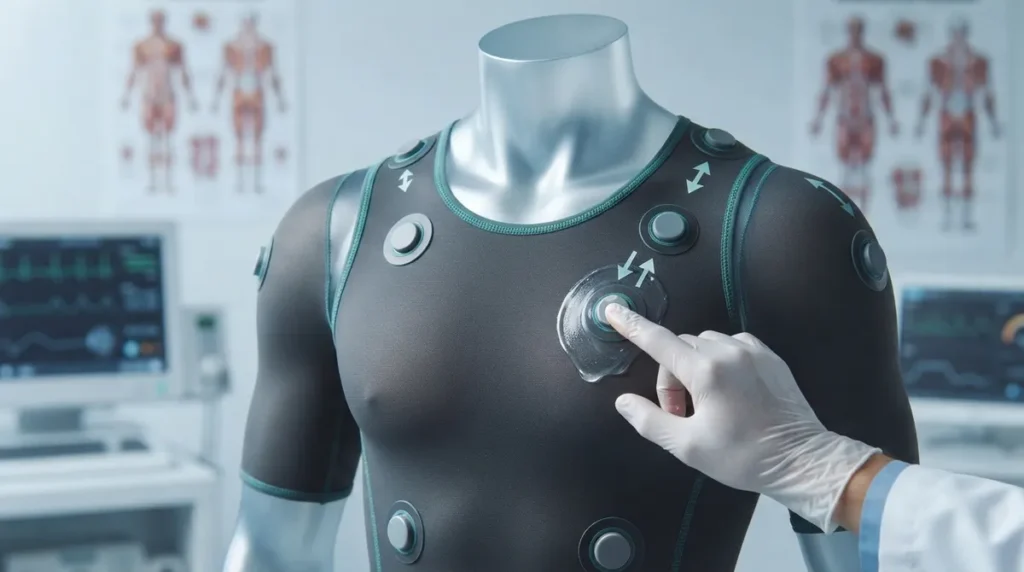
Electrode garments are wearable textiles—shirts, sleeves, shorts, pants, or full-body suits—with conductive textile or flexible printed electrodes built into specific locations over target nerves or muscles. Rather than applying individual adhesive pads at each session, clinicians can use a garment that maintains consistent electrode positioning across visits. This matters for practices managing high patient volumes, such as auto accident injury clinics treating whiplash and soft tissue damage, where treatment consistency directly affects documentation and outcomes reporting for insurance claims.
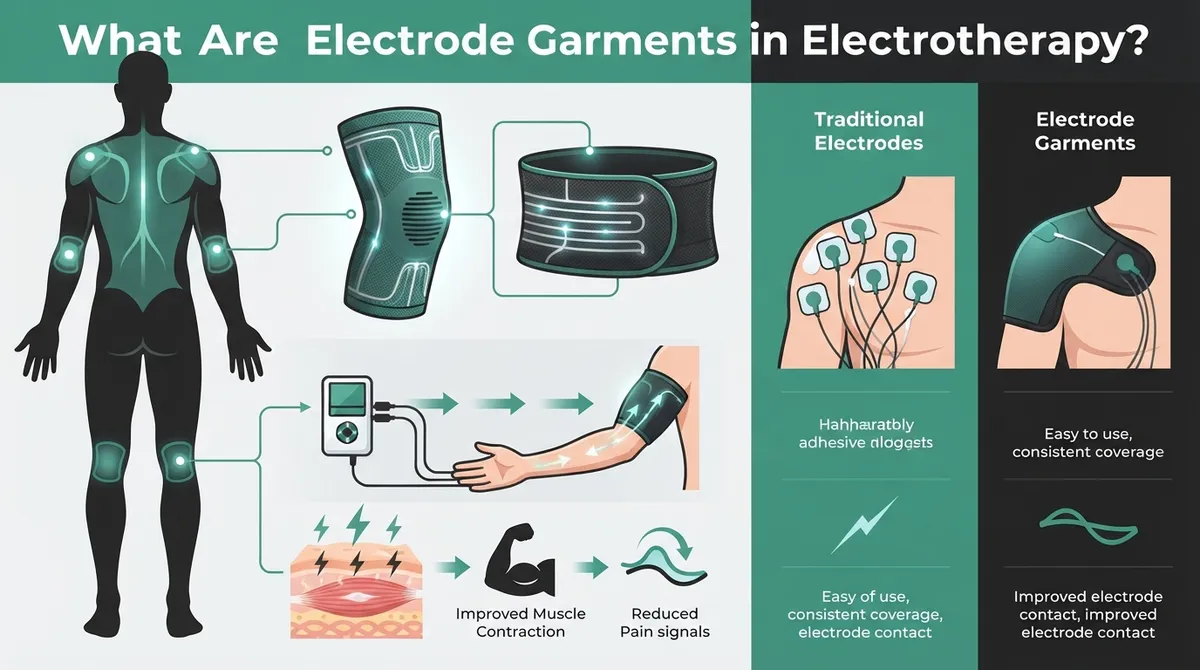
What Are Electrode Garments in Electrotherapy?
In clinical electrotherapy, electrode garments support three primary stimulation modes: TENS (transcutaneous electrical nerve stimulation) for pain modulation, NMES (neuromuscular electrical stimulation) for muscle strengthening or activation, and FES (functional electrical stimulation) for assisting movements such as walking, grasping, or cycling. The garment itself does not generate current; it connects to an external or embedded stimulator that delivers programmed electrical pulses through the integrated electrodes.
Unlike a single pair of hydrogel pads, a garment can distribute multiple electrode sites across a treatment area—useful for conditions requiring simultaneous stimulation of several muscle groups or nerve pathways. This is particularly relevant for chiropractic practices managing patients with multi-segmental spinal complaints who benefit from broader coverage than a standard TENS device and pad configuration typically provides.
Textile and Electrode Materials Used
Manufacturers construct textile electrodes from several material types, each with distinct performance characteristics:
- Conductive fabrics woven or knitted with metallic or carbon-based threads
- Conductive coatings applied to standard textile substrates
- Screen-printed conductive materials for precise electrode placement
- Silicone-based conductive layers offering flexibility and durability
- Other flexible e-textile structures designed for washability and reuse
Some systems rely on moist or lotion-assisted interfaces to maintain conductivity, while others are engineered as dry electrodes. The choice affects setup time, patient comfort, and how frequently the garment requires reconditioning between uses.
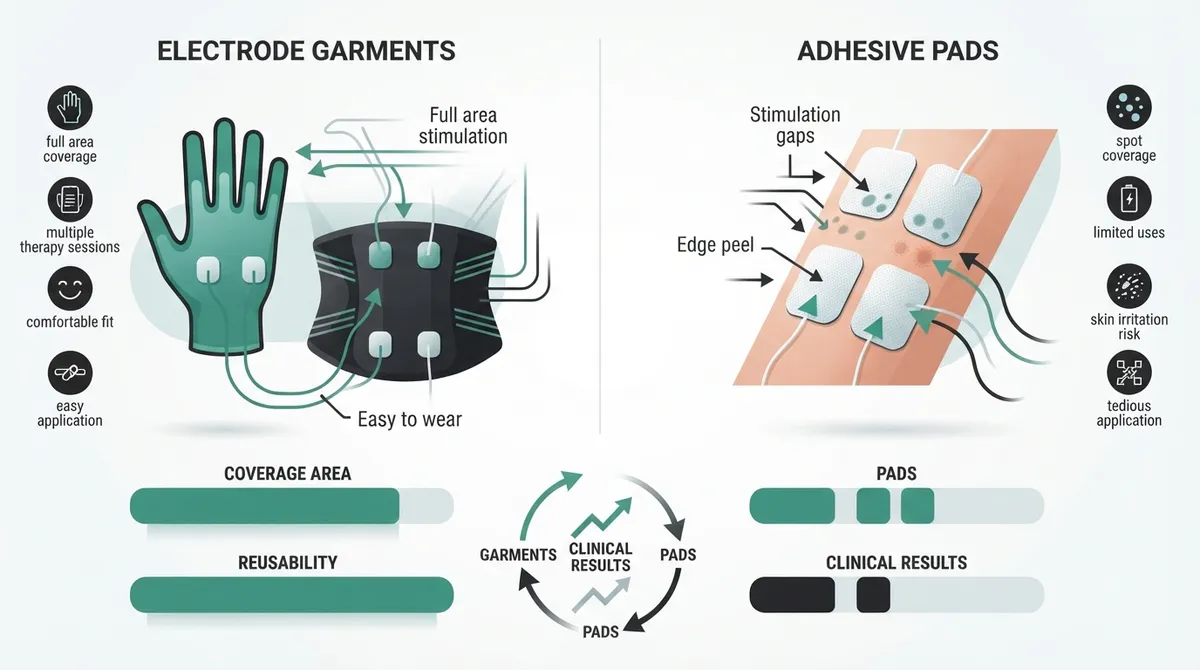
Electrode Garments vs. Adhesive TENS and NMES Pads
Providers evaluating whether to add electrode garments to their treatment offerings should weigh several practical differences against conventional adhesive electrodes.
| Factor | Adhesive Hydrogel Pads | Electrode Garments |
|---|---|---|
| Setup Time | Longer, requires manual placement each session | Faster once properly fitted; consistent placement |
| Positioning Repeatability | Variable, depends on clinician or patient technique | Higher, anatomical location is fixed within garment |
| Multi-Site Treatment | Limited by number of pads and lead wires | Supports multiple electrode sites simultaneously |
| Reusability | Pads degrade and require replacement | Washable and reusable, depending on design |
| Skin Contact Reliability | Strong adhesive contact when properly applied | Dependent on garment fit, moisture, and movement |
A 2025 randomized crossover study published in a peer-reviewed journal reported no significant difference between tested textile and hydrogel electrodes for comfort, consistency, and efficiency when the textile electrodes were used with moisturizing lotion and described as washable and reusable. However, the researchers noted that results may not generalize to every garment design, underscoring the importance of evaluating each product individually rather than assuming universal performance (Nature Scientific Reports).
Clinical Applications Across Provider Types
Physical Therapy Clinics
Physical therapy providers treating stroke recovery, spinal cord injury, or gait dysfunction have a growing interest in FES-based garments that assist functional movement. These applications remain an area of active research, and clinics should verify the regulatory clearance and intended use of any device before incorporating it into a treatment plan. Reviewing options such as conductive garments or TheraKnit garments alongside standard electrotherapy protocols can expand a clinic’s rehabilitation toolkit while maintaining evidence-based practice standards.
Chiropractic Practices
Chiropractors frequently prescribe at-home electrotherapy to extend the benefits of in-office spinal adjustments. Garment-based systems can simplify home use for patients who struggle with correct pad placement, reducing callback questions and improving compliance. Pairing a well-fitted garment with guidance similar to that found in how to fit conductive garments for better TENS results helps ensure patients receive consistent therapeutic benefit between visits.
Auto Accident Injury Clinics
Providers treating whiplash, soft tissue damage, and post-collision back pain often need documented, repeatable treatment protocols to support insurance claims. Electrode garments can standardize electrode placement across multiple visits, which strengthens clinical documentation. Liberty Medical Solutions works with commercial PPO/POS plans, workers’ compensation, and auto accident claims, making it easier for clinics to integrate these tools without absorbing unpredictable administrative burden.
Step-by-Step: Fitting an Electrode Garment for Clinical Use
- Assess patient anatomy and treatment goals. Determine the target nerve or muscle group and confirm the garment’s electrode layout matches the intended treatment area.
- Select appropriate garment size. A poor fit compromises skin contact and increases impedance, reducing stimulation effectiveness.
- Prepare the skin. Clean the area to remove oils or lotions unless the system specifically requires a moisture-assisted interface.
- Apply moisture or lotion if specified. Some textile electrode systems require a conductive lotion layer to maintain consistent contact throughout the session.
- Connect the stimulator and verify electrode contact. Check impedance readings if the device provides them before beginning stimulation.
- Set stimulation parameters gradually. Begin at a low intensity and increase according to patient tolerance and treatment protocol.
- Monitor for comfort changes during the session. Fabric electrodes can dry out during longer sessions, so clinicians should watch for signs of discomfort.
- Document electrode placement and settings. Consistent records support both clinical progress tracking and insurance documentation requirements.
Technical Challenges Providers Should Understand
Maintaining consistent skin contact during patient movement remains one of the most significant technical hurdles for garment-based electrotherapy. A 2019 proof-of-concept study found that stimulation became uncomfortable as fabric electrodes dried, with comfort declining after approximately 9 to 18 minutes unless moisture was actively maintained (National Library of Medicine). This finding has practical implications for session length planning and patient monitoring, particularly in home-use scenarios where a clinician is not present to adjust the garment mid-session.
A related 2019 qualitative study involving 19 potential users and clinicians identified usability, comfort, cabling, software, and commercialization readiness as key adoption barriers for wearable FES garments (PubMed). Clinics considering these systems should factor in staff training time and patient education needs alongside the clinical benefits.
Evidence Base and Research Maturity
It is important for providers to distinguish research prototypes from cleared or approved medical devices. The 2019 garment-FES literature characterized the technology as promising but noted that no garment-based FES system had reached full clinical readiness at that time. Published FES rehabilitation research has commonly used protocols involving approximately 12 to 72 hours of total stimulation over 8 to 16 weeks, though this reflects prior research designs rather than a universal prescription applicable to every patient.
A 2018 wearable multi-site NMES hand-function study tested its system in nine healthy subjects and reported promising stimulation performance and personalization capability ahead of planned clinical testing. A 2021 study examining end-user and clinician perspectives on wearable FES garments after stroke and spinal cord injury emphasized that technical usability, device design, and business-model considerations all influence whether these systems succeed in real-world clinical settings.
Safety, Contraindications, and Verification Checklist
Before adopting any electrode garment into a treatment protocol, providers should confirm the following:
- Device clearance or regulatory approval status for the specific intended use
- Stimulation parameters and whether they align with established TENS, NMES, or FES protocols
- Electrode material composition and any lotion or moisture requirements
- Cleaning and maintenance instructions to preserve conductivity and hygiene
- Documented contraindications, including pacemakers, pregnancy, active infection, or compromised skin integrity
- Availability of professional fitting or programming support from the manufacturer or distributor
Chronic pain affects a substantial share of American adults, and interest in non-opioid pain management continues to grow, supported by federal guidance encouraging expanded non-pharmacological options (National Institutes of Health, FDA). Electrode garments fit within this broader movement toward accessible, evidence-informed electrotherapy, provided clinics apply appropriate diligence in product selection.
Choosing a Reliable Electrotherapy Partner
Selecting electrode garments and supporting stimulators requires more than comparing price points. Clinics benefit from working with a supplier that understands insurance workflows, provides fitting guidance, and offers a full range of complementary products. Liberty Medical Solutions supports physical therapy clinics, chiropractic practices, and auto accident injury clinics with customized electrotherapy solutions, including back braces, cervical traction units, and a full product catalog designed to integrate into existing treatment plans. The company’s experience navigating commercial PPO/POS plans, workers’ compensation, and auto accident claims gives providers a practical path to offering advanced electrotherapy without added administrative strain.
For clinics building broader electrotherapy programs, understanding foundational device categories remains essential alongside garment-based options. Resources such as Electrotherapy Electrodes: A Clinical Guide for Providers and What Makes the Best TENS Machine for Clinical Use? offer additional context for providers refining their equipment strategy.
Conclusion
Electrode garments represent a meaningful advancement in wearable electrotherapy, offering improved positioning repeatability, multi-site treatment capability, and reusable components compared with traditional adhesive electrodes. Their effectiveness, however, depends heavily on proper fit, skin contact management, and verification of each product’s regulatory status and intended use. Physical therapy clinics, chiropractic practices, and auto accident injury clinics that approach these systems with careful evaluation—rather than assuming interchangeability with clinically validated devices—stand to benefit most from this evolving technology. To explore which electrode garment and electrotherapy solutions best fit your practice’s patient population and insurance mix, Contact Our Team at Liberty Medical Solutions for personalized guidance.
FAQs
Q: What are electrode garments used for in electrotherapy?
A: Electrode garments are wearable textiles with integrated conductive electrodes used to deliver TENS for pain modulation, NMES for muscle strengthening, or FES for assisting functional movements like walking or grasping. They connect to an external or embedded stimulator and are used in rehabilitation, home care, and clinical settings depending on the device’s approved intended use.
Q: How do electrode garments compare with adhesive TENS or NMES pads?
A: Electrode garments can improve positioning repeatability, support multiple electrode sites at once, and offer washable, reusable components compared with single-use adhesive pads. However, their performance depends heavily on garment fit, skin contact, and moisture management, and a 2025 crossover study found no significant performance difference from hydrogel electrodes under tested conditions.
Q: Are electrode garments safe for home use?
A: Many electrode garments are designed for home use, but safety depends on verifying the specific device’s regulatory clearance, confirming contraindications, and following manufacturer instructions for skin preparation and cleaning. Patients should receive proper fitting guidance from a clinician before independent home use.
Q: What is the difference between TENS, NMES, and FES garments?
A: TENS garments target nerve pathways to reduce pain perception, NMES garments stimulate muscles to build strength or prevent atrophy, and FES garments are designed to assist functional movements such as gait or grasping during rehabilitation. The distinction matters because each mode uses different stimulation parameters and serves a different clinical purpose.
Q: Do electrode garments require water, gel, or lotion to work effectively?
A: Some textile electrode systems require moisture or conductive lotion to maintain skin contact and reduce impedance, while others are designed as dry electrodes. Research has shown that fabric electrodes can become uncomfortable as they dry, so checking manufacturer specifications for moisture requirements is essential before each session.