Key Takeaways
-
Set TENS intensity to the highest level that produces strong, comfortable tingling without pain, discomfort, or muscle twitching—described as 'ants crawling' rather than 'needles poking.'
-
Always increase intensity gradually from zero in small increments every 10-15 seconds to allow precise calibration and prevent startling the patient or causing reflex withdrawal.
-
Match frequency settings to your clinical goal: 80-120 Hz for acute pain, 2-10 Hz for chronic pain management, and 35-50 Hz for muscle stimulation and strengthening.
-
Check pulse width before adjusting intensity if a previously comfortable setting suddenly feels too strong, as wider pulse width recruits more nerve fibers and increases perceived sensation.
-
Limit sessions to 30-60 minutes per treatment with up to four sessions daily to prevent habituation, where the nervous system adapts and perceives reduced therapeutic relief.
-
Reposition electrodes before increasing intensity if patients report suboptimal results, as poor placement is often the root cause of inadequate treatment rather than insufficient intensity.
One of the most common questions patients and clinicians encounter when beginning electrotherapy treatment is: how high should I set my TENS unit? Setting intensity too low produces little therapeutic effect, while setting it too high risks discomfort, skin irritation, or unintended muscle contractions. For physical therapy clinics, chiropractic practices, and auto accident injury specialists, guiding patients toward the correct settings is essential for achieving consistent, measurable outcomes. Understanding the relationship between frequency, pulse width, and intensity empowers providers to deliver superior care and ensures patients can confidently manage their at-home electrotherapy regimen.
This guide breaks down the key parameters of TENS unit settings, explains how to calibrate intensity for different clinical goals, and provides evidence-based recommendations to help your practice optimize electrotherapy outcomes. Whether you are prescribing a device for post-injury rehabilitation, chronic pain management, or spinal recovery, the following information will serve as a reliable clinical reference.
Understanding TENS Unit Parameters Before Adjusting Intensity
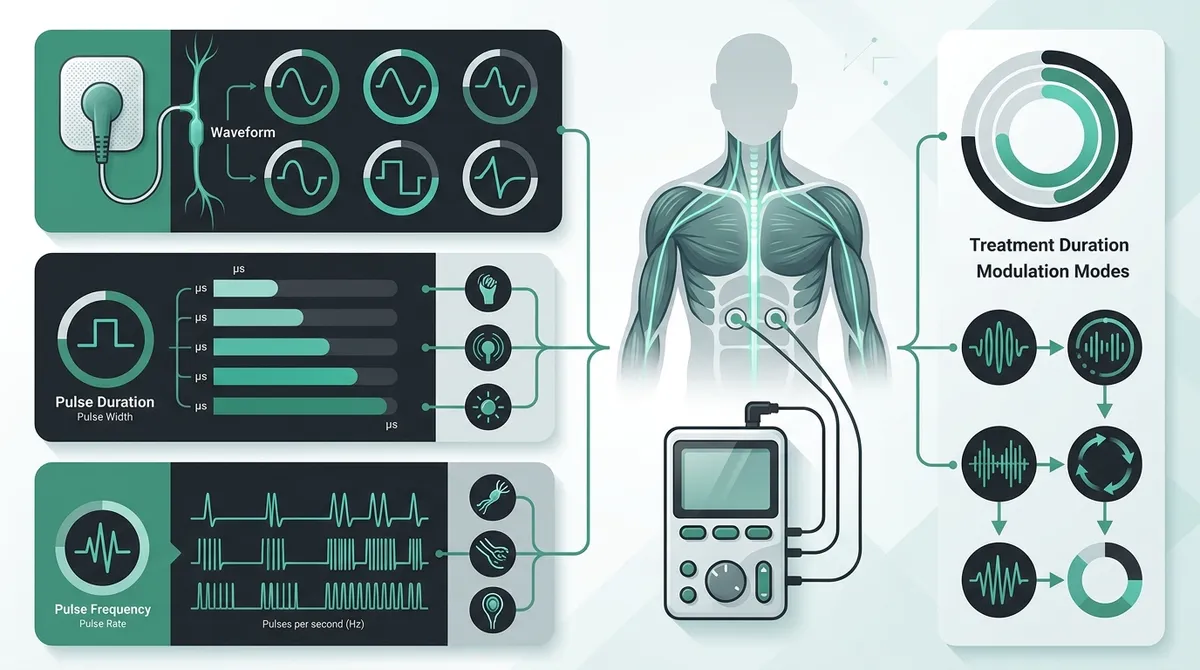
Before addressing intensity specifically, it is important to understand that a TENS unit operates through three primary parameters: frequency (measured in Hz), pulse width (measured in microseconds, or µs), and amplitude (intensity, measured in milliamps or mA). Each variable interacts with the others to determine the therapeutic effect delivered to the patient. Adjusting only one parameter without considering the others can reduce efficacy or cause discomfort.
For providers managing patients through electrotherapy devices, understanding these parameters is foundational. Clinicians at physical therapy and chiropractic practices should educate patients on all three settings before sending them home with a prescribed unit. The Cleveland Clinic notes that TENS therapy works by delivering electrical impulses that interfere with pain signals traveling to the brain, making precise calibration critical for effectiveness.
Frequency: The Foundation of Your TENS Protocol
Frequency determines how many electrical pulses are delivered per second and directly influences the mechanism of pain relief. High-frequency TENS (80–120 Hz) activates the gate control mechanism, blocking pain signals from reaching the brain. This mode is most effective for acute pain and is commonly used in post-injury and post-procedure settings. Low-frequency TENS (2–10 Hz) stimulates the release of endorphins and enkephalins, making it better suited for chronic pain management.
For muscle stimulation and strengthening, particularly relevant after auto accident injuries or post-surgical rehabilitation, frequencies between 35–50 Hz are typically employed. These mid-range frequencies generate muscle contractions that support recovery and neuromuscular re-education. Providers at physical therapy clinics regularly use this range to assist patients regaining strength after soft tissue damage.

How High Should I Set My TENS Unit: The Core Answer
The clinical standard for TENS unit intensity is straightforward: set it to the highest level that produces a strong, comfortable tingling or buzzing sensation without causing pain, discomfort, or involuntary muscle twitching. Patients frequently describe the ideal sensation as feeling like “ants crawling” on the skin rather than “needles poking.” This distinction is important when coaching patients on self-management.
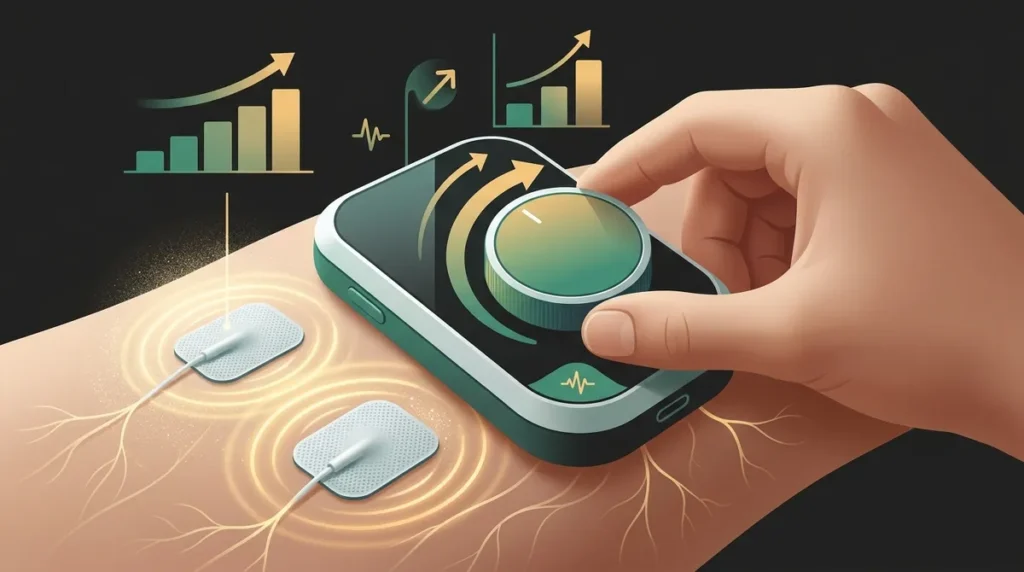
Intensity should always be increased gradually, starting from zero and moving upward in small increments. This approach prevents startling the patient, reduces the risk of excessive stimulation, and allows for precise calibration. Never instruct patients to jump to a high setting immediately, as this can cause reflex withdrawal and reduce compliance with the therapy. The WebMD resource on TENS for back pain similarly recommends a slow, incremental approach to intensity adjustment.
Signs That Intensity Is Set Correctly
- The patient reports a strong but comfortable tingling or buzzing sensation at the electrode sites
- No pain, burning, or sharp sensations are present during stimulation
- Muscle twitching does not occur (unless specifically targeting muscle stimulation protocols)
- The patient can sustain the session for the full prescribed duration without needing to reduce the setting
- Skin appears normal after removal of electrodes, with no prolonged redness or irritation
Signs That Intensity Is Set Too High
- Patient reports pain, burning, or stinging sensations at or around electrode placement sites
- Visible or palpable involuntary muscle contractions in areas not targeted for stimulation
- Skin redness, irritation, or small burns appearing after treatment sessions
- Patient withdraws from or refuses subsequent sessions due to discomfort
Recommended Settings by Clinical Goal
Different treatment objectives require different parameter combinations. The table below summarizes evidence-based TENS settings organized by clinical goal, which providers can use as a starting point for patient protocols.
| Clinical Goal | Frequency (Hz) | Pulse Width (µs) | Intensity Level |
|---|---|---|---|
| Acute Pain Relief | 80–120 Hz | 100–175 µs | Strong tingling, no muscle contraction |
| Chronic Pain Management | 2–10 Hz | 175–200 µs | Mild to moderate tingling, comfortable |
| Muscle Stimulation | 35–50 Hz | 200–300 µs | Visible muscle contraction, tolerable |
| Post-Injury Rehabilitation | 80–100 Hz | 150–200 µs | Strong but pain-free tingling |
These settings align with clinical guidelines referenced by sources including Enriched Health Care (2023) and Kaiser Permanente (2023). Providers should always individualize protocols based on patient feedback and clinical assessment. For chiropractors expanding their therapeutic toolkit, resources such as how to choose the best TENS unit for your clinical practice offer additional guidance on device selection to match these protocols.
Step-by-Step Protocol for Setting TENS Unit Intensity
Whether you are training a patient to use a home unit or calibrating a device in clinic, following a consistent protocol ensures safety and therapeutic effectiveness. The FDA has recognized electrotherapy as an important non-opioid option for pain management, reinforcing the importance of correct device usage in clinical practice.
- Position electrodes correctly: Place electrode pads on clean, dry skin at or near the pain site, ensuring proper adhesion and avoiding bony prominences, open wounds, or areas of compromised sensation.
- Select the appropriate frequency: Choose the frequency that matches your clinical goal (e.g., 80–120 Hz for acute pain, 2–10 Hz for chronic conditions).
- Set pulse width: Begin with a mid-range pulse width of approximately 175–200 µs for pain relief, adjusting upward if targeting muscle stimulation.
- Start intensity at zero: Ensure the intensity dial or control is at its lowest setting before activating the unit.
- Increase intensity gradually: Raise the intensity in small increments every 10–15 seconds, pausing to assess patient response at each level.
- Identify the therapeutic threshold: Stop increasing intensity when the patient reports a strong but comfortable tingling sensation. Confirm there is no pain, muscle twitching, or skin discomfort.
- Document the setting: Record the final frequency, pulse width, and intensity level in the patient’s file for reproducibility across sessions.
Session Duration and Frequency of Use
Intensity calibration is only one component of an effective TENS protocol. Session duration and frequency of use also significantly impact outcomes. Clinical guidelines from Kaiser Permanente and Healthline (2023) recommend TENS sessions of 30–60 minutes per treatment, with up to four sessions per day. Exceeding this frequency without clinical supervision may result in habituation, where the patient’s nervous system adapts to the electrical stimulus and perceives reduced relief.
Providers should schedule breaks between sessions to minimize habituation and maintain therapeutic effectiveness. For patients recovering from auto accident injuries, consistent daily sessions within these parameters can meaningfully accelerate recovery from whiplash and soft tissue damage. The National Institutes of Health reports high rates of persistent chronic pain among U.S. adults, underscoring the clinical importance of optimized electrotherapy protocols in managing this widespread condition.
Pulse Width and Its Impact on Intensity Perception
Pulse width is often overlooked when clinicians focus on intensity, yet it profoundly affects how stimulation is perceived by the patient. A wider pulse width recruits more nerve fibers per pulse, which means that a lower amplitude may feel stronger at a longer pulse width than at a shorter one. This is particularly relevant when transitioning patients between pain relief and muscle stimulation modes.
| Pulse Width Range (µs) | Typical Application | Perceived Sensation |
|---|---|---|
| 50–100 µs | Sensory stimulation only | Mild surface tingling |
| 100–175 µs | Acute pain relief | Moderate tingling, no contraction |
| 175–200 µs | Chronic pain relief | Strong tingling, comfortable |
| 200–300 µs | Muscle stimulation | Visible muscle contraction |
When a patient reports that a previously comfortable intensity setting suddenly feels too strong, clinicians should first check whether the pulse width has inadvertently been increased. Recalibrating pulse width before adjusting intensity often resolves this issue without compromising the treatment protocol.
Special Considerations for Clinical Populations
Certain patient populations require modified intensity protocols. Patients with peripheral neuropathy may have reduced sensory perception, making it difficult to accurately report whether intensity is appropriate. In these cases, clinicians should use visual and physiological cues rather than relying solely on patient feedback. Similarly, elderly patients often have more sensitive skin and may require lower intensity settings to achieve the same therapeutic effect.
For auto accident injury patients experiencing acute pain from whiplash or lumbar strain, high-frequency TENS at moderate intensity is generally well-tolerated and can provide rapid symptomatic relief. Pairing TENS therapy with complementary equipment such as back braces or conductive garments enhances electrode contact and can improve overall treatment outcomes, particularly for patients who require extended wear periods.
Common Intensity Mistakes and How to Avoid Them
Even experienced clinicians and well-coached patients make predictable errors when adjusting TENS intensity. Awareness of these pitfalls helps practices maintain consistent treatment quality.
| Common Mistake | Why It Happens | How to Correct It |
|---|---|---|
| Starting at high intensity | Patient or clinician impatient for relief | Always begin at zero and increase slowly |
| Ignoring muscle twitching | Mistaken belief that stronger = better | Reduce intensity until twitching stops (unless targeting muscle stim) |
| Failing to reassess over sessions | Assuming settings remain optimal indefinitely | Reassess and recalibrate at each session or weekly |
| Increasing intensity to compensate for poor placement | Electrodes positioned suboptimally | Reposition electrodes before adjusting intensity upward |
For additional clinical insights on electrode placement strategies that work in tandem with correct intensity settings, providers may find value in reviewing resources on TENS unit pad placement tips for clinical results. Proper placement is often the first and most impactful correction when patients report suboptimal results.
How Liberty Medical Solutions Supports Optimal TENS Protocols
Liberty Medical Solutions provides customized electrotherapy devices and related equipment designed to support precise clinical protocols for physical therapy clinics, chiropractic practices, and auto accident injury providers. Their product range, including TENS units, conductive garments, and cervical traction units, is selected to accommodate the full spectrum of intensity and parameter requirements described in this guide. Providers looking to expand their electrotherapy capabilities or explore device options suited to their patient population are encouraged to reach out to the Liberty Medical Solutions team for a consultation tailored to their practice’s specific needs.
For clinicians interested in understanding the broader clinical applications of TENS technology, the article on what TENS units actually do for clinical pain management provides a useful evidence-based overview. Additional resources on what makes the best TENS machine for clinical use can assist providers in matching device specifications to treatment goals.
Conclusion
Knowing how high to set a TENS unit is not a matter of simply turning up the dial until relief is felt. It is a clinical skill that requires understanding the interplay between frequency, pulse width, and intensity, calibrated to the specific therapeutic goal and individual patient tolerance. The guiding principle remains consistent: strong, comfortable, and pain-free stimulation produces the best outcomes, while excessive intensity introduces risk without added benefit.
Physical therapy providers, chiropractors, and auto accident injury clinicians who invest in educating patients about correct TENS settings will see higher compliance, better outcomes, and fewer complications. Staying current with evidence-based protocols and pairing the right device with the right accessories—such as TheraKnit garments or conductive pads—further enhances treatment effectiveness. For practices ready to optimize their electrotherapy programs, contact Liberty Medical Solutions today to explore customized solutions designed for clinical excellence.
FAQs
Q: What is the ideal intensity level when using a TENS unit for back pain?
A: The ideal intensity for back pain is a level that produces a strong, comfortable tingling sensation without causing pain, muscle twitching, or skin irritation. For acute back pain, high-frequency settings of 80–120 Hz at a moderate-to-strong intensity are most commonly recommended. Always increase intensity gradually from zero, stopping when the sensation is therapeutically noticeable but remains comfortable.
Q: How do I know if my TENS unit is set too high?
A: Your TENS unit is likely set too high if you experience pain, burning, stinging, or involuntary muscle contractions that are not part of a deliberate muscle stimulation protocol. Skin redness or irritation after electrode removal is another indicator of excessive intensity. Reduce the setting immediately to a level where the sensation is strong but free of discomfort.
Q: What is the difference between high-frequency and low-frequency TENS settings?
A: High-frequency TENS (80–120 Hz) works through the gate control mechanism, blocking pain signals and providing rapid relief suited to acute conditions. Low-frequency TENS (2–10 Hz) stimulates the release of endorphins for longer-lasting relief and is better suited to chronic pain management. Clinicians should select the frequency that aligns with the patient’s specific diagnosis and treatment goals.
Q: How long should a TENS unit session last for optimal results?
A: Clinical guidelines recommend TENS sessions of 30 to 60 minutes per treatment, with up to four sessions per day. Exceeding this without clinical oversight may lead to habituation, where the nervous system adapts to the stimulus and perceives diminished relief. Scheduled breaks between sessions help maintain the therapeutic effectiveness of each treatment.
Q: Can TENS unit intensity be set the same for every patient?
A: No. Intensity is highly individual and must be calibrated based on each patient’s pain tolerance, sensory perception, treatment goal, and clinical condition. Patients with peripheral neuropathy, elderly individuals, and those with skin sensitivity may require lower intensities than younger, otherwise healthy patients. Providers should reassess and document intensity settings at each session to ensure ongoing appropriateness.