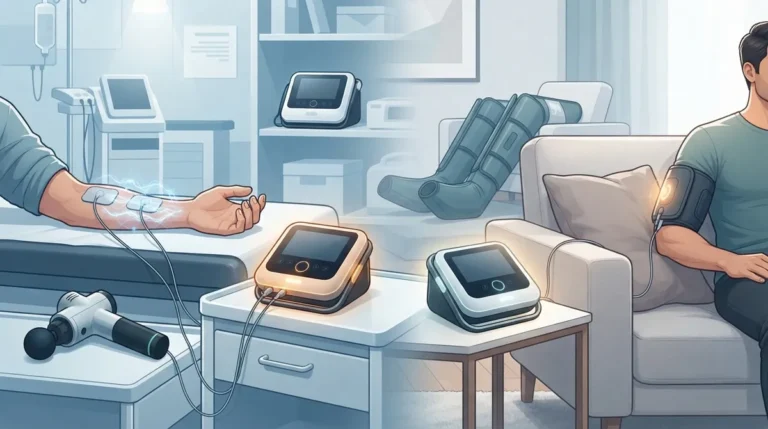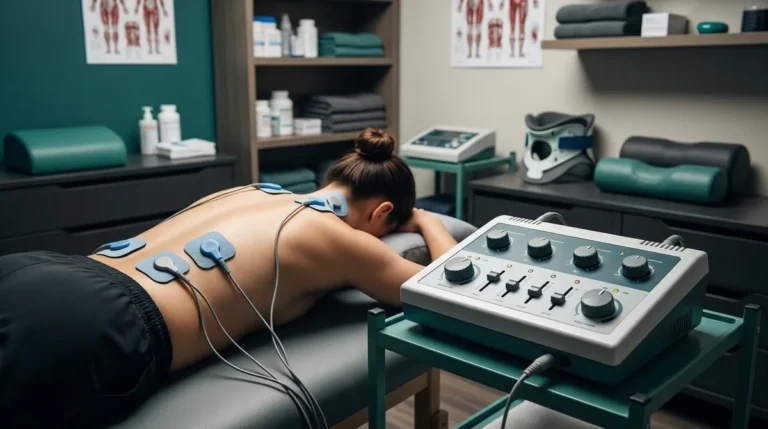
Muscle soreness and stiffness are among the most common complaints seen in physical therapy clinics, chiropractic offices, and auto accident injury practices. Patients recovering from whiplash, overexertion, post-adjustment tenderness, or delayed-onset muscle soreness often ask whether a TENS unit can speed relief. For clinicians, understanding how to answer that question accurately protects credibility while giving patients a practical, evidence-informed tool to manage discomfort between visits. This guide explains how transcutaneous electrical nerve stimulation works for muscle soreness and stiffness, what the current research actually supports, and how to guide patients toward safe, effective use.
As a provider, your recommendations carry weight. Patients trust your clinical judgment when you introduce a home-use device, so it is essential to set realistic expectations from the start. TENS is not a cure for muscle damage or a substitute for diagnosis, but when used correctly, it can be a valuable adjunct to manual therapy, exercise programs, and rehabilitation protocols. Liberty Medical Solutions works with clinics across the country to supply TENS devices that meet these clinical needs while remaining accessible through commercial insurance, workers’ compensation, and auto accident claims.
What a TENS Unit Actually Does for Sore, Stiff Muscles
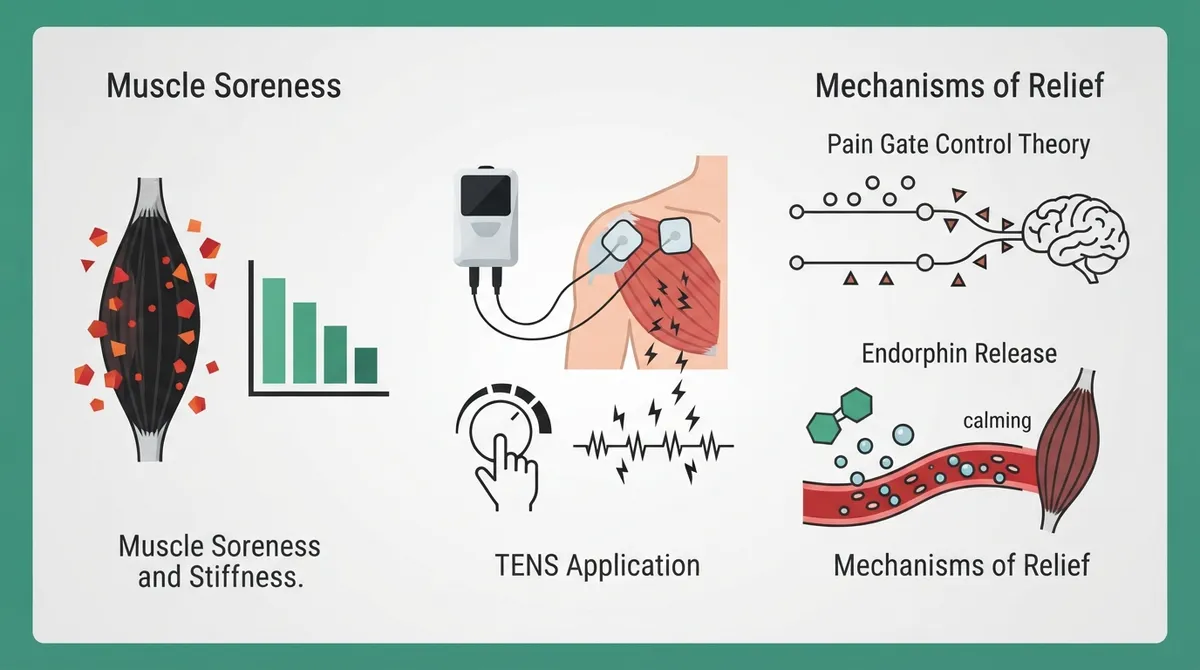
A TENS unit delivers low-voltage electrical pulses through adhesive electrodes placed on the skin. These pulses stimulate sensory nerve fibers, which can interrupt or modulate pain signals traveling to the brain and may also encourage the release of endorphins. Patients typically describe the sensation as a strong but comfortable tingling, not a painful shock or forceful muscle contraction.
For muscle soreness and stiffness specifically, TENS functions primarily as a short-term symptom-management tool rather than a treatment that resolves the underlying cause. It may reduce the perception of discomfort enough to make stretching, walking, or prescribed exercises more tolerable. However, a 2025 systematic review found that TENS was not significantly better than sham treatment for normalizing muscle tone, stiffness, elasticity, or relaxation, which means clinicians should frame TENS as a complement to rehabilitation, not a mechanism for repairing tissue or eliminating stiffness outright.
Why This Matters for Clinical Recommendations
Physical therapists and chiropractors who prescribe TENS units for home use should communicate this distinction clearly. Patients who understand that TENS manages symptoms while their prescribed exercises and adjustments address the underlying condition tend to have more realistic expectations and better adherence to full treatment plans. This transparency also protects your practice’s credibility and aligns with the broader push toward non-opioid pain management strategies supported by the FDA and the CDC.
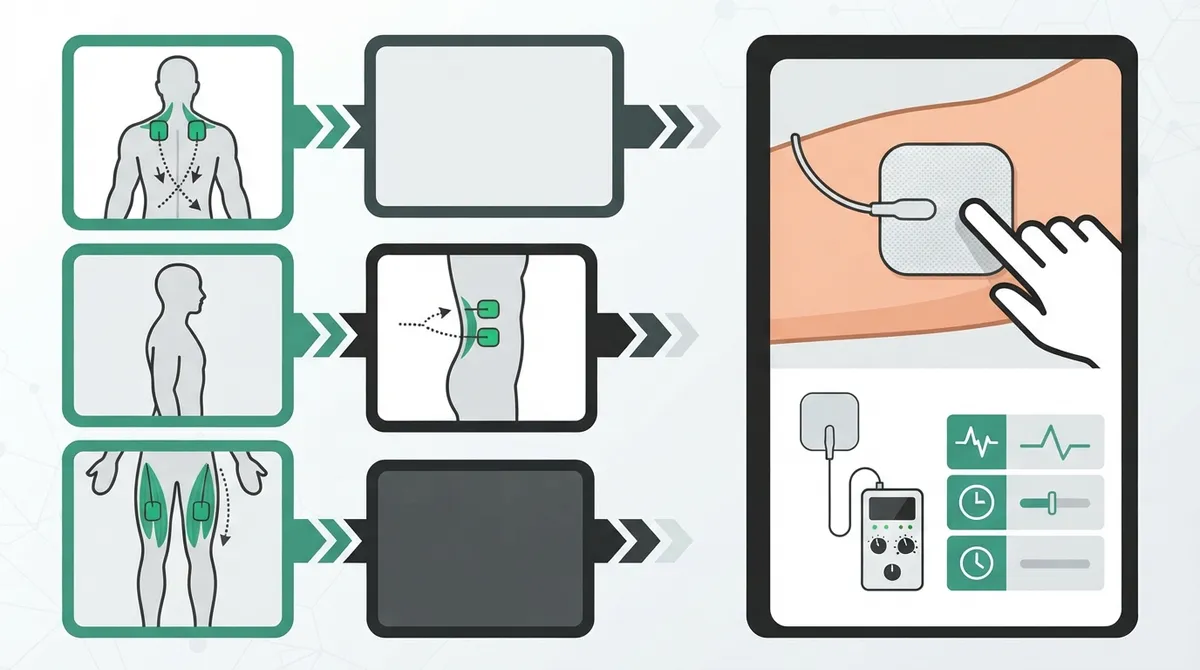
How to Guide Patients Through Proper Electrode Placement
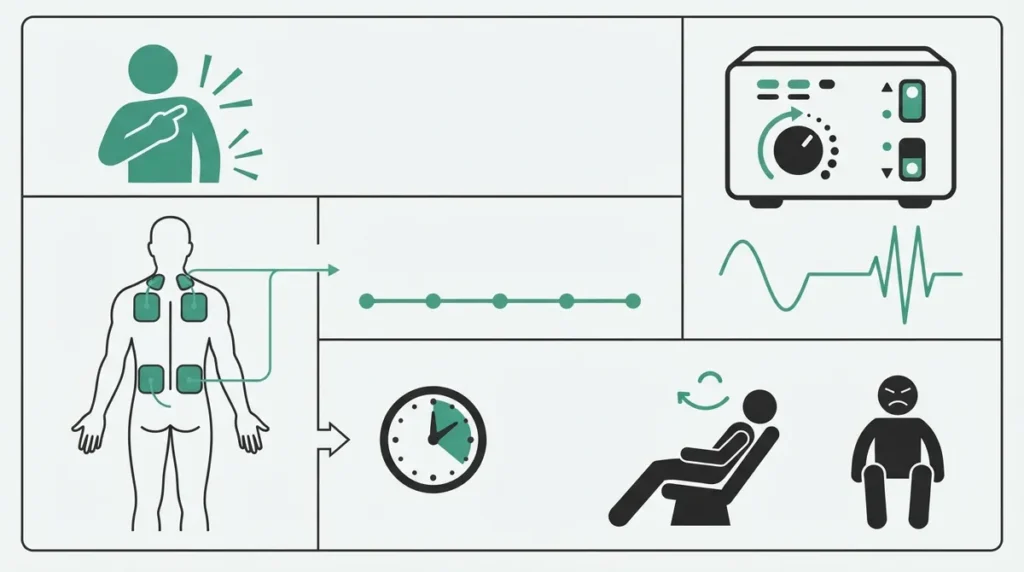
Correct electrode placement is one of the most important factors in achieving effective, safe TENS therapy. Improper placement can reduce effectiveness or, in rare cases, cause skin irritation. Clinicians should walk patients through the following steps when issuing a device for home use:
- Clean and dry the skin. Electrodes should only be applied to clean, dry, intact skin, free from lotion, oils, or broken areas.
- Position pads around the painful or stiff area. Rather than placing electrodes directly on top of the most tender spot, position them on either side of the discomfort.
- Maintain proper spacing. Electrodes should be separated by at least one electrode width, or approximately 2.5 cm, to ensure the electrical current passes through the target tissue effectively.
- Start with the device powered off. Attach the pads first, then power on the unit and gradually increase intensity.
- Adjust intensity slowly. The sensation should remain strong but comfortable. If tingling becomes painful or causes an uncomfortable muscle contraction, the patient should reduce the intensity immediately.
These steps align with guidance from the NHS and other clinical protocols, which emphasize gradual intensity increases and proper spacing to avoid discomfort or reduced efficacy. For chiropractic practices, pairing TENS instructions with back brace recommendations can offer patients a more complete at-home recovery package.
Settings and Session Guidelines for Muscle Soreness
Patients frequently ask what settings work best for sore or stiff muscles. While exact parameters depend on the specific device and the clinician’s recommendation, general principles apply across most units used in clinical and home settings.
| Parameter | General Guidance |
|---|---|
| Intensity | Strong but comfortable tingling; not painful or forceful |
| Session Duration | Typically 15–30 minutes per session, per device instructions |
| Frequency | As advised by the prescribing clinician; avoid continuous all-day use |
| Electrode Spacing | At least 2.5 cm (approximately one electrode width) apart |
| Skin Check | Inspect skin after each session for redness or irritation |
Clinicians should always defer to the specific device’s manufacturer instructions, since pulse frequency, waveform, and mode options vary across models. Liberty Medical Solutions provides device-specific training materials with every unit dispensed through a clinic, helping ensure patients follow the correct protocol rather than guessing at settings.
Safety Considerations Every Clinic Should Reinforce
Before recommending a TENS unit for home use, clinicians should screen patients for contraindications and reinforce safety guidelines. This is particularly important for auto accident injury clinics, where patients may present with complex, overlapping injuries that require careful evaluation before introducing any home therapy device.
- Never place electrodes on the front or sides of the neck, over the eyes, mouth, directly over the heart, or across the chest and upper back simultaneously.
- Avoid application over broken, infected, inflamed, numb, or irritated skin.
- Use caution around varicose veins unless specifically advised otherwise by a clinician.
- Patients with pacemakers, implantable defibrillators, or other electronic implants should not use TENS without explicit clearance from their treating physician.
- Pregnancy, epilepsy, reduced sensation, and undiagnosed pain all warrant professional evaluation before starting TENS therapy.
- TENS should never be used while sleeping, bathing, showering, swimming, driving, or operating machinery.
According to NHS patient guidance, TENS is generally safe when used correctly, with skin irritation and discomfort representing the primary practical risks. Patients should be instructed to stop treatment and inspect the skin if persistent redness, itching, blistering, or burning develops. This guidance is consistent with information published by the Cleveland Clinic regarding TENS safety protocols.
When Muscle Soreness Requires Further Evaluation
TENS should complement, not replace, clinical assessment. Providers should advise patients to schedule a follow-up visit if soreness or stiffness follows a significant injury or is accompanied by swelling, weakness, numbness, fever, unexplained pain, or loss of function. Auto accident injury clinics in particular should document these red flags carefully, since they can affect both clinical outcomes and insurance claim documentation.
Integrating TENS Into a Broader Treatment Plan
For physical therapy clinics, TENS units work best as one component of a multi-modal recovery strategy that includes therapeutic exercise, manual therapy, and patient education. Chiropractic practices often pair TENS with spinal adjustments and recommend the device for at-home use between sessions to help patients manage discomfort and stay engaged with their rehabilitation exercises. Combining a TENS unit with conductive garments or TheraKnit garments can also improve electrode contact and patient comfort during extended wear.
Clinics treating auto accident patients frequently use TENS as part of a broader electrotherapy protocol that may include cervical traction for whiplash-related stiffness. Reviewing how to select cervical traction equipment that delivers results can help clinics build out a more comprehensive electrotherapy offering alongside TENS therapy.
Documenting Outcomes and Supporting Insurance Claims
For clinics working with commercial PPO/POS plans, workers’ compensation, or auto accident claims, documenting patient response to TENS therapy is essential for both clinical continuity and reimbursement purposes. Tracking pain scores, range of motion, and functional improvements before and after TENS sessions provides objective data that supports medical necessity documentation. Liberty Medical Solutions assists clinics with this process by supplying devices that integrate smoothly into existing billing and insurance workflows, reducing administrative friction for providers managing high patient volumes.
Chronic and recurring musculoskeletal pain remains a significant burden on the healthcare system. Research from the National Institutes of Health highlights persistently high rates of chronic pain among U.S. adults, underscoring the importance of accessible, non-pharmacological options like TENS therapy within a comprehensive care plan.
Choosing the Right TENS Device for Your Practice
Not all TENS units are built the same, and clinics should evaluate devices based on ease of use, durability, program versatility, and patient compliance features. Practices that dispense units for home use should prioritize devices with clear instructions, adjustable intensity dials, and reliable electrode connections to minimize patient error.
- Assess the patient population your clinic typically serves and whether they need simple, single-mode devices or more advanced multi-program units.
- Confirm that the device supports the insurance pathways your clinic works with, including commercial PPO/POS, workers’ compensation, and auto accident claims.
- Review manufacturer training materials and ensure your staff can confidently instruct patients on electrode placement and settings.
- Evaluate the supplier’s reputation for clinical support, warranty registration, and ongoing patient service.
Clinics exploring device options can review guidance such as how to choose the best TENS unit for your clinical practice or browse the full product catalog to compare available models suited to different patient needs.
Conclusion
TENS units remain a valuable, evidence-supported tool for managing muscle soreness and stiffness when used correctly and paired with realistic clinical expectations. They are most effective as part of a broader treatment strategy that includes manual therapy, exercise, and professional oversight rather than as a standalone solution for resolving underlying muscle damage. Clinics that educate patients on proper electrode placement, safe intensity levels, and appropriate use cases can improve compliance and patient satisfaction while supporting better overall outcomes. Liberty Medical Solutions partners with physical therapy clinics, chiropractic practices, and auto accident injury providers to supply reliable, insurance-compatible electrotherapy devices backed by clinical training and support. To explore customized TENS solutions for your practice, Get in Touch with Our Team today.
FAQs
Q: Can a TENS unit help muscle soreness after exercise?
A: A TENS unit may reduce the perception of post-exercise soreness by stimulating sensory nerves and interrupting pain signals, making movement more comfortable. However, evidence suggests it does not significantly accelerate muscle recovery or normalize muscle tone compared to sham treatment, so it should be used as a symptom-management tool alongside proper rest and rehabilitation.
Q: Does TENS reduce muscle stiffness or only relieve pain?
A: Current research indicates TENS is more effective for short-term pain relief than for directly reducing muscle stiffness. A 2025 systematic review found no significant difference between TENS and sham treatment for muscle tone, elasticity, or stiffness measures, so it should be positioned as a pain-management adjunct rather than a stiffness treatment.
Q: Where should I place TENS pads for a sore or stiff muscle?
A: Electrodes should be placed on clean, dry, intact skin on either side of the painful or stiff area, spaced at least 2.5 cm apart. Avoid placing pads directly over the most tender point, and always follow the specific device manufacturer’s placement instructions for best results.
Q: Is it safe to use a TENS unit with a pacemaker or during pregnancy?
A: Patients with pacemakers, implantable defibrillators, or other electronic implants should not use TENS without explicit clearance from their treating physician. Pregnancy also warrants professional advice before use, since certain electrode placements and settings may not be appropriate without clinical guidance.
Q: When should muscle soreness or stiffness be evaluated by a healthcare professional instead of managed with TENS alone?
A: Patients should seek professional evaluation if soreness or stiffness follows a significant injury or is accompanied by swelling, weakness, numbness, fever, unexplained pain, or loss of function. TENS is designed to complement clinical treatment, not replace assessment when symptoms are severe, persistent, or worsening.