Key Takeaways
-
Specialized electrotherapy suppliers outperform general DME retailers in clinical knowledge, insurance navigation, and product customization—critical factors for PT clinics, chiropractic practices, and auto injury clinics seeking reliable patient outcomes.
-
Tampa clinics treating auto accident injuries need suppliers experienced with third-party liability documentation and claims processes, as improper paperwork handling creates delays affecting both patient care and cash flow.
-
Verify supplier qualifications by confirming experience with specific insurance types (commercial PPO/POS, workers' compensation, auto liability), staff training availability, and documented references from similar practice types before committing.
-
TENS and electrical stimulation devices require ongoing support including replacement electrode availability, warranty registration, troubleshooting assistance, and patient education materials—services general retailers typically cannot provide.
-
Chiropractic and PT practices benefit from suppliers offering product customization like conductive garments and customized back braces that simplify at-home patient use, extending treatment effectiveness beyond the clinic.
-
Long-term supply partnerships with transparent pricing, regular inventory check-ins, and support during insurance audits protect smaller practices from unexpected equipment costs and cash flow disruptions.
Tampa’s healthcare landscape includes a growing network of durable medical equipment providers, but not all medical supplies Tampa clinics rely on are created equal when it comes to electrotherapy. Physical therapy practices, chiropractic offices, and auto accident injury clinics each face unique demands for pain-management equipment, and choosing the right supplier directly affects patient outcomes, insurance reimbursement, and clinical efficiency. This guide examines the Tampa medical supply landscape, explains what separates a true electrotherapy specialist from a general equipment vendor, and outlines the factors clinicians should weigh before committing to a supply partner.
With chronic pain affecting a significant portion of American adults according to the National Institutes of Health, demand for non-pharmacological pain management tools continues to rise. Tampa providers who understand this shift are positioning their practices to meet patient needs while supporting broader public health goals around reducing reliance on opioid medications.

The Tampa Medical Supply Landscape
Tampa has developed a notable concentration of durable medical equipment (DME) and electrotherapy-related suppliers, reflecting the city’s role as a regional healthcare hub. Several companies operate locally, each with different specializations, service models, and levels of clinical support.
Established Local Providers
EMSI (Electrostim Medical Services, Inc.), headquartered in Tampa, is one of the more recognized names in the local market, describing itself as a medical device company focused on home electrical stimulation units and related accessories for pain management and physical rehabilitation. The company’s NPI registry classification under Durable Medical Equipment & Medical Supplies confirms its role within this supplier category, and its substantial volume of customer reviews on platforms like Birdeye suggests meaningful visibility in the Tampa market.
Anderson Home Health Supply has reportedly served the Tampa and broader Florida market for more than 95 years, offering local delivery and in-home demonstrations for patients who need assistance setting up rehabilitation equipment. JMS Med Supply similarly positions itself as a durable medical equipment provider focused on helping physicians reduce patient pain through effective bracing and service. Clinical Health Services, located on West Idlewild Avenue, lists electrotherapy units alongside hot/cold therapy tools and exercise rehabilitation equipment, reflecting a broader inventory approach rather than a single-product focus.
Newer Entrants and Market Expansion
STYMCO, another Tampa-based company, announced in 2013 that it had received a healthcare license as a durable medical equipment provider with plans to market Class II electrotherapy devices. While that announcement is now over a decade old, it illustrates how the Tampa market has continued to attract new entrants seeking to serve the electrotherapy and pain-management supply niche.
| Tampa Supplier Type | Primary Focus | Relevant to Clinics? |
|---|---|---|
| Home electrical stimulation specialists | TENS/EMS units, accessories | Yes – direct overlap with clinical protocols |
| General DME retailers | Mobility aids, braces, general supplies | Partial – limited electrotherapy depth |
| Rehabilitation product distributors | Broad inventory (hot/cold, exercise, electrotherapy) | Yes – useful for multi-modality clinics |
| Newly licensed DME entrants | Expanding into Class II devices | Depends on experience and support infrastructure |
What Separates Electrotherapy Specialists from General Suppliers
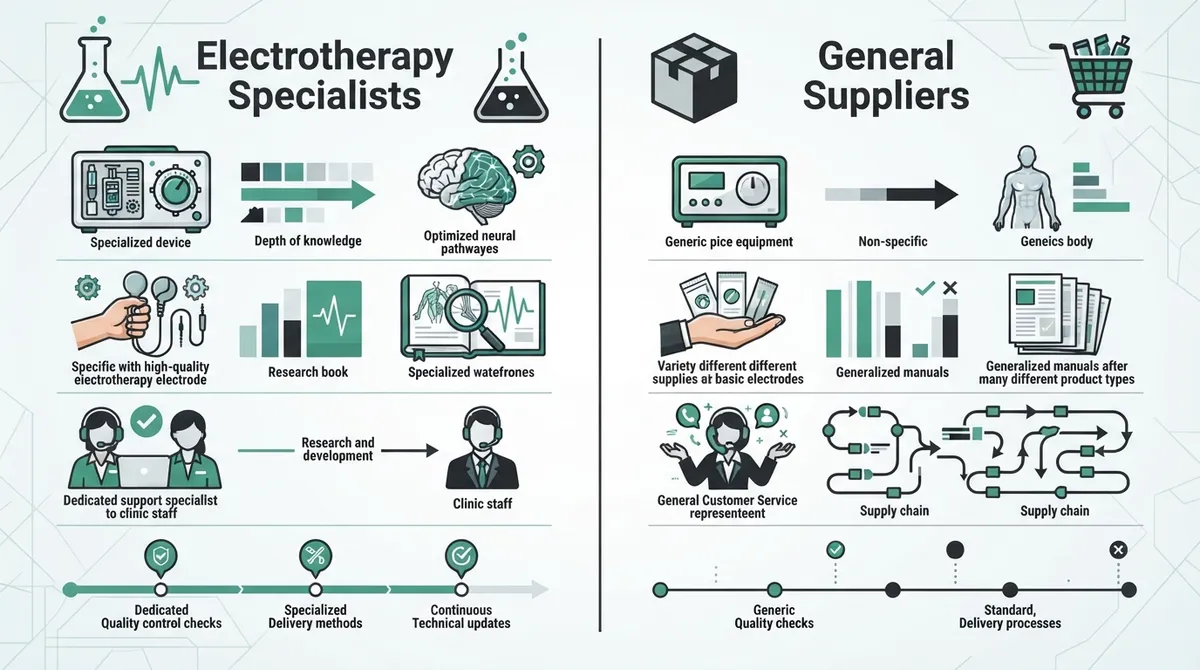
Not every medical supply company in Tampa has the clinical depth needed to properly outfit a physical therapy clinic, chiropractic practice, or auto injury clinic. General DME retailers often carry a wide catalog of mobility aids and bracing products but may lack the specialized knowledge required for electrotherapy device selection, insurance navigation, and patient education.
Clinics evaluating a potential supply partner should consider these distinguishing factors:
- Clinical device knowledge: Does the supplier understand the difference between TENS, NMES, and interferential current modalities, and can they guide device selection accordingly?
- Insurance experience: Can the provider navigate commercial PPO/POS plans, workers’ compensation claims, and auto accident third-party liability cases?
- Product customization: Does the company offer back braces and orthopedic supports tailored to individual patient anatomy rather than one-size-fits-all products?
- Ongoing clinical support: Is there responsive customer service available for troubleshooting, warranty registration, and reordering supplies?
- Delivery and setup: Does the supplier offer home delivery and in-home demonstrations for patients transitioning from clinic-based to home-use electrotherapy?
Why Physical Therapy Clinics Need Specialized Electrotherapy Supply Partners
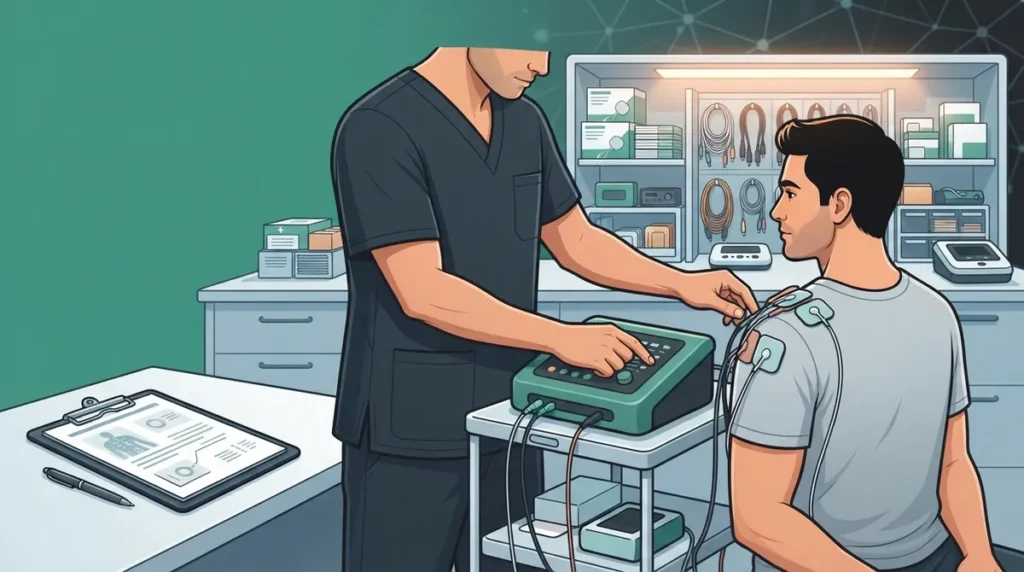
Physical therapy providers rely heavily on electrotherapy modalities to expand treatment options and improve measurable patient outcomes. TENS units and cervical traction equipment are staples in many PT practices, used for everything from acute post-surgical pain to chronic musculoskeletal conditions. According to the Cleveland Clinic, TENS therapy works by delivering low-voltage electrical currents that can interrupt pain signals and stimulate endorphin release, making it a valuable non-drug option for many patients.
For PT clinics in Tampa, sourcing devices from a supplier with true clinical understanding of the best TENS machine for clinical use ensures that equipment matches the treatment protocols already established in the practice. Clinics that source generic units from non-specialized retailers often face inconsistent lead intensities, poor electrode quality, or inadequate technical support when devices malfunction.
Key Considerations for PT Clinic Purchasing Decisions
- Verify the supplier’s experience working with rehabilitation-specific protocols, not just general consumer electronics.
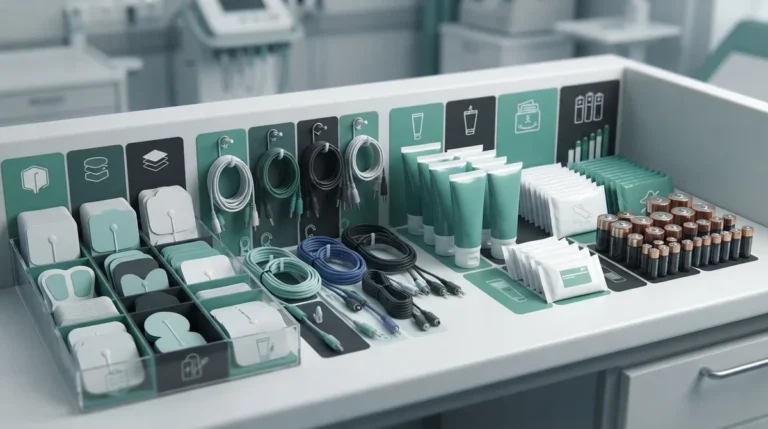
- Confirm availability of replacement electrodes, leads, and batteries to avoid treatment interruptions.
- Ask whether the company provides staff training on device operation and patient education materials.
- Review the supplier’s track record with insurance documentation and prior authorization support.
- Evaluate whether the company offers a full range of products beyond a single device category, allowing for consistent ordering from one trusted source.
Why Chiropractic Practices Require Customized Electrotherapy Solutions
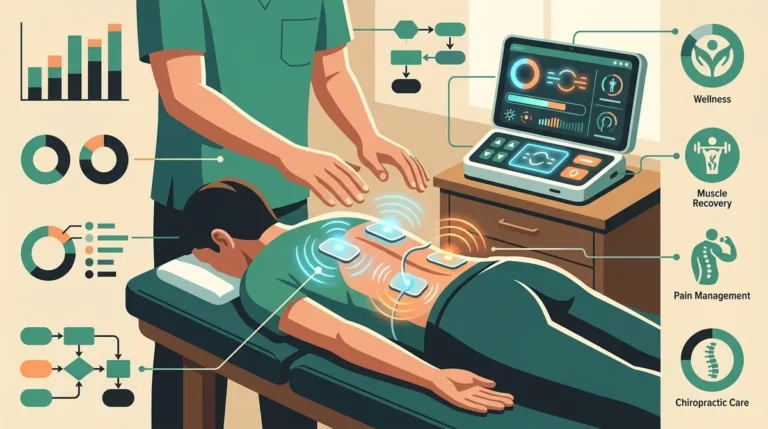
Chiropractors frequently pair spinal adjustments with electrotherapy to manage inflammation, reduce muscle spasm, and support patient recovery between visits. Because chiropractic patients often need take-home devices to reinforce in-office treatment, the supplier relationship extends beyond a single purchase into ongoing patient support.
A supplier that understands chiropractic workflows can help practices select devices appropriate for at-home use, provide conductive garments that simplify electrode placement for patients with limited dexterity, and offer TheraKnit garments designed for comfortable, consistent wear during extended treatment sessions. This level of product customization is difficult to find at general medical supply stores that stock a narrow range of standard units.
Research published through the National Library of Medicine continues to support electrical stimulation as an adjunct therapy for musculoskeletal pain, reinforcing why chiropractic practices increasingly integrate these devices into their treatment plans rather than relying solely on manual adjustment.
Why Auto Accident Injury Clinics Depend on Reliable Electrotherapy Equipment
Clinics treating whiplash, soft tissue damage, and back injuries from motor vehicle accidents face a distinct set of operational challenges. Patients in these cases often require sustained electrotherapy over weeks or months, and reimbursement frequently depends on documentation tied to auto insurance claims or third-party liability cases rather than standard commercial coverage.
Suppliers unfamiliar with auto accident claim documentation can create delays that affect both patient care and clinic cash flow. A supply partner experienced in this niche understands how to structure paperwork, verify coverage eligibility, and support providers through the claims process. This is particularly relevant for clinics that treat a high volume of accident-related cases and need consistent, predictable turnaround on electrotherapy for auto accident treatment.
| Insurance Type | Common Use Case | Documentation Complexity |
|---|---|---|
| Commercial PPO/POS | General chronic pain, post-surgical rehab | Moderate |
| Workers’ Compensation | Occupational injuries | High |
| Auto Accident/Third-Party Liability | Whiplash, soft tissue injury | High |
Evaluating Local vs. Specialized National Suppliers
While Tampa’s local medical supply ecosystem includes several established players, clinics benefit from working with a supplier whose primary expertise is electrotherapy rather than general durable medical equipment. General retailers may offer convenience for wheelchairs, walkers, or bathroom safety equipment, but electrotherapy devices require more nuanced clinical guidance, especially for practices managing insurance-based billing.
- Local general DME stores may offer faster in-person pickup but limited device variety.
- Specialized electrotherapy providers typically offer deeper product customization and insurance navigation experience.
- Clinics with high patient volume benefit from suppliers who can scale orders and maintain consistent inventory.
- Multi-location practices need a supplier capable of coordinating across several clinic sites simultaneously.
Liberty Medical Solutions, based in Tampa, has built its practice around this exact need, offering customized electrotherapy devices, back braces, cervical traction units, and conductive garments while working directly with commercial PPO/POS plans, workers’ compensation, and auto accident claims. This positions the company as a resource specifically tailored to the clinical and administrative realities that Tampa-area PT clinics, chiropractic offices, and auto injury practices navigate daily.
Questions to Ask Before Choosing a Supplier
Before finalizing a relationship with any Tampa medical supply provider, clinics should ask a structured set of questions to confirm fit:
- What electrotherapy device categories does the supplier carry, and are they updated with current technology?
- Does the company have documented experience with the specific insurance types the clinic bills most frequently?
- Can the supplier provide references from similar practices, such as chiropractic offices or auto injury clinics?
- What is the average turnaround time for device delivery and warranty claims?
- Does the supplier offer training resources for clinical staff and patient-facing instructional materials?
The FDA has emphasized the importance of expanding access to non-opioid pain management options, as outlined in its recent guidance on non-opioid treatment approaches. Selecting a supplier that aligns with this broader public health direction can strengthen a clinic’s positioning as a forward-thinking, evidence-based practice.
Building a Long-Term Supply Partnership
Rather than treating equipment procurement as a one-time transaction, Tampa clinics benefit from establishing ongoing relationships with suppliers who understand their patient population and billing structure. This includes regular check-ins on inventory needs, updates on new device technology, and support during insurance audits or claim disputes.
A dependable supply partner should also be transparent about pricing structures, warranty terms, and product specifications, allowing clinics to make informed purchasing decisions without unexpected costs. This transparency is particularly important for smaller practices operating on tighter margins, where unplanned equipment expenses can disrupt cash flow.
Conclusion
Tampa’s medical supply market offers a range of options, but clinics seeking true electrotherapy expertise need more than a general equipment vendor. Physical therapy clinics, chiropractic practices, and auto accident injury clinics each require tailored device selection, insurance navigation support, and reliable ongoing service that goes beyond simply stocking products. Liberty Medical Solutions has developed its Tampa-based operation specifically around these clinical and administrative needs, offering customized electrotherapy devices and related equipment designed to support measurable patient outcomes. If your practice is ready to strengthen its electrotherapy offerings with a supplier who understands the full scope of clinical and insurance requirements, Contact Us to discuss how a tailored supply partnership can support your patients and your practice.
FAQs
Q: What medical supplies in Tampa are used for electrotherapy?
A: Tampa suppliers commonly offer TENS units, EMS devices, cervical traction equipment, conductive garments, and replacement electrodes designed for both clinical and home-based pain management. These products support treatment for conditions ranging from chronic back pain to post-accident soft tissue injuries.
Q: Which Tampa companies sell electrical stimulation devices for pain management?
A: Several Tampa-based providers, including EMSI and Liberty Medical Solutions, specialize in electrical stimulation devices and related accessories. These companies focus specifically on electrotherapy rather than general durable medical equipment, offering deeper clinical expertise for pain management applications.
Q: Is EMSI in Tampa a durable medical equipment provider?
A: Yes, EMSI is classified under the Durable Medical Equipment & Medical Supplies taxonomy in the NPI registry and markets home electrical stimulation units and accessories for pain management and physical rehabilitation from its Tampa headquarters.
Q: Do Tampa medical supply stores offer delivery or in-home setup for rehabilitation equipment?
A: Many Tampa-area suppliers, including established retailers like Anderson Home Health Supply, offer local delivery and in-home demonstrations for patients transitioning to home-use electrotherapy equipment. This service helps ensure patients use devices correctly and safely between clinical visits.
Q: How do I choose a Tampa medical supplier for pain-management equipment?
A: Clinics should evaluate a supplier’s clinical device knowledge, experience with insurance types such as workers’ compensation and auto accident claims, product customization options, and availability of ongoing support. Prioritizing specialized electrotherapy expertise over general equipment vendors typically results in better patient outcomes and smoother billing processes.