Key Takeaways
-
Many battery-powered, wearable TENS devices are specifically designed for mobile use while sitting, standing, or walking, provided electrodes remain secure and activities avoid hazards like driving or machinery operation.
-
Clinical evidence shows TENS may be most effective for chronic pain when used for at least 30 minutes during activity; restricting use to seated rest periods may reduce effectiveness for many patients.
-
Compact belt-clip units, wearable body-worn systems, and conductive garments are ideal for active patients, as they keep controls accessible hands-free and reduce electrode displacement during movement.
-
Clinicians must communicate specific safety precautions before issuing take-home devices, including avoiding driving, machinery, water exposure, and confirming no contraindications like pacemakers or pregnancy.
-
Proper electrode placement with secure, hypoallergenic pads separated by at least one inch, combined with intensity locks and programmable timers, prevents accidental setting changes and pad shifting during daily activities.
-
Clinics should match TENS devices to individual patient history, occupation, and injury profile rather than relying on generic retail options, with follow-up skin checks after initial use to ensure compliance and safety.
Patients frequently ask clinical staff whether a TENS unit can travel with them through a normal day rather than confining them to a treatment table. The answer is yes: many battery-powered, wearable TENS devices are specifically designed for use while sitting, standing, or walking, provided the electrodes remain secure and the activity is not hazardous. For physical therapy clinics, chiropractic practices, and auto accident injury clinics, understanding which devices support mobile use—and how to counsel patients on safe activity—directly affects treatment adherence and outcomes.
This guide reviews ten categories of TENS units and features that support active daily use, explains the clinical guidance behind safe movement during stimulation, and outlines the precautions every provider should communicate before sending a unit home with a patient. Liberty Medical Solutions works with clinics across multiple specialties to match patients with devices suited to their activity level, insurance coverage, and injury profile.

Why Mobility Matters for TENS Therapy
Chronic pain affects a substantial share of the adult population, and the National Institutes of Health has documented persistently high rates of chronic pain among U.S. adults, underscoring the need for non-pharmacological options that fit into daily routines. A University of Iowa Health Care patient resource notes that TENS may be most effective for chronic pain when used for at least 30 minutes during activity, and that stimulation can be less effective when a patient sits still or lies down. This means clinicians should not automatically restrict TENS use to seated rest periods; for many patients, walking or standing while wearing the device may actually improve outcomes.
Clinical Guidance Supports Activity, Within Limits
NHS and hospital pain-service guidance consistently supports using TENS during normal daily activities—walking, light household tasks, desk work, and shopping—as long as the electrodes stay firmly attached and the stimulation remains a comfortable tingling sensation rather than a painful jolt. The NHS TENS guidance emphasizes that the device should never cause pain, and that itching, irritation, or redness under the pads means the session should stop immediately.
10 TENS Unit Types and Features Suited for Active Use
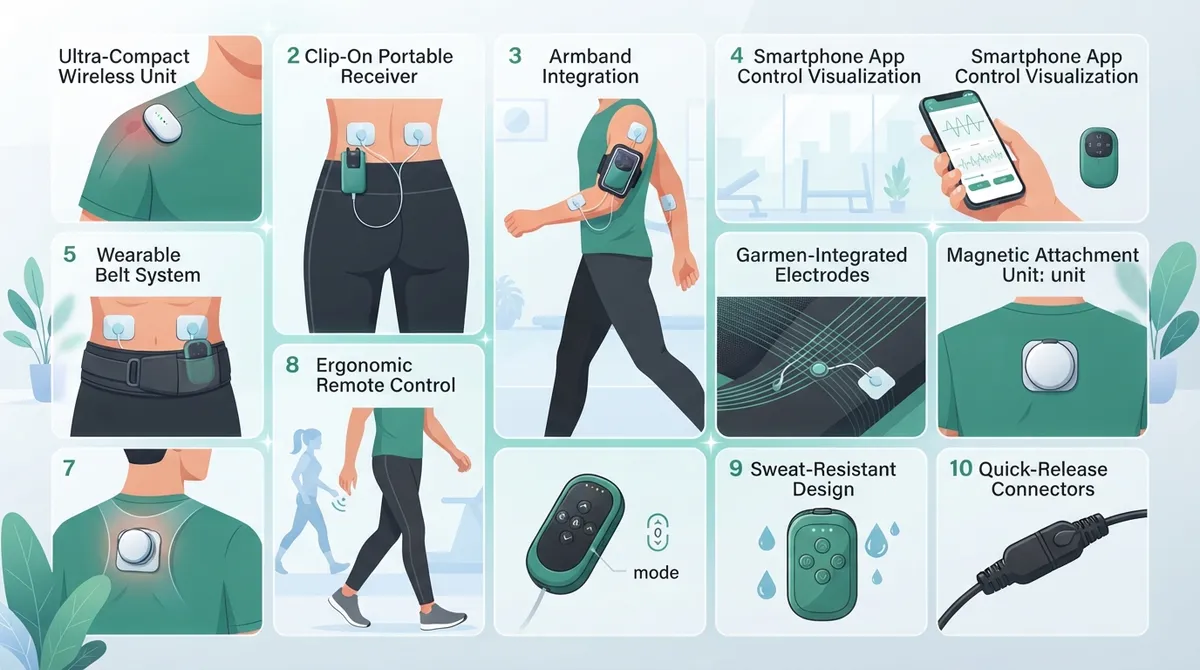
Not every device on the market is built for movement. The following ten categories represent the equipment and design features that clinics should prioritize when recommending a unit for patients who need relief while sitting, standing, or walking.
1. Compact Belt-Clip Units
A University of Iowa Health Care source specifically recommends using a belt clip to operate a TENS unit hands-free during activity. Compact devices that attach to a waistband or belt keep the controls accessible without requiring a patient to hold the unit, making them ideal for walking-based rehabilitation protocols.
2. Wearable Body-Worn Systems
Integrated wearable designs eliminate long cables that can snag on clothing or furniture. These units, often used in TheraKnit garments, distribute electrode contact across a knit fabric layer, reducing the risk of pad displacement during movement.
3. Dual-Channel Devices with Independent Controls
Patients managing pain in two locations—such as the lower back and a knee—benefit from independent channel controls that allow intensity adjustments on each side without disrupting the other. This is particularly useful for auto accident patients with multiple injury sites.
4. Units with Intensity Lock Features
An intensity lock prevents accidental setting changes when a device is bumped during walking or bending. This safety feature protects against sudden intensity spikes that could startle a patient or cause discomfort in a public setting.
5. Devices with Secure Electrode Adhesion
Strong, hypoallergenic electrode pads are essential for movement-based use. Clinics should review electrotherapy electrodes clinical guidance to select pads rated for extended wear and repeated activity without lifting.
6. Conductive Garment Systems
For patients who need stimulation over a broader area while remaining mobile, conductive garments integrate electrodes into fabric sleeves, wraps, or vests. These systems distribute pressure evenly and reduce the chance of a single pad losing contact during motion.
7. Short-Lead or Low-Profile Wire Designs
Units with shorter leads or low-profile wire routing reduce the risk of wires catching on chairs, doorframes, or equipment. This is especially relevant for patients returning to light work duties after a workers’ compensation injury.
8. Rechargeable Battery Units with Extended Runtime
Patients who wear a device throughout a workday need reliable battery life. Rechargeable units with several hours of continuous runtime reduce the need for mid-day battery swaps that could interrupt therapy.
9. Devices with Programmable Timed Sessions
Preset session timers help patients avoid overuse. A hospital patient leaflet suggests an example starting schedule of about one hour twice daily, with adjustments made based on response and clinician advice. Programmable timers support this structured approach automatically.
10. Clinically Supported Units Matched to Patient History
The most important feature is not a specification at all—it is a proper fit between the device and the patient’s diagnosis, skin condition, and medical history. Clinics that consult with a knowledgeable electrotherapy solutions provider can match patients to appropriate TENS devices rather than relying on generic retail options.
Activities That Are Generally Supported
Clinical resources from NHS and hospital pain services describe a range of low-risk activities that are typically compatible with TENS use, provided pads remain secure and skin is monitored for irritation.
- Walking around the home, office, or outdoors at a normal pace
- Standing for extended periods at a workstation or during light job duties
- Sitting at a desk, in a vehicle as a passenger, or during meals
- Light household tasks such as folding laundry or preparing food
- Non-strenuous exercise, such as gentle stretching or a slow walk, when approved by a clinician
Activities and Situations to Avoid
Certain activities and settings are consistently flagged across clinical sources as unsafe for TENS use, regardless of how comfortable the patient feels with the device.
- Driving or cycling in traffic, where an unexpected muscle response could create a safety hazard
- Operating power tools or heavy machinery
- Bathing, showering, swimming, or any submersion in water
- Sleeping while wearing an active unit
- Placement on broken, infected, or numb skin, or over the front and sides of the neck, eyes, or mouth
The Cleveland Clinic reinforces that TENS should always be turned off before electrodes are repositioned or removed, a step that is easy to overlook when a patient is moving between activities throughout the day.
Electrode Placement Considerations for Mobile Patients
Correct pad placement is central to both comfort and effectiveness when a patient will be moving. NHS and hospital sources recommend keeping electrodes separated by roughly one inch or more, with exact spacing depending on the specific device and clinical instructions. Below is a general reference table clinics can use when counseling patients on placement for common pain locations associated with walking or standing.
| Pain Location | General Placement Guidance | Movement Consideration |
|---|---|---|
| Lower back | Pads placed on either side of the spine, not directly over it unless directed by a clinician | Secure with a waistband clip to prevent shifting when bending or walking |
| Knee | Pads above and below the joint, avoiding direct contact over the kneecap | Use flexible, low-profile pads that accommodate joint bending |
| Hip | Pads surrounding the area of reported pain, avoiding bony prominences | Choose adhesive rated for friction from clothing during walking |
| Neck (upper back, not front/sides) | Pads on the upper trapezius or shoulder muscles, never on the front or sides of the neck | Often paired with cervical traction equipment for combined therapy |
Exact placement should always follow the device manufacturer’s instructions or a treating clinician’s direction, since precautions vary by unit and by patient presentation.
Precautions Every Clinic Should Communicate
Before a patient leaves with a take-home TENS unit for use during daily movement, clinics should walk through several safety points to reduce the risk of misuse or injury.
- Confirm the patient has no pacemaker or other implanted electronic device, or has received clearance from their physician if they do.
- Ask about pregnancy, epilepsy, or areas of reduced skin sensation that may require modified placement or clinician supervision.
- Review the maximum recommended daily wear time and the importance of scheduled breaks, such as the 3-to-4-hour on, 30-to-60-minute off pattern described in some patient guides to reduce skin irritation.
- Demonstrate how to turn the unit off before adjusting or removing pads, and how to inspect leads and electrodes for wear before each use.
- Explain which activities are off-limits, including driving, machinery operation, and water exposure.
- Provide written instructions matching the specific device issued, since features and warnings can differ between models.
The National Library of Medicine has published research supporting TENS as a non-pharmacological pain management option, which aligns with broader public health guidance. The FDA has also issued guidance encouraging expanded access to non-opioid pain management tools, a category in which properly fitted TENS devices play a meaningful role.
Matching Devices to Clinical Settings
Physical therapy clinics, chiropractic practices, and auto accident injury clinics each encounter different patient movement needs. A physical therapy clinic guiding a patient through gait training will prioritize a low-profile, belt-clip unit that survives repeated walking sessions. A chiropractic practice sending a patient home after spinal adjustment may prefer a device paired with a back brace for combined support and stimulation. Auto accident injury clinics treating whiplash or soft tissue damage often need units compatible with both auto accident electrotherapy treatment protocols and the documentation required for insurance claims.
Because reimbursement pathways differ, clinics benefit from working with a supplier familiar with commercial PPO/POS plans, workers’ compensation, and auto accident claims. Liberty Medical Solutions supports providers with this insurance coordination, helping ensure that patients receive an appropriate device without unnecessary administrative delay. Clinics can review the full product catalog to compare wearable options suited to different mobility needs.
Building Patient Confidence in Daily Use
Patients are more likely to adhere to a home electrotherapy program when they understand exactly what is safe. Clear written instructions, a brief demonstration in the clinic, and a follow-up check on skin tolerance after the first few days of use all contribute to better long-term compliance. Providers can also reference reputable third-party resources, such as the WebMD overview of TENS for back pain or the Mayo Clinic patient education sheet, to reinforce guidance given during the office visit.
Clinics that regularly issue take-home electrotherapy devices should also maintain a simple intake checklist confirming contraindications, reviewing the patient’s occupation and typical daily movement, and documenting the specific unit and settings provided. This creates a clear record for insurance documentation and supports continuity of care if the patient transitions between providers.
Conclusion
A well-chosen TENS unit does not have to keep a patient tethered to a chair. With the right combination of secure electrode adhesion, a compact wearable design, and clear safety guidance, patients can carry pain relief with them while sitting at a desk, standing at work, or walking through a normal day. Clinics that take the time to match devices to patient activity levels—and that clearly communicate the precautions around driving, water exposure, and skin sensitivity—see better adherence and better outcomes. For physical therapy clinics, chiropractic practices, and auto accident injury clinics looking to expand their take-home electrotherapy offerings, our team can help identify the right devices and manage insurance coordination; get in touch with our team to discuss options suited to your patient population.
FAQs
Q: Can I wear a TENS unit while walking outside or exercising?
A: Yes, wearable TENS units are generally suitable for walking and non-strenuous exercise, provided the electrodes remain securely attached and the intensity stays at a comfortable level. Strenuous exercise or high-impact activity should first be discussed with a treating clinician to confirm the unit and placement are appropriate.
Q: Is it safe to use a TENS machine while standing at work?
A: Standing for extended periods while wearing a properly secured TENS unit is generally considered safe according to NHS and hospital pain-service guidance. A belt-clip or wearable design helps keep the device stable and the controls accessible during a standing workday.
Q: Can I drive or operate machinery while wearing a TENS unit?
A: No, clinical guidance consistently advises against using TENS while driving, cycling in traffic, or operating machinery. An unexpected muscle response or a loose electrode could distract the user or trigger an involuntary movement, creating a safety risk.
Q: What type of TENS unit is best for walking and everyday activities?
A: Compact, belt-clip or wearable units with secure electrode adhesion, independent channel controls, and an intensity lock tend to perform best during walking and daily activity. These features reduce the risk of pad displacement and accidental setting changes during movement.
Q: How long can I safely wear a TENS unit during the day?
A: Recommended wear times vary by device and clinical guidance, though some hospital resources suggest starting with about one hour twice daily and adjusting based on response. Many guides also recommend periodic breaks, such as several hours on followed by 30 to 60 minutes off, to reduce the risk of skin irritation.