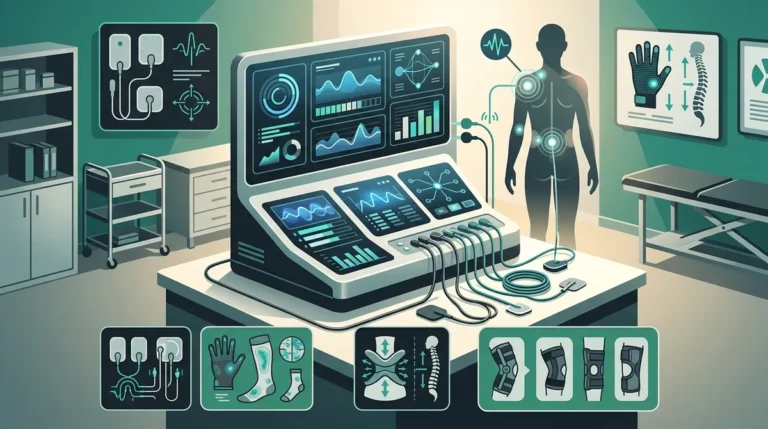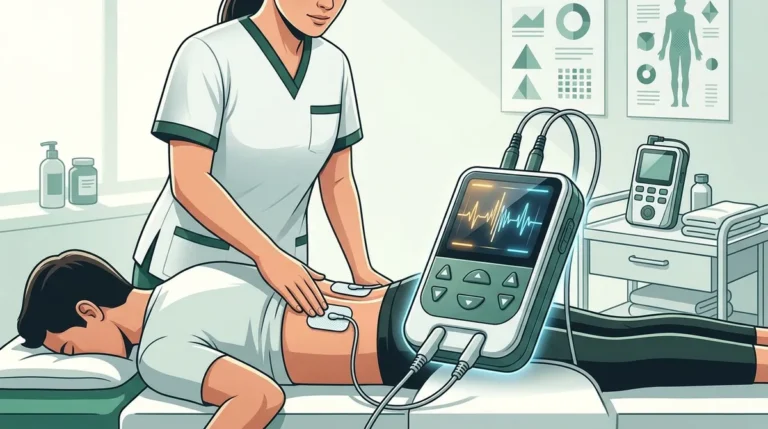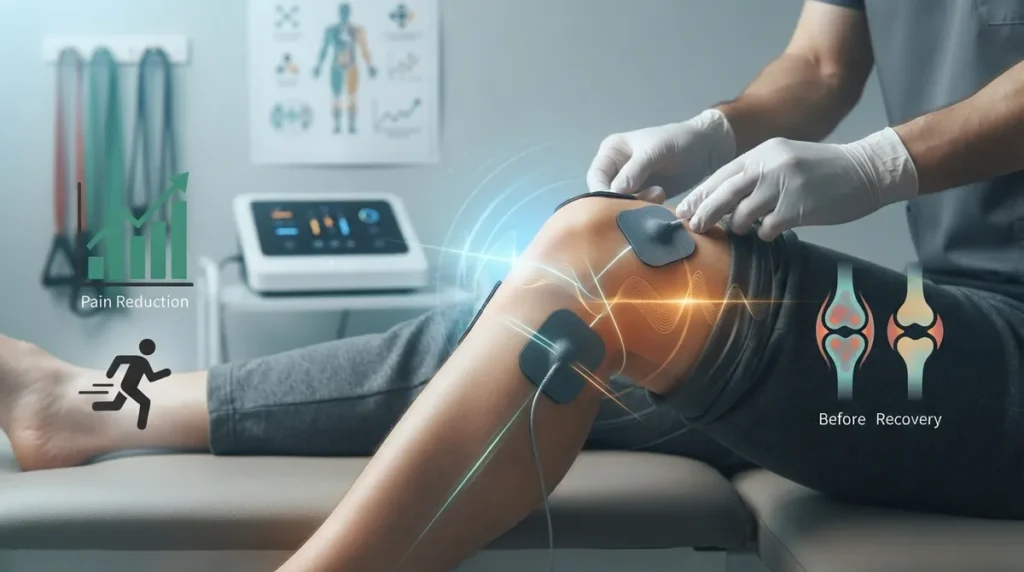
Key Takeaways
-
TENS provides moderate, condition-dependent evidence for short-term pain relief in chronic musculoskeletal pain, but major guidelines like the American College of Rheumatology recommend against it for osteoarthritis, requiring case-by-case patient evaluation.
-
Electrotherapy works best when combined with active rehabilitation (exercise, stretching, manual therapy) rather than used as a standalone treatment, with emerging evidence suggesting TENS during functional activity may enhance pain relief.
-
Different modalities serve distinct purposes: TENS modulates pain sensory signals, NMES/EMS activates muscle fibers for strength recovery, and interferential current targets deeper tissue, so clinics should match the device to each patient's specific condition.
-
Never use TENS on patients with cardiac pacemakers, implanted defibrillators, or during pregnancy without physician clearance; avoid electrode placement on the neck, chest, head, or broken skin to prevent serious complications.
-
Clinics must document baseline pain scores, treatment parameters, and functional outcomes for each session to support insurance reimbursement, provide objective evidence of efficacy, and evaluate whether electrotherapy benefits individual patients.
-
Educate patients that electrotherapy provides temporary relief and is not a cure for structural joint damage; position it as one component of a multi-modal pain management strategy including exercise, manual therapy, and medical care.
Joint pain remains one of the most common complaints seen in physical therapy clinics, chiropractic practices, and auto accident injury centers across the country. According to the National Institutes of Health, chronic pain affects a substantial portion of U.S. adults, and joint-related conditions are among the leading drivers of clinic visits. For providers looking to expand non-pharmacological treatment options, electrotherapy for joint pain has become a widely used adjunct therapy. Understanding how it works, what the evidence actually shows, and how to apply it appropriately is essential for clinicians who want to deliver credible, results-oriented care while managing patient expectations responsibly.
This article examines the clinical evidence behind transcutaneous electrical nerve stimulation (TENS) and related modalities for joint pain, outlines practical application guidelines, and explains how clinics can integrate these tools into a broader rehabilitation strategy. Whether you operate a physical therapy clinic, a chiropractic office, or an auto accident injury center, this guide will help you evaluate electrotherapy as part of a comprehensive, evidence-informed pain management program.
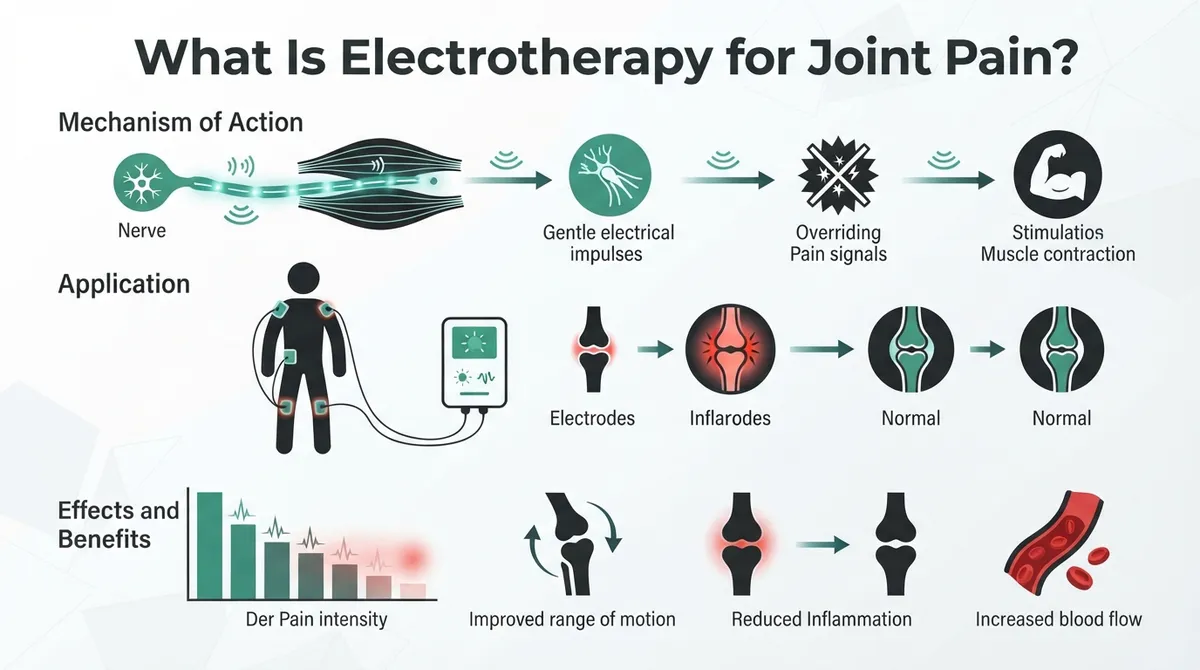
What Is Electrotherapy for Joint Pain?
Electrotherapy for joint pain most commonly refers to transcutaneous electrical nerve stimulation, or TENS, which delivers mild electrical impulses through surface electrodes placed on or around the affected joint. These impulses are thought to modulate pain signals traveling to the brain, offering temporary relief without medication. Related modalities frequently used in clinical settings include neuromuscular electrical stimulation (NMES/EMS), interferential current therapy (IFC), and microcurrent stimulation.
Each modality serves a distinct clinical purpose. TENS is primarily used for sensory-level pain modulation, while NMES/EMS is designed to activate muscle fibers and support strength recovery around a painful or surgically treated joint. IFC uses crossed electrical currents to reach deeper tissue with a comfortable sensation, though evidence for its superiority over other modalities remains limited. Clinics that understand these distinctions can better match the right device to each patient’s presentation.
Common Joint Conditions Treated with Electrotherapy
- Knee osteoarthritis and post-surgical knee pain
- Shoulder impingement and rotator cuff-related pain
- Hip osteoarthritis and post-operative hip discomfort
- Rheumatoid arthritis-related joint symptoms
- Whiplash-associated cervical and shoulder joint pain following auto accidents
- Chronic musculoskeletal pain involving multiple joints
What Does the Research Actually Show?
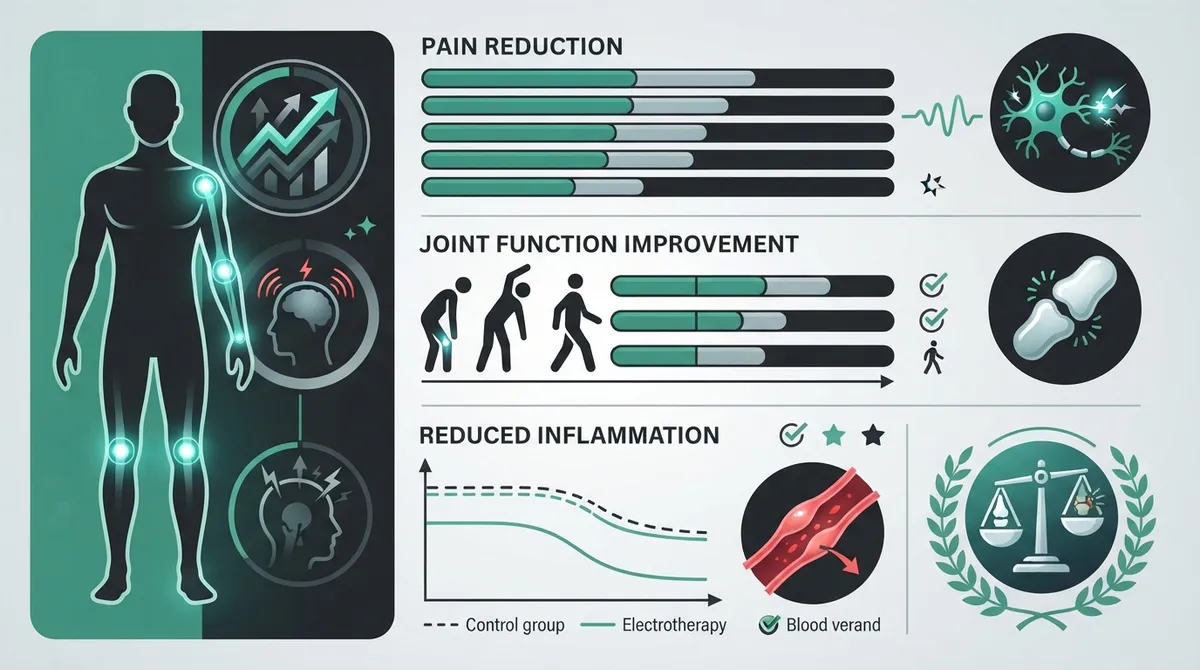
The evidence supporting electrotherapy for joint pain is condition- and protocol-dependent, and clinics should present it accurately rather than as a guaranteed solution. A 2023 systematic review screened 22,252 records, ultimately including 58 studies in the systematic review and 35 in the meta-analysis of TENS for chronic musculoskeletal and experimental pain, finding moderate evidence that TENS can reduce pain intensity and pain sensitization, according to research published on PubMed.
However, results vary substantially depending on electrical settings, treatment duration, electrode placement, and outcome measures used across studies. A 2021 overview of reviews found benefit-oriented conclusions in 69 of 169 reviews, inconclusive findings in 87, and no-benefit conclusions in 13—illustrating just how inconsistent the broader evidence base remains, as detailed by the National Library of Medicine.
Knee Osteoarthritis: A Mixed Picture
Evidence for knee osteoarthritis specifically illustrates this inconsistency. Some systematic reviews report statistically significant short-term pain relief and functional improvement, and a 2021 meta-analysis found high-frequency TENS reduced pain more than placebo, though the average difference was not always clinically meaningful. Yet the 2019 American College of Rheumatology/Arthritis Foundation osteoarthritis guideline strongly recommended against TENS for osteoarthritis pain. This discrepancy means clinicians should frame TENS as a possible adjunct therapy rather than a universally endorsed treatment, and should document outcomes carefully with each patient.
Electrotherapy During Exercise and Functional Activity
One of the more promising applications involves using electrical stimulation to help patients tolerate movement or exercise. A 2024 systematic review found that TENS used during functional activity may provide additional analgesia, particularly with higher-frequency stimulation delivered at a strong but comfortable sensory intensity. However, only six studies met the review’s criteria out of 634 initial articles, indicating this specific application still requires more robust clinical trials before firm conclusions can be drawn.
For chronic low-back pain, a 2024 systematic review and meta-analysis of EMS, IFC, and TENS found moderate evidence that TENS performed similarly to active and passive controls for pain and disability, while evidence for EMS or IFC superiority remained limited and outcome-dependent, as reported by Frontiers in Pain Research.
Comparing TENS, EMS, NMES, and Interferential Therapy
Clinics evaluating which modality to add to their treatment offerings should understand the functional differences between these devices. The table below summarizes their primary clinical applications.
| Modality | Primary Purpose | Typical Clinical Use | Evidence Strength |
|---|---|---|---|
| TENS | Sensory-level pain modulation | Chronic musculoskeletal pain, osteoarthritis, post-op pain | Moderate, condition-dependent |
| NMES/EMS | Muscle activation and recruitment | Post-surgical rehab, muscle weakness around joints | Established for muscle re-education |
| Interferential Current (IFC) | Deep tissue pain relief | Chronic pain, joint stiffness | Limited, inconsistent |
| Microcurrent | Low-intensity tissue stimulation | Soft tissue healing, minor pain | Emerging, limited data |
Practical Application Guidelines for Clinics
Proper application significantly influences patient outcomes and satisfaction. Clinics offering electrotherapy for joint pain should train staff on the following steps to ensure consistent, safe, and effective delivery.
- Assess the joint condition first. Confirm the diagnosis and rule out contraindications such as acute injury, unexplained swelling, or infection before initiating treatment.
- Select appropriate electrode placement. Position electrodes around—not directly over—the painful joint region, avoiding broken skin or areas of reduced sensation.
- Start at a low intensity. Gradually increase to a strong but comfortable tingling sensation, avoiding painful stimulation levels.
- Combine with active rehabilitation. Use electrotherapy alongside exercise, stretching, or manual therapy rather than as a standalone treatment.
- Monitor and document outcomes. Track pain scores and functional measures across sessions to determine whether the modality is providing meaningful benefit for that specific patient.
- Educate patients on realistic expectations. Explain that electrotherapy is a short-term adjunct, not a cure for structural joint damage.
Safety Considerations Every Clinic Must Follow
Patient safety should remain a top priority when integrating electrotherapy into a treatment plan. The FDA has cleared TENS devices for temporary relief of pain associated with sore or aching muscles in specified body regions, but labeling also warns of potentially serious electrical interference with implanted electronic devices.
- Never use TENS on patients with a cardiac pacemaker, implanted defibrillator, or other implanted electronic or metallic medical device unless specifically cleared by their physician.
- Avoid electrode placement over the front or sides of the neck, across the chest, over the head, on broken or infected skin, or over areas with markedly reduced sensation.
- Exercise caution—and seek professional clearance—during pregnancy or in patients with epilepsy, cancer, significant circulation problems, or acute unexplained swelling.
- Discontinue use and seek medical evaluation if a patient reports worsening pain, weakness, numbness, fever, or signs suggestive of infection.
Side effects are typically mild, including temporary skin redness or irritation, but burns can occur if intensity is excessive or electrodes are poorly applied. Clinics should always follow device-specific instructions and, per the CDC, consider electrotherapy as one component of a broader non-opioid pain management strategy rather than a substitute for comprehensive care.
Why Providers Choose Liberty Medical Solutions for Electrotherapy Equipment
Physical therapy clinics, chiropractic practices, and auto accident injury centers each have distinct operational needs when it comes to electrotherapy equipment. Liberty Medical Solutions works directly with providers to supply customized products, including TENS units, back braces, cervical traction units, and conductive garments designed to support joint and soft tissue recovery.
For Physical Therapy Clinics
PT clinics benefit from devices that integrate seamlessly into active rehabilitation protocols. Because research suggests TENS may offer additional analgesic benefit when used during functional movement, having reliable, clinic-grade units on hand allows therapists to combine electrical stimulation with therapeutic exercise for patients recovering from joint injuries or surgery.
For Chiropractic Practices
Chiropractors often use electrotherapy as a complement to spinal adjustments and manual therapy, extending pain relief between office visits. Providing patients with take-home devices supports continuity of care and reinforces the value of in-office treatment. Many practices also pair units with supportive garments to address joint and soft tissue pain simultaneously.
For Auto Accident Injury Clinics
Clinics treating whiplash, back injuries, and joint-related soft tissue damage from motor vehicle accidents require equipment that supports documented, insurance-compliant treatment plans. Liberty Medical Solutions works with commercial PPO/POS plans, workers’ compensation, and auto accident claims to help make electrotherapy accessible without creating administrative burden for the clinic or the patient.
Clinics interested in evaluating device options, insurance compatibility, or bulk ordering for their practice can get in touch with the Liberty Medical Solutions team to discuss tailored solutions.
Integrating Electrotherapy into a Complete Joint Pain Management Plan
Electrotherapy should never be positioned as a standalone cure. Instead, it works best as one component of a multi-modal approach that may include structured exercise, manual therapy, weight management where clinically appropriate, medication as prescribed, and ongoing assessment of the underlying joint condition. Organizations such as the Cleveland Clinic emphasize that TENS is most effective when used as part of a broader care plan rather than in isolation.
For clinics building out their electrotherapy offerings, resources such as how electrotherapy works for pain and rehab and electrotherapy strategies that upgrade muscle and joint care can help staff better understand protocol design. Clinics can also review how to choose the best TENS unit for clinical practice to ensure they select equipment matched to their patient population and treatment goals.
Documentation and Insurance Considerations
Because electrotherapy is frequently billed through commercial insurance, workers’ compensation, or auto accident claims, proper documentation is essential. Clinics should record baseline pain scores, treatment parameters, and functional outcomes for each session. This not only supports reimbursement but also provides objective evidence of whether the modality is benefiting a specific patient. Providers navigating PPO insurance and electrotherapy coverage or POS insurance impacts on electrotherapy coverage can streamline billing while maintaining compliance.
Conclusion
Electrotherapy for joint pain, particularly TENS, offers a legitimate non-pharmacological option for many patients experiencing knee osteoarthritis, post-surgical joint pain, chronic musculoskeletal conditions, and accident-related joint trauma. The evidence remains condition-specific and protocol-dependent, meaning clinics should present electrotherapy as an adjunct to—not a replacement for—comprehensive rehabilitation and medical care. When applied correctly, with appropriate patient selection, electrode placement, and integration into active treatment plans, electrotherapy can meaningfully support pain management and functional recovery.
Clinics ready to expand their joint pain treatment capabilities with reliable, clinically supported equipment can reach out to Liberty Medical Solutions today to explore customized electrotherapy solutions tailored to their patient population and insurance requirements.
FAQs
Q: Does electrotherapy or TENS really help joint pain?
A: Research suggests TENS can provide short-term pain relief for some patients with chronic musculoskeletal pain, though evidence varies by condition and treatment protocol. It should be viewed as an adjunct to a broader treatment plan rather than a standalone cure for joint pain.
Q: Can TENS reduce knee osteoarthritis pain?
A: Some systematic reviews report short-term pain relief and functional improvement with TENS for knee osteoarthritis, while other major guidelines recommend against its routine use. Results are inconsistent, so clinicians typically evaluate patient response on a case-by-case basis.
Q: What is the difference between TENS, EMS, NMES, and interferential therapy?
A: TENS primarily targets sensory nerves to modulate pain perception, while EMS and NMES activate muscle fibers to support strength and rehabilitation. Interferential current therapy uses crossed electrical currents intended to reach deeper tissue, though its evidence base remains more limited.
Q: Is electrotherapy safe with a pacemaker, joint replacement, or during pregnancy?
A: TENS should not be used on patients with a cardiac pacemaker, implanted defibrillator, or other implanted electronic devices unless specifically cleared by a physician. Pregnant patients and those with epilepsy, cancer, or significant circulation problems should also seek professional guidance before use.
Q: Can TENS be used while exercising or during physical therapy?
A: Emerging research indicates that TENS used during functional activity or exercise may provide additional pain relief, particularly with higher-frequency stimulation at a strong but comfortable intensity. However, this application has a limited evidence base and warrants further clinical study.